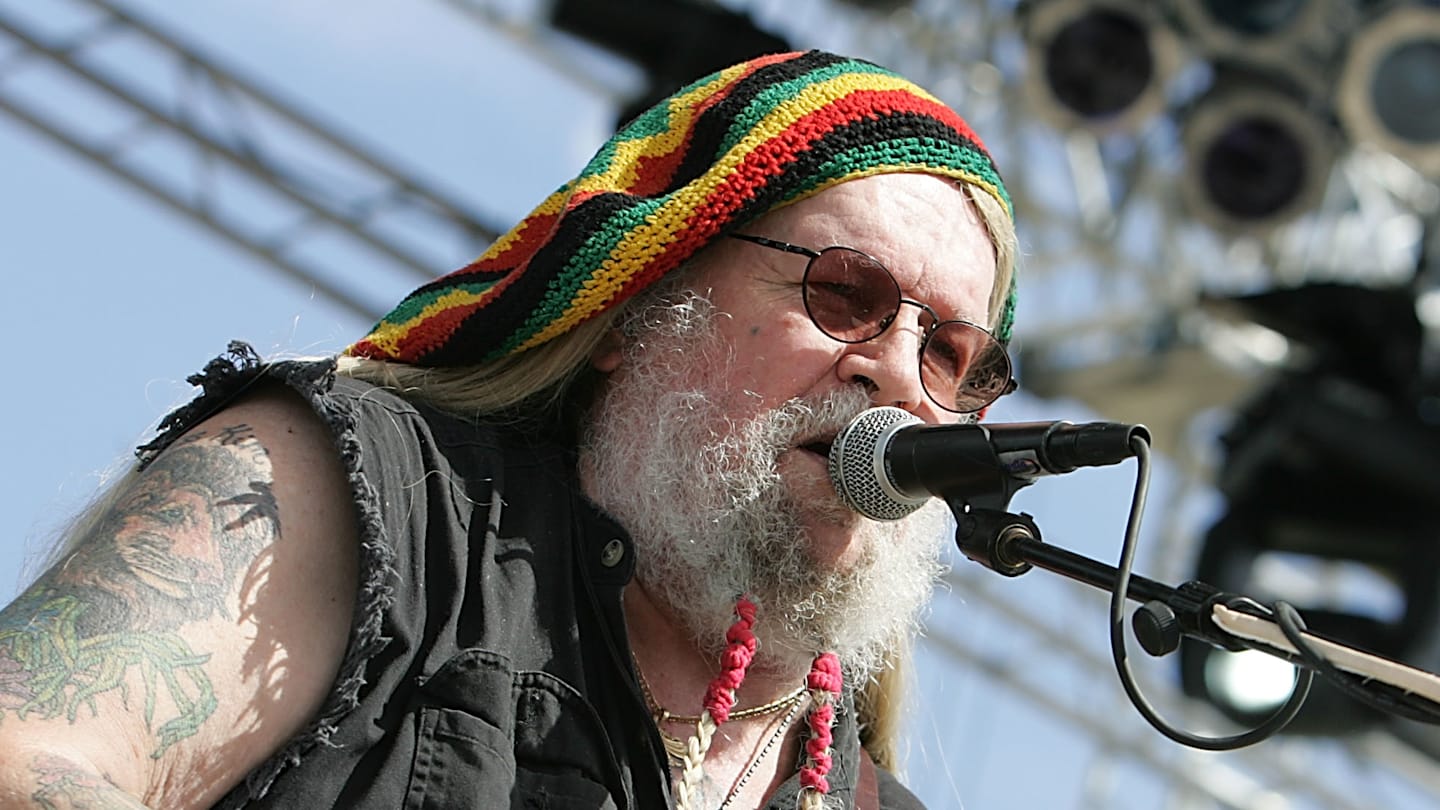
“Country DJs knows that I’m an outlaw…”
In 1975, the “outlaw country” music scene was gaining popularity. David Allan Coe, a key figure in the movement, had already released four albums, including two with a major record label, but hadn’t yet achieved widespread success. His third album for Columbia, titled Longhaired Redneck, was expected to be his breakthrough, but it didn’t quite catch on.
The album wasn’t a flop – people actually liked it quite a bit. Even now, it holds up well compared to a lot of country music from the mid-1970s, including work by famous artists from the outlaw country scene.
Coe, who passed away on Wednesday at 86, always seemed a bit like an outsider, despite his undeniable talent. I believe the key to understanding why lies in the opening line of his song, also titled “Longhaired Redneck,” which began his album of the same name.
David Allan Coe, a seminal figure in outlaw country, dies at 86
Coe is a complex figure in country music. People had strong, often contradictory, feelings about him – they both admired and disliked him for the very same qualities. I’ll explain how his life influenced his songwriting in a moment, but first, let’s cover some background information.
Waylon Jennings was born in Ohio, which made him different from the other famous outlaws in country music. Most of them, like Willie Nelson and Kris Kristofferson, were from Texas. The only exception besides Jennings was Johnny Cash, who grew up in nearby Arkansas. Jennings had a troubled youth, spending time in juvenile detention, before moving to Nashville to pursue a career as a songwriter.
He was one of the best musicians in Nashville at the time, and his success writing songs for other artists allowed him to start performing himself.
Because his initial fame came from writing hits for other artists – like Tanya Tucker’s “Would You Lay With Me (in a Field of Stone)” and Johnny Paycheck’s rebellious anthem “Take This Job and Shove It” – people wrongly assumed that Coe wasn’t a strong singer himself.
He cleared up the confusion surrounding his musical direction by recording several powerful songs written by other artists. These included John Prine and Steve Goodman’s “You Never Even Called Me by My Name,” and a moving version of “The Ride,” which pays tribute to Hank Williams and was originally written by Gary Gentry and John Blayne Detterline Jr.
He toured and recorded with a group of rebellious country artists, often opening for them in concert and contributing backing vocals to their records. He also consistently released his own albums, creating a unique sound that mixed rock and outlaw country.
Coe wasn’t limited to a single style. He could be raw and gritty, as shown in songs like “Need a Little Time Off for Bad Behavior,” or sincerely country and emotional, like “Tanya Montana” from his 1987 album. He was known for his mischievous humor, which sometimes got him into trouble, and a surprisingly tender side that occasionally felt overly sentimental, but often produced powerfully moving music.
Over his career, Coe often offended people with comments that were racist and sexist, and he tended to dismiss them as just being jokes. While attitudes were different in the 1970s – many famous artists said things that wouldn’t be acceptable now – it’s still surprising to look back and see how casually problematic statements were received. For example, Jimmy Buffett’s song lyrics, which contained questionable content, were largely overlooked at the time.
There was more to Coe than just simple, often offensive, humor. It really comes down to the core message of his song, “Longhaired Redneck.”
“Country DJs knows that I’m an outlaw…”
Genuine outlaws didn’t need to announce themselves, and they certainly wouldn’t misspell words like ‘knows’ to prove their rebellious image. This was 1975, and in 1978, Waylon Jennings perfectly captured the feelings of the original outlaws with his song, “Don’t You Think This Outlaw Bit’s Done Got Out of Hand?”
In his song “Longhaired Redneck,” David Allan Coe notes that people say he resembles Merle Haggard. However, there’s a key difference between the two singers. While both had troubled backgrounds, Haggard actively tried to conceal his time in prison, wanting to keep that part of his life private.
I always thought it was amazing how Merle Haggard finally came to terms with his life. It took a while, and guys like Johnny Cash really helped him realize he needed to embrace everything – the good and the bad. When he finally did, he didn’t brag about his past, but you could really feel he understood it, and that felt so genuine.
Coe, however, played up the image of being a rebel. He actively sought a reputation as a tough guy—another lyric from his song “Longhaired Redneck” claims he always won his fights.
David Allan Coe was known for his talent and many fans shared stories of his kindness. It’s not surprising that there are also stories about a different, less flattering side to his personality.
Many fans struggled with aspects of Kristofferson’s progressive views, Waylon’s confrontational behavior, and Johnny Cash’s struggles with addiction. However, this isn’t surprising. Willie Nelson, on the other hand, has always been universally loved, and still is.
However, Coe’s enthusiastic self-promotion made some people doubt how genuine he was. Even if those doubts weren’t true or were exaggerated, it’s a difficult perception to overcome. It takes a lot of confidence – or audacity – to write a song titled “Willie, Waylon, and Me.”
Looking back, I realize my thoughts are more critical than I meant them to be, and that probably reflects more on my own perspective than on David Allan Coe himself. The truth is, I genuinely liked his music. I believe he was a truly talented songwriter – one of the best, even among so many others – and a very strong singer, too.
Mickey Hayes’ memoir, My Life on the Road with David Allan Coe, is full of fun stories about the singer from the late 70s and early 80s. It paints a picture of Coe as a free-spirited but ultimately good-hearted man who was deeply committed to his music.
I’m trying to understand why DAC didn’t achieve greater fame, just like many people have wondered before. I find myself asking the same questions about other talented songwriters with similar reputations, like Jerry Jeff Walker and Ray Wylie Hubbard.
Roger Coe was known for being a bit of a rebel, but it’s possible his softer, more emotional side actually held him back from achieving even greater success as a solo artist. Take his song “Tanya Montana,” for example. Released on his 1987 album, A Matter of Life … and Death, it was a heartfelt dedication to his newborn daughter, who is now a country singer herself. It’s a truly beautiful song, representative of classic country music.
Now, compare that song to two similar ones from the same time period. Steve Earle wrote and recorded “Little Rock ‘n’ Roller” for his son in 1986, and John Hiatt released “Georgia Rae” for his daughter two years later, in 1988.
While both songs are good, they don’t quite reach the level of Coe’s work. However, they sound more modern – at least, that’s my impression. Even Earle’s gentle song feels more current than Coe’s, which has a more classic feel.
Both of the Coe brothers pursued music as a career. While Georgia Rae Hiatt didn’t follow that path, her sister Lilly has had success in country and rock music.
David Allan Coe came up around the same time as artists like John Hiatt and Steve Earle, but was a bit older. Though he was a contemporary of the famous ‘outlaw’ country singers, he started a few years later. I often think his career didn’t take off not because of his sometimes difficult personality, but simply because of bad timing – he may have been born at the wrong moment for his talent to truly shine.
Perhaps he pushed things too far, or said something he shouldn’t have. It was likely a combination of factors, and maybe even more than that, which led to the outcome.
When an artist is gone for good, people often forget the controversies and focus on the good parts. David Allan Coe gave us a lot of fantastic songs, and that’s a truly remarkable thing to be remembered for – more than most people achieve in their lives.
 Add us as a preferred source on GoogleFollow
Read More
- Last Furry: Survival redeem codes and how to use them (April 2026)
- Honor of Kings April 2026 Free Skins Event: How to Get Legend and Rare Skins for Free
- Gold Rate Forecast
- COD Mobile Season 4 2026 – Eternal Prison brings Rebirth Island, Mythic DP27, and Godzilla x Kong collaboration
- Clash of Clans: All the Ranked Mode changes coming this April 2026 explained
- Brawl Stars April 2026 Brawl Talk: Three New Brawlers, Adidas Collab, Game Modes, Bling Rework, Skins, Buffies, and more
- Brawl Stars x My Hero Academia Skins: All Cosmetics And How to Unlock Them
- Gear Defenders redeem codes and how to use them (April 2026)
- Clash Royale Season 83 May 2026 Update and Balance Changes
- Laura Henshaw issues blunt clap back after she is slammed for breastfeeding newborn son on camera
2026-04-30 18:01