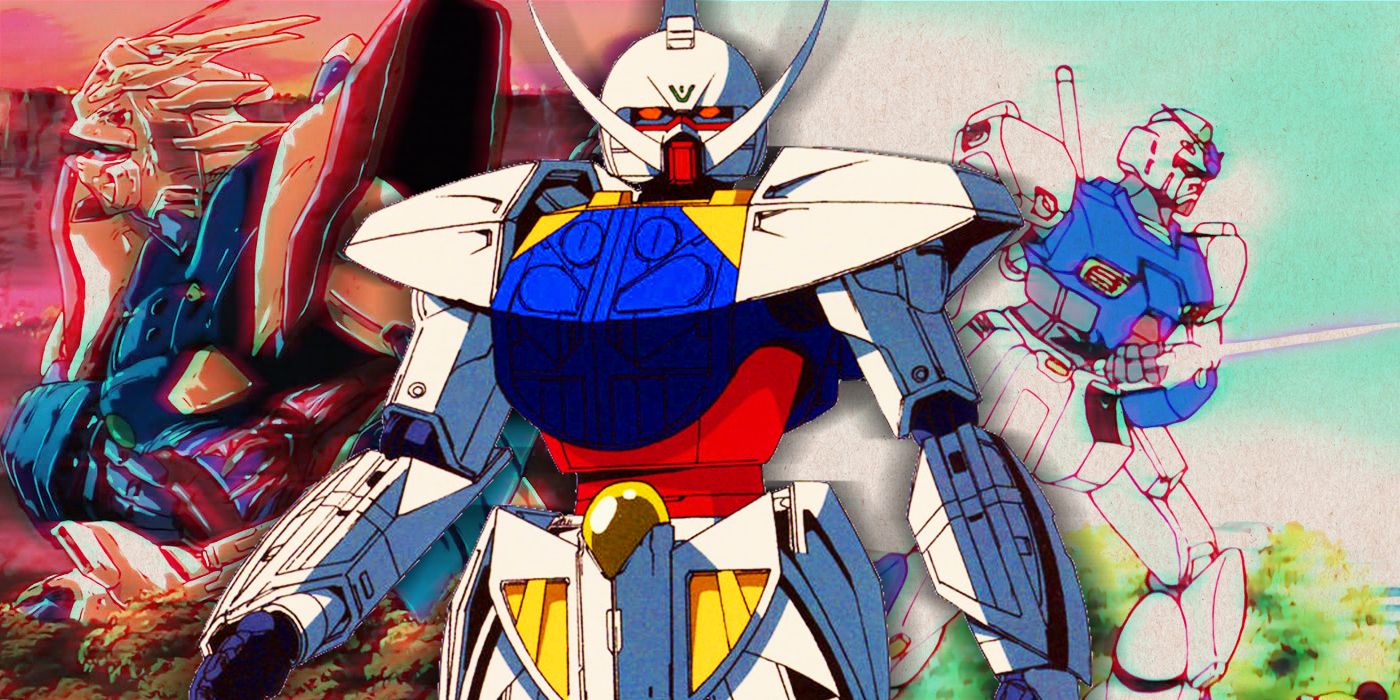
While many different types of stories exist, giant robot narratives – known as ‘mecha’ – have become a defining feature. Starting in the 1950s, these stories of massive robots battling it out have changed over the years, attracting a wide range of fans – those who enjoy action, science fiction, or even complex political storylines.
Early mecha anime such as Tetsujin 28/Gigantor, Mazinger Z, and Giant Robo laid the groundwork for the genre. Mobile Suit Gundam then popularized it, and more recent shows like Code Geass and SSSS.Gridman continue to keep mecha anime popular today. While these series are incredibly influential, they aren’t perfect. Creating a truly great mecha story is challenging, but these anime manage to do it seamlessly.
Macross Plus Combines Music & Mechas To Make Beautiful Harmony
I’m a huge Macross fan, and it’s amazing how many stories this franchise has given us – over a dozen across TV shows, movies, and those cool OVA episodes! Not everything’s been a hit, though; I remember being a little disappointed with Macross Delta back in 2016. But Macross Plus? Now that’s a classic! A lot of fans, myself included, see it as the real follow-up to the very first Super Dimension Fortress Macross, and it’s consistently ranked as one of the best entries.
Macross Plus is a four-part animated series that was also released as a movie. It tells the story of two skilled pilots, Isamu and Guld, and their intense rivalry, which is complicated by a romantic connection with the same woman.
A surprising plot point in Macross Plus centers around a virtual pop star who merges with cutting-edge military tech, becomes self-aware, and gains control of the SDF-1 Macross, potentially endangering the world. Released in 1994, Macross Plus was remarkably ahead of its time in addressing the increasing risks of artificial intelligence. Its unique blend of AI themes, complex relationships, and the positive influence of music makes it a groundbreaking and influential mecha anime.
Gurren Lagann Channels The Undying Spirit Of Rebellious Revolutionaries For The Greater Good
Gainax’s Gurren Lagann beautifully bridges the gap between classic and modern mecha anime. It revitalizes familiar themes of freedom, rebellion, and control, presenting them in a fresh way for a new audience. The 27-episode series tells an uplifting story centered around these ideas.
Watching Gurren Lagann is a wild ride – it’s constantly happening, and it definitely doesn’t hold back! But surprisingly, all that over-the-top action and energy actually works really well. It’s got this fantastic sense of adventure that I think anyone, young or old, can enjoy.
While it’s enjoyable to follow the dramatic story of Simon and Kamina and explore the anime’s ideas, what truly makes Gurren Lagann special is its incredible scale. The final form of the Lagann – Super Tengen Toppa Gurren Lagann – is one of the largest mechs ever created in anime, reaching the size of the entire universe. As a result, the battles are epic and unforgettable cosmic events.
The Big O Combines Mecha Staples With Detective Fiction & Art Deco Aesthetics
Many American cartoons have borrowed ideas from Japanese anime, especially the ‘mecha’ genre, but it’s less common to see anime influenced by Western shows. The Big O is a great example of this, blending detective and film noir stories with a unique, retro-futuristic style called ‘dieselpunk,’ and clearly inspired by Batman: The Animated Series. The main character, Roger O. Smith, feels like a combination of Batman and James Bond.
I always found The Big O captivating, mostly because it’s set in this incredible city, Paradigm City, and features Roger Smith piloting the giant robot, Big O, battling all sorts of dangerous machines. There’s plenty of exciting robot action, that’s for sure! But what really stuck with me was how the show delved into deeper ideas – questions about who we are and what’s real. It wasn’t afraid to tackle big philosophical concepts, and that’s a hallmark of the writer, Chiaki J. Konaka. The show really tries to explore the very nature of reality in a way that feels both ambitious and thoughtful.
While not a huge hit in Japan, the anime series The Big O became popular in America. It was co-produced by a partner who also helped fund the second season. With 26 episodes across its two seasons, the show explores complex themes in a thrilling way. The Big O II builds on the ideas of the first season, offering a fresh and engaging experience instead of simply repeating old concepts.
Mobile Suit Gundam 0080: War In The Pocket Gives The Franchise A Grounded, Gritty Makeover
Mobile Suit Gundam is a hugely influential series that helped define the giant robot, or ‘mecha,’ genre. It’s spawned countless TV shows, movies, and related products. While early Gundam stories in the 1980s and 90s were large-scale space adventures, the series took a significant turn with Mobile Suit Gundam 0080: War in the Pocket. This story demonstrated that focusing on realistic, Earth-based conflicts and the personal impact of war could be even more compelling.
War in the Pocket is the first original video animation (OVA) series in the Gundam franchise, and its story is perfectly suited for a six-episode format. The series offers a unique perspective on Gundam’s One Year War, told through the eyes of 11-year-old Alfred, who experiences the real-world impact of the giant robot battles that viewers usually just see as spectacle. Its simple approach is a strength, leading to a powerfully emotional climax considered one of the best moments in all of Gundam. The success of War in the Pocket paved the way for other popular Gundam OVAs like Stardust Memories and The 08th MS Team.
Full Metal Panic! Blurs Genre Lines With A Mecha Mercenary Mission In High School
This anime is surprisingly well-made and could easily fall apart with less skilled direction. It’s also perfect for newcomers to anime, blending action-packed robots with heartfelt drama, romance, and plenty of humor. The show cleverly twists familiar tropes, taking a simple ‘new kid’ story and brilliantly combining it with themes of military life and giant robots, all within a school setting.
The connection between Sousuke and Kaname is undeniable, and it’s great to watch Sousuke become more human, developing empathy and expressing his emotions. What’s impressive about Full Metal Panic! is how consistently good it is, even with different animation studios working on it over the years. Its spin-off, Full Metal Panic? Fumoffu, is a hilarious comedy and a standout in the genre. The other sequels and additions continue the high quality, with Full Metal Panic! The Second Raid often considered the best part of the series, bringing all the emotional storylines to a satisfying conclusion.
The Vision Of Escaflowne Features Amazing Mecha Combat In A Fantasy World
Many mecha anime rely solely on exciting robot battles, but the genre is capable of much more. The Vision of Escaflowne starts with a teenage girl named Hitomi suddenly finding herself in the fantastical world of Gaea. There, she becomes key to stopping a long and brutal war, and also develops a sweet romance with some of Gaea’s central figures.
I’m a huge fan of Escaflowne – it really burst onto the scene as something special because its mecha isn’t powered by technology, but by pure magic! The Escaflowne itself is incredible – it looks like a massive, armored knight with a huge sword, but it can also transform into a dragon for when it needs to fly. Honestly, The Vision of Escaflowne raised the bar for shows that blend mecha action with fantasy, and it definitely paved the way for a lot of what came after. And can we talk about the soundtrack? Yoko Kanno’s work on Escaflowne is some of her best, and I think it’s seriously underrated!
Patlabor: The Series Uses Mechas To Aid Labor & Police In A Futuristic Yet Familiar World
While often overshadowed by more popular mecha series like Mobile Suit Gundam, Patlabor stood out by portraying robots as tools used in everyday law enforcement. The franchise initially gained recognition through its movies, but Patlabor: The TV Series successfully adapted the investigative and police procedural elements into a captivating 47-episode anime.
Patlabor: The Series takes place in its own version of the Patlabor universe, separate from the movies, and is a great place to start if you’re new to this fresh take on giant robots. Unlike many other mecha series that focus on huge space battles, Patlabor features robots used for everyday jobs like construction and police work. The series really shines with its detailed world and well-developed characters. Plus, Mamoru Oshii returns to add his signature philosophical and religious themes to these unique mecha stories.
Found an error? Send it so it can be corrected.
Read More
- Last Furry: Survival redeem codes and how to use them (April 2026)
- Honor of Kings April 2026 Free Skins Event: How to Get Legend and Rare Skins for Free
- Gear Defenders redeem codes and how to use them (April 2026)
- Clash Royale Season 83 May 2026 Update and Balance Changes
- Gold Rate Forecast
- Brawl Stars Starr Patrol Skins: All Cosmetics & How to Unlock Them
- Brawl Stars April 2026 Brawl Talk: Three New Brawlers, Adidas Collab, Game Modes, Bling Rework, Skins, Buffies, and more
- Silver Rate Forecast
- Laura Henshaw issues blunt clap back after she is slammed for breastfeeding newborn son on camera
- Total Football free codes and how to redeem them (March 2026)
2026-05-02 04:15