
Twenty years ago, Health was a loud, experimental band playing at the Smell, a small Los Angeles nightclub known for its intense music. That music scene greatly influenced independent music, but most of the bands from that time have since stopped performing.
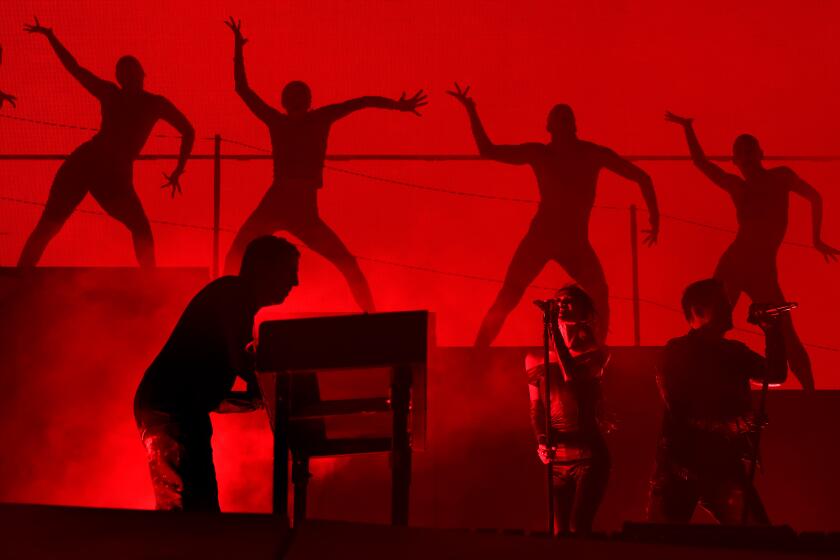
I’ve been a fan of HEALTH for years, and it’s amazing to see how much they’ve grown! They didn’t just stick with their original sound; they constantly evolved, adding in electronic elements, heavier guitar riffs, and even some industrial rock vibes – you can really hear it on their latest album, ‘Conflict DLC.’ They’ve become super popular in the gaming world with their music for soundtracks, and a lot of newer bands like Sleep Token and Bad Omens have even mentioned being influenced by them. It was incredible to see them sell out the Hollywood Palladium – a 4,000-person venue! – for their show on Friday. It was their biggest headlining gig in their hometown after almost twenty years of making music.
In an interview with The Times, the band discussed the influence of Los Angeles’ independent music community on their sound, how Nine Inch Nails inspired them to build a career from intense music, and how their album “Death Magic” resonated with young transgender fans who connected with the themes within it.
Playing at the Palladium is the biggest show you’ve done in your hometown after twenty years as a band. Back when you were starting out, did you ever think something like this would happen, let alone now?
Jacob Duzsik, who handles vocals and guitar, explained that the band wasn’t interested in those kinds of things at all. They were involved in a small, rebellious art community, so ideas like mainstream success weren’t even on their radar. Their focus back then was simply to get out and play shows at venues like the Smell – small, raw spaces where they could test out their sound and see how it developed.
We were also really driven, and just a year later, we actually got to open for Nine Inch Nails.
We’ve always aimed high, but within the scope of our scene. The bands we looked up to weren’t exactly mainstream, and that was okay with us. We just wanted to create music we loved and put on great live shows. But things shifted when Pitchfork started paying attention to the Smell, and suddenly we were playing festivals like Primavera and touring internationally.
You’ve successfully moved beyond many different music genres – from noise and indie to electronic, metal, and industrial. How did you manage to pull off such diverse and authentic transitions?
John Famiglietti, the bassist and electronics player, believes their band avoided the typical pitfalls of success because they never had a massive hit. They looked up to Animal Collective, and by staying outside of any specific music scene, they were able to evolve and change their sound over time. Famiglietti jokes that if they had had a hit song, he thinks he would have struggled with addiction and the band likely would have fallen apart.

Music
Bad Omens proved at their energetic Thursday night concert that they are a remarkably talented and forward-thinking rock band.
Unlike many millennial bands who are finding new fans through TikTok, you’ve built your following without a viral hit on the platform. Bands like Acid Bath and The Neighbourhood have seen a resurgence thanks to TikTok, but you’ve taken a different path.
It’s become really common for bands to split up or go on hiatus, and then get asked to reunite, often just because one of their old songs suddenly goes viral. This happens a lot now – a band might get offered a big festival like Coachella simply because a song has hundreds of millions of streams. It’s crazy how these algorithms can bring any band back from the past, and it feels out of their control. We’re not experiencing a natural return of bands, but one driven by internet trends.
I’m always hoping for something truly spectacular to happen for us, on top of the steady progress we’ve been making.
You’d want your Grateful Dead “Touch of Grey” moment.
I often bring that up. The Grateful Dead concerts were already wild, but then you’d hear their songs playing on easy listening stations. It was a strange mix – you’d go to a Dead show and find people selling drugs in the parking lot. That’s the kind of experience Health is aiming for – a parent bringing their child to a show because they heard our song in a video game, and there’s someone wearing a bizarre leather dog mask. It’s about creating a memorable, slightly surreal atmosphere.
Gamer culture played a big role in reaching a wider audience. Many fans first discovered your work through games like “Cyberpunk 2077” and the music you created for “Max Payne 3”.
Back then, there was debate within the music blogosphere about whether we were compromising our artistic integrity. Looking back, that decision was crucial for our longevity. It connected us with a large online community, which proved invaluable for staying in touch with fans during the pandemic. Interestingly, many of the people we collaborated with knew us not from our early days, but from our work on the Max Payne game. It’s amazing how one thing leads to another in ways you could never anticipate.
You’ve also been one of the most intense live bands in L.A. for decades. That must have helped.
That’s what really creates a strong bond with the band. It’s amazing to see so many young people at our shows who’ve never experienced live music before. We came up playing at places like The Smell, where the focus was always on the live performance. Back then, our recordings were just rough cassette tapes, honestly they didn’t sound great!
Things are very different now. Musicians struggle with performing live because they’re not sure how to deliver a compelling show. Back when we started, being a great live band was how you built a following and got more gigs. We’ve always focused on creating a really energetic, immersive experience. As you get older, the biggest challenge is keeping your fanbase fresh – you need to attract new listeners, or your long-time fans will eventually feel let down.
I remember when we were starting out, we really honed our skills playing in all sorts of DIY venues. It was a super supportive scene – everyone was pushing themselves to be great, but also really encouraging each other. We were dedicated, practicing four times a week! We always wanted to give the best performance possible and make everything really polished. Especially for a song as complex as “Courtship,” we rehearsed it endlessly – seriously, so many times!
It’s a reversal of what usually happens with new artists today. They often have a popular song first, and then work on developing their live performance skills. This used to be the other way around.
We started out as a DIY band, and then we toured with Nine Inch Nails. It was a huge leap – going from small, independent shows to performing at the highest level. It made us realize that if our band wanted to succeed, we needed to constantly improve and evolve.
As a critic, I’ve watched a lot of bands rise quickly, sometimes too quickly. I’ve seen groups leap from small clubs to huge venues without understanding how to actually fill that bigger space – and when the show doesn’t match the room, fans don’t return. There are critical moments for young bands where they just don’t know how to adapt. Luckily, for this group, their growth has been steady, allowing them to adjust and calibrate along the way. It’s a smart approach I really appreciate – they’re building something sustainable, not just chasing a quick high.
Music
Trent Reznor might never escape those ghouls.
Is it easier to grow older in metal and industrial music? You’re all in your mid 40s now.
JD: What are you talking about? I’m 31.
Sure.
JF: Metal respects their elders in a way that’s kind of unheard of in other genres.
Fans aren’t worried about whether the band is still popular or if they’re too old to wear band merchandise. They just don’t care! And I think that’s a big reason why it’s easier to stay connected with them when you have a fanbase like that.
It’s common to see people explore many different creative outlets – going from noise bands to DJing, then to modular synth music, and even starting podcasts about science. But metal fans often stick with what they love – they might say, ‘I’ve always liked Tool, and that’s all I need.’
Do you think your upbringing in a do-it-yourself environment helped you become prepared for the music industry today, where artists often have to handle everything themselves?
JF: I worry, because kids ask me for advice, and my advice would be crazy outdated.
As a huge music fan, I’ve noticed something about concerts lately. Bands aren’t just selling music anymore – merch is a huge part of how they make tours work. Touring is incredibly expensive, so merchandise sales really keep everything afloat. And with ticket prices getting so high, bands need to give fans a good reason to spend their money, and that often means awesome, exclusive merch!
Growing up, seeing shows was just… what you did. We all used to hit multiple concerts every week, no problem. But honestly, looking back, that was a bit crazy financially! We quickly figured out the importance of merch – it wasn’t just a souvenir, it was a way for artists – and fans – to actually make things sustainable. It was a pretty quick lesson, really.
Your “Don’t Kill Yourself” hat is such an instantly recognizable subcultural gesture.
From the start, we really excelled at selling merchandise at the Smell. It’s funny because punk and metal bands, even though they’re against commercialism, actually have strong branding. You still see people wearing Black Flag shirts today – that style never fades.
We’ve been including the health hotline number on our merchandise, and John is available to answer calls on it. As the band grows, can we continue to offer this service?
I only answer calls during my livestreams now, which has really simplified things. However, I still get texts all the time, and occasionally people even come to my house. If we ever have to scale back because things get too popular, that would be a great problem to have – but I don’t think that’s going to happen anytime soon. Even if you met Lemmy at a concert, he’d still be friendly and want to spend time with you.
I’ve created a personal rule where I avoid meeting people – it’s mostly due to social anxiety. The idea for the hotline started as a joke, but it actually became a reality. I was reading a biography of Joe Strummer, and he used to invite fans back to The Clash’s dressing room after shows to hang out and drink with them, which really fit their punk rock spirit.
It’s really refreshing to meet accomplished artists who are also humble and approachable, and treat you like an equal instead of talking down to you.
You’ve worked with Nine Inch Nails for a long time. Now that your band is playing bigger venues, what lessons have you learned from them about bringing experimental sounds to a large audience?
I really appreciate your trust in us. We’re facing incredibly dangerous times – the potential for worldwide conflict and massive financial issues. Things could change instantly. But honestly, all I feel is worry about the costs. Every exciting thing we do – every ‘big moment’ – immediately makes me think about how much it’s going to cost.
Green Day doesn’t rely on elaborate production because their songs are popular and people already know the words. Bruce Springsteen proves you only need basic lighting and a charismatic performer. We’re more like Nine Inch Nails – if we keep growing, we’ll probably continue needing complex production because our music doesn’t have those big, singalong moments where everyone joins in.
Nine Inch Nails really demonstrates this idea. If you appreciate their music, you should also pay attention to everything surrounding it. They carefully control every aspect of their presentation – the lighting, the merchandise, and how all those visual elements connect to the music itself.

Music
The band Dead City Punx has been holding surprise concerts under freeway overpasses, attracting large crowds. While these chaotic shows have caught the attention of some in the art and music scene, Mayor Karen Bass has criticized them. The question now is whether this unique approach can lead to long-term success for the band.
That’s good advice for younger bands like Bad Omens. What do they say they admire in Health?
Noah from the band Bad Omens explained that he first connected with the band through their song “Death Magic.” I realized from that conversation that we approach electronic music production with a pop sensibility, then blend it into heavier, more aggressive sounds. This is different from what’s typical in a lot of alternative music scenes, where those elements are often kept separate.
Bands like Sleep Token, Bad Omens, Turnstile, and Knocked Loose are really inspiring a new generation to pick up guitars. I think it’s because people are feeling lost and overwhelmed by technology – they’re searching for something real and meaningful instead of just passively consuming content created by algorithms and AI.
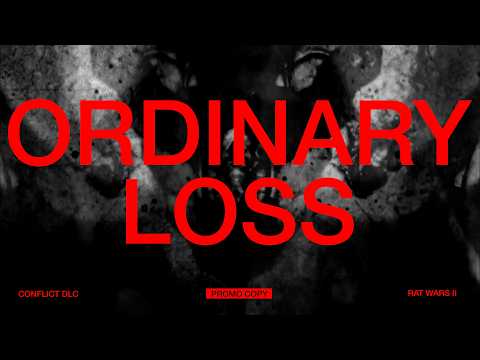
You’ve never really considered yourselves a political band, but your new album, “Ordinary Loss,” directly addresses how discouraging things are at the moment.
I realized the joke was that I’d been working on the same song throughout the entire process, and as time went on, things just kept getting more difficult. When we were first recording, we created a visual mood board to inspire the music – it was all about a futuristic, almost post-apocalyptic world, kind of like “Terminator” or “Mad Max.” It feels strangely relevant now.
JF said our music seemed to predict what was happening in the world. Honestly, I’d prefer if our band wasn’t doing so well if it meant things were generally better.
During an interview with a German journalist, I was asked a strange question. They said, “It looks like things are going well for your band… do you want them to continue to decline?”
Your band’s music often focuses on themes of death, both in the lyrics and the overall style. Considering you recently experienced the loss of close friends – Silent Servant and The Soft Moon – how did those tragedies impact your work?
I knew them personally. We’ve all lost someone we cared about, and that’s a major reason why we’re involved with End Overdose. Substance use has always been a part of the rock and roll lifestyle, and when this happened, it was deeply upsetting.
Drugs have become much more dangerous recently. Living in Los Angeles and being around the nightlife scene, I’ve seen this firsthand. Many of my friends have used drugs for years, but in the past year alone, I’ve known five people who died from accidental fentanyl overdoses.
You have a song called “Drugs Exist” that alludes to that reality.
I’m concerned about the spread of this illness, it’s still a major problem. That’s why we strongly encourage everyone to get tested. While it’s logical to avoid risky behavior, realistically, we can’t expect people to always do that – it’s similar to asking kids to abstain from everything; it’s just not practical.
The song “You Died” on our latest album is partly about Luis, who was in the band The Soft Moon. We’d collaborated on a song, and John had become good friends with him after Luis moved to Los Feliz. We were even discussing the possibility of touring together. There’s a lyric in the song – “We walked around the same streets, we wanted the same things / Then we made plans and never spoke again” – that really captures what happened. It was a simple situation: we’d say, “Let’s hang out sometime,” knowing we lived nearby, but it never actually happened.
I haven’t talked about this in an interview before. While we weren’t close friends, the experience was deeply emotional and felt very genuine.
JF: I think that’s always kind of a thing, just how un-cinematic real life death and tragedy are.
“Ordinary Loss” is what that song is about. As I get older and raise a family, I’ve been thinking a lot about losing my mom, which happened recently. It’s tough to accept that the most painful and upsetting experiences are also a normal part of life – they happen to everyone. It’s a difficult truth to come to terms with.
Someone once asked Cormac McCarthy why so many of his books dealt with death. His response was simple: he couldn’t imagine writing about much else.
 ×
× I’d like to mention something wonderful happening with the band’s fans. You’ve gained a large and incredibly supportive following among young transgender fans. For a group who hadn’t experienced that kind of connection before, it must be really meaningful and impactful.
We’re always careful when discussing this, because we don’t want to seem like we’re trying to profit from something wonderful that happened naturally. I can share my own experiences in a song, but I’m mindful that listeners will interpret them through their own perspectives, and I want to be respectful of that. It’s just been an incredible, unexpected result.
We’ve noticed from fan feedback that some people mistake me for a female vocalist if they’re not familiar with the band. Apparently, my voice has an androgynous quality when combined with our music. However, I’d prefer to hear directly from listeners what specifically leads them to that conclusion rather than speculate myself.
Our album “Death Magic” didn’t become a massive hit, and it faded from attention. However, we later discovered a new, younger generation of transgender people had found the record and connected with it deeply. They interpreted it as having a hidden message about the transgender experience, and it’s incredibly moving to see how art can take on whatever meaning resonates with its listeners. That’s the beauty of art – it’s open to individual interpretation.
It’s a huge honor for an artist when their songs take on a life of their own and connect with people in ways they didn’t even imagine.
We were surprised to learn that the Ukrainian Ministry of Defense was using songs from our album, “Rat Wars,” in videos showing drone strikes inside Russia – and the videos were getting millions of views. It made us stop and think: did we want our music linked to violence and destruction? I’d be really upset if someone who committed a shooting had been listening to our band for a long time beforehand.
Considering the recent ICE raids, does it feel odd to revisit the police brutality depicted in the “Slaves of Fear” video?
It’s messed up. When we made that video, it felt exaggerated, like we were warning about an overreaching government. We intended to hint at that idea, but now it feels like it’s actually happening in the United States today.
We actually got lucky in that regard. If I try to be completely pessimistic and predict the worst possible outcome, things surprisingly turned out okay.
Read More
- Last Furry: Survival redeem codes and how to use them (April 2026)
- Honor of Kings April 2026 Free Skins Event: How to Get Legend and Rare Skins for Free
- Gold Rate Forecast
- COD Mobile Season 4 2026 – Eternal Prison brings Rebirth Island, Mythic DP27, and Godzilla x Kong collaboration
- Clash of Clans: All the Ranked Mode changes coming this April 2026 explained
- Brawl Stars April 2026 Brawl Talk: Three New Brawlers, Adidas Collab, Game Modes, Bling Rework, Skins, Buffies, and more
- Brawl Stars x My Hero Academia Skins: All Cosmetics And How to Unlock Them
- Gear Defenders redeem codes and how to use them (April 2026)
- Clash Royale Season 83 May 2026 Update and Balance Changes
- Laura Henshaw issues blunt clap back after she is slammed for breastfeeding newborn son on camera
2026-04-30 13:35