The new Prime Video series, “The Gray House,” is based on the true story of Elizabeth Van Lew, a Union spy who lived in Richmond, Virginia during the Civil War. While the show generally follows the main events of her life, it adds a lot of fictional details and dramatic storylines.
Let’s be honest, this isn’t the first historical movie to take liberties with the truth to make things more dramatic. I’ve learned to just go with it – if I’m not constantly fact-checking and worrying about what really happened or who’s a real person versus a fictional one, I usually have a good time. But if historical accuracy is important to you, I’d recommend checking out Gerri Willis’ 2025 book, “Lincoln’s Lady Spymaster.” It dives into the true story of an abolitionist who was a key player during the Civil War.
I won’t point out every instance where this miniseries, which claims to be based on a true story, takes liberties with the facts, even though I notice these changes.
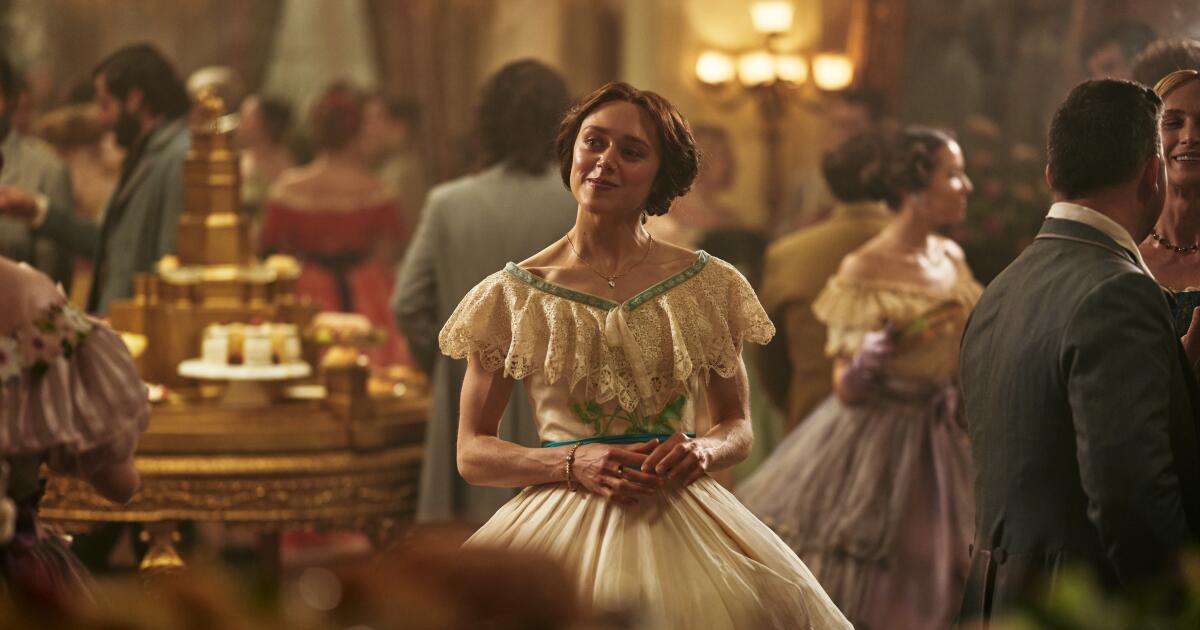
It’s July 4th, 1860, just months before the Civil War begins. Elizabeth and her mother, Eliza, are hosting a party at their mansion in Richmond, Virginia. Among the guests are notable figures like Swedish author Fredrika Bremer and Congressman Sherrard Clemens, as well as Virginia Governor Henry Wise and his troublesome son. Through conversations, the guests explain the issues leading to the war. Meanwhile, a runaway slave arrives at the house, seeking refuge and help, having heard it’s a safe haven. Elizabeth and Eliza are secretly involved with the Underground Railroad, working against slavery and secession while carefully hiding their activities from those around them.
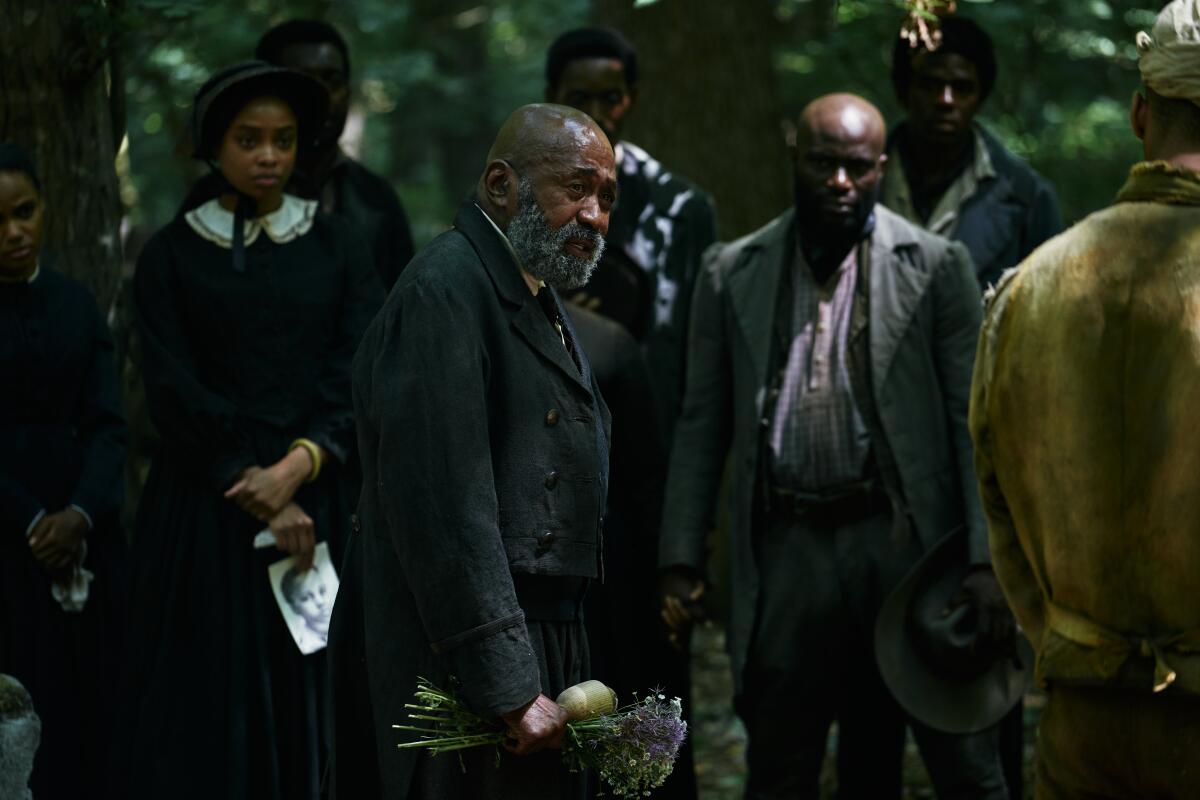
Among Elizabeth Van Lew’s household staff – who were secretly freed after her father’s death – are Isham, the head porter, wonderfully portrayed by Ben Vereen, and Mary Jane (Amethyst Davis). Mary Jane is a smart and driven young woman recently returned from Liberia, a place she found unsuitable, describing it as a way to remove free Black people from America. The series gives her significant influence and makes her a key member of the spy network. Despite the power imbalance inherent in the pre- and during-Civil War South – where some were enslaved and others were owners – the group functions as much like a family as possible.
Elizabeth’s spy network includes Thomas McNiven, a Scottish baker played by Christopher McDonald, and Clara Parish (Hannah James), a captivating prostitute who longs for a life reminiscent of the Brontë sisters. In a surprising turn, Clara gets a full musical performance in a Western-style saloon – a nod to Marlene Dietrich in “Destry Rides Again.” This saloon was actually a permanent set at Castel Film Studios in Romania, where the show was filmed, and the studio’s Western street also appears briefly, despite not quite fitting the setting.
Elizabeth’s brother, John (played by Ewan Miller), means well, but his wife, Laurette (Catherine Hannay), is selfish and discontent. She’s constantly looking for something better and is furious that John didn’t exploit others to build their home. She’s similar to Scarlett O’Hara, but without the wit or charisma.
The Confederate leadership includes President Jefferson Davis (played by Sam Trammell), whom spy Mary Jane will infiltrate while he’s at his home, known as the Gray House; Judah P. Benjamin (Rob Morrow), the Secretary of War (and later State), who is attracted to Clara and discusses property rights with her during private moments; and a minor character, John Wilkes Booth (Charles Craddock), who appears sporadically, hinting at Lincoln’s eventual assassination (though Lincoln only makes a brief appearance). Beneath them in terms of power, but more involved in the immediate events, are the brutal Sheriff Stokely Reeves (Paul Anderson) and slave hunter Bully Lumpkin (Robert Knepper). While violence was common in the racially prejudiced South, the show relies too heavily on stereotypes and clichés, even if it aims to be historically informative.
Hollywood rarely creates compelling female heroes, so Elizabeth finds herself attracting multiple suitors. Unlike the superficial women surrounding her sister-in-law, Elizabeth is admired for her intelligence, spirit, and engaging conversation. These admirers include Hamton Arsenault (Colin Morgan), a charming man from New Orleans who arrives with an alligator as a dramatic entrance, Captain William Lounsbury (Colin O’Donoghue), a Union officer escaping a Confederate prison who feels an instant connection with Elizabeth, and Erasmus Ross (Joshua McGuire), a quiet employee at the Van Lew’s store who will later work at a Union prison – a position the Van Lews can use to their advantage.
While “The Gray House” has good intentions, it suffers from being overly predictable and far too long. At eight episodes, many exceeding an hour, the show unnecessarily stretches out scenes and gets bogged down in unimportant side stories with characters who don’t add anything meaningful to the plot. For example, a duel is included simply because it happened in real life, and it allows for a visually interesting, though ultimately pointless, horseback gunfight, even though these characters aren’t central to the overall narrative.
While Parker’s performance is solid, his delivery occasionally feels overly Southern. Davis and Head deliver strong performances that help overcome some of the show’s predictable and occasionally cheesy dialogue. (Leslie Greif and Darrell Fetty, the writers behind “Hatfields & McCoys,” penned the miniseries, with a minor contribution from John Sayles.) Keith David, as activist Henry H. Garnet, delivers a powerful seven-minute speech about education with the intensity of a Shakespearean actor, then confronts a dangerous sheriff with the confidence of a blaxploitation hero. It’s a standout moment, and the one instance where the extended runtime truly works.
Directed by Roland Joffé, who four decades ago was Oscar-nominated for “The Killing Fields” and “The Mission,” the production is a mixed bag; much care has been lavished on the costumes; the crowd scenes are well populated; printed material is done really well. (It matters.) Battle scenes — including Bull Run, where picnicking tourists are accurately shown in attendance — are convincingly rendered. But Romania, whether on or off the studio lot, only occasionally musters a decent impression of 19th century Virginia, reminding you, as “The Gray House” often does, that this is only a movie.
2026-02-26 23:01