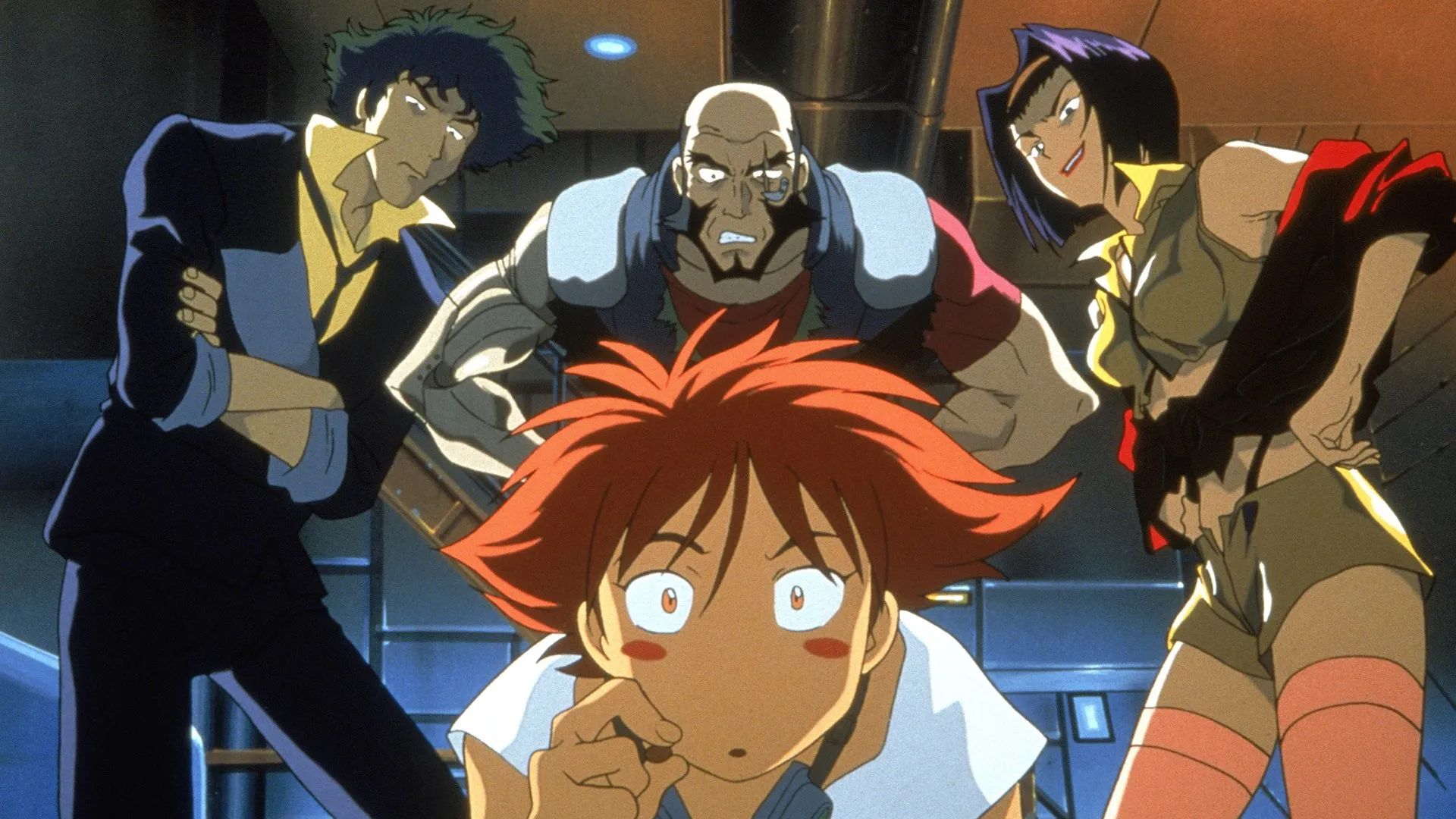
Shinichiro Watanabe’s Cowboy Bebop is a true television masterpiece. It’s not just a great anime; the show has fundamentally raised the bar for all of TV. Many anime fans point to Cowboy Bebop as the perfect starting point for those new to the medium, captivating viewers with its emotional depth and exploration of the human condition, no matter their prior experience.
While nothing quite compares to Cowboy Bebop – it’s incredibly rewatchable because of its engaging characters, exciting stories, and amazing music – a few anime series stand the test of time even better. These shows, whether they cleverly break down anime tropes or perfectly exemplify great storytelling, go beyond typical genre and storytelling conventions, offering a lasting appeal that matches, and sometimes exceeds, Cowboy Bebop.
Kill La Kill Proved Just How Far Anime Can Go Beyond Its Limits
Both Kill la Kill and Gurren Lagann playfully parody different anime styles while also being incredibly enjoyable to watch again and again. However, Kill la Kill’s raw emotional power and over-the-top energy just slightly edge out Gurren Lagann’s epic story of brotherhood and grand spectacle.
Ryuko Matoi stands out as a fantastic anime hero and one of the few female leads in the shonen genre. Kill la Kill quickly builds momentum, constantly raising the stakes throughout its 24 episodes (plus one OVA). The series brilliantly blends satire of various anime styles – shonen, mecha, shojo, slice-of-life, and magical girl – with exciting action, creating a story that feels both incredibly relatable and wildly exaggerated.
The anime’s main idea – that clothing grants power – can be seen as a symbol of how systems control people and demand they all fit in. This makes Ryuko’s fight against the strict Honnouji Academy a powerful act of independence, much like the rebellions we see in series like One Piece and Code Geass. Even when the plot gets wild, the show’s underlying themes stay true to life and consistently reinforce its central message.
Studio Trigger’s animation style is known for its over-the-top action, bold colors, and intentionally rough edges. They use quick cuts and visible linework to create a raw, energetic feel. While the music adds to the excitement, it’s the combination of visuals and sound that truly stands out. Some viewers find the sudden shifts in tone in shows like Kill la Kill jarring, but these changes are actually a key part of the show’s unique identity and its refusal to conform to expectations – a style that remains unmatched.
Neon Genesis Evangelion Breaks Anime Down to the Human Condition
Watching Evangelion can be a really challenging experience, but many people find themselves watching it again and again. It’s emotionally intense to see a child struggle with such difficult issues, and while it’s not easy to watch, the payoff is huge. Though it starts as a typical mecha anime with giant robots, Evangelion quickly breaks the mold, focusing less on action and more on the characters’ inner turmoil.
The story is rich with symbolism, drawing heavily on spiritual and religious ideas. This adds a sense of myth and mystery to the science fiction world, making it more thought-provoking and open to interpretation. This combination has sparked countless discussions among fans and scholars over the years.
Shinji Ikari isn’t your typical anime hero. He’s deeply flawed, struggling with intense self-doubt, emotional vulnerability, and a fear of being rejected. The series focuses heavily on exploring his past traumas and how he deals with them, a level of psychological depth that was unusual for anime in 1995 and is still relatively rare today.
While the series focuses heavily on the characters’ inner thoughts and feelings, often at the expense of a straightforward plot, it’s crucial to watch The End of Evangelion. Though it’s also quite abstract, the film provides a different viewpoint that brings the story’s scattered ideas together into a clearer resolution. Even if Episodes 25 and 26 are confusing, the film offers valuable context.
Fullmetal Alchemist: Brotherhood Perfected Long-Form Anime Storytelling
I think Fullmetal Alchemist: Brotherhood is a true masterpiece, and it’s easy to see why. What really stands out is how well the story holds together, the complex themes it explores, and how consistently everything works. It’s based on the original manga, and it centers around the Elric brothers, Edward and Alphonse, and their journey to fix their bodies after a failed attempt at alchemy.
The story doesn’t shy away from the serious repercussions of Ed and Al’s actions; they face both physical and emotional hardship as a result of attempting human transmutation, and the narrative consistently emphasizes the moral implications of their choices. Beyond this, Fullmetal Alchemist: Brotherhood delves into even more intricate themes, exploring the complexities of war, genocide, morality, power dynamics, and what it means to be human.
This anime explores the concept of Equivalent Exchange – the idea that something lost can truly be replaced with something of equal value. However, Fullmetal Alchemist: Brotherhood consistently questions this notion. The series follows the Elric brothers as they grow, and features a rich cast of supporting characters who are much more complex than typical anime tropes, each playing a vital role in the story.
I remember watching the 2009 version of Fullmetal Alchemist, and while it wasn’t bad, it just didn’t quite capture the magic of what came after. The original had 51 episodes, but the newer one, with 64, is the one I always come back to – honestly, I’d even say it’s more rewatchable than Cowboy Bebop, and that show is famously well-paced with its 26 episodes. What really sets it apart is the way it tells a story, tackling big ideas with relatable characters, and blending serious drama with genuinely funny moments. It’s just a fantastic piece of fiction, and stands out even within the anime world.
Read More
- Last Furry: Survival redeem codes and how to use them (April 2026)
- Gear Defenders redeem codes and how to use them (April 2026)
- Clash Royale Season 83 May 2026 Update and Balance Changes
- Neverness to Everness Hotori Build Guide: Kit, Best Arcs, Console, Teams and more
- Brawl Stars Damian Guide: Attacks, Star Power, Gadgets, Hypercharge, Gears and more
- Clash of Clans May 2026: List of Weekly Events, Challenges, and Rewards
- Clash of Clans “Clash vs Skeleton” Event for May 2026: Details, How to Progress, Rewards and more
- Total Football free codes and how to redeem them (March 2026)
- Brawl Stars x My Hero Academia Skins: All Cosmetics And How to Unlock Them
- Neverness to Everness City Tycoon Guide: How to Unlock, Level Up, Rewards, and Benefits
2026-05-04 19:38