What’s fascinating about anime is how its style evolves every ten years. The 1960s laid the groundwork, and the 70s and 80s really boosted certain genres and popular series. However, many fans consider the 1990s the most important decade for anime, as its shows and concepts continue to be popular and influential even now.
The 1990s saw hugely popular anime like Dragon Ball Z, Sailor Moon, Slayers, and Trigun attract a lot of new fans. While these shows perfectly capture the feeling of the decade, they sometimes suffer from common issues found in anime from that era. However, a few exceptional series stand out as consistently high-quality and truly showcase the best of ‘90s anime.
Revolutionary Girl Utena is the Shojo Magical Girl Equivalent of Evangelion
I recently watched a show that really mixed things up – it took the familiar style of magical girl anime and blended it with the exciting action you’d find in many Japanese animated series. What stood out most was how it flipped traditional expectations; instead of a princess being rescued, the main character, Utena, actually becomes the prince, determined to win the hand of the Rose Bride through some incredible sword battles. It was a really refreshing take on the genre.
Watching Utena defeat boastful opponents and grow more self-assured with each fight is incredibly rewarding. Revolutionary Girl Utena thoughtfully examines themes of identity, trauma, and love, all wrapped in a visually stunning and surreal presentation. The show has a dreamlike feel, and its complex, non-linear narrative makes it even more impactful on subsequent viewings.
Cowboy Bebop Is Infinitely-Bingeable Space Western Bliss
Cowboy Bebop is a highly acclaimed anime from the 1990s, well-known even among people who don’t typically watch anime. Created by Shinichiro Watanabe, the series centers around a group of resourceful bounty hunters constantly searching for their next big payday. While many episodes involve the crew traveling to different planets in pursuit of leads, Cowboy Bebop expertly blends various genres, including westerns, film noir, horror, and even psychedelic experiences.
What truly makes Cowboy Bebop special is its crew – they’re just a joy to spend time with. While they might seem like familiar types at first, each character is surprisingly complex and deals with a troubled history. The show’s stories are fantastic, and the two-part ending is a masterpiece that has cemented its place as a timeless classic.
Mobile Suit Gundam: The 08th MS Team Delivers Grounded Combat With A Hubristic Human Factor
By the 1990s, the Mobile Suit Gundam series was thriving and becoming increasingly experimental with shows like Mobile Fighter G Gundam, Gundam Wing, and After War Gundam X. However, these entries weren’t perfect and each came with its own set of issues.
Released between 1996 and 1999, Mobile Suit Gundam: The 08th MS Team was a refreshing take on the classic series. This 11-episode OVA offers a more realistic and down-to-earth story set on Earth during the One Year War from Mobile Suit Gundam.
Earlier Gundam animated specials focused on the experiences of ordinary soldiers, rather than the powerful Newtypes who typically pilot the Gundams. The 08th MS Team feels similar to the Patlabor series, portraying mobile suits as everyday military equipment. The series features characters you can easily connect with and a heartbreaking love story, offering a more personal and emotional side to the larger Gundam war. It also reunites many talented creators who have worked on the Gundam franchise before, and they deliver some of their best work here.
Yu Yu Hakusho Perfects Battle Shonen Staples & The Art Of A Tournament Arc
Yu Yu Hakusho is a compelling story about Yusuke Urameshi, a troubled teen who turns his life around after death by becoming a spirit detective. The anime starts as a series of supernatural mysteries, but eventually focuses more on action and battles. Many similar anime from the 1990s tend to drag on with pointless episodes, but with 112 episodes, Yu Yu Hakusho manages to stay focused and doesn’t feel unnecessarily long.
The series focuses on its best storylines and a smaller, well-developed cast of characters who each have opportunities to prove themselves. Yu Yu Hakusho finds a great pace, especially during the Dark Tournament, which is widely considered a classic anime arc. It’s a fantastic example of classic shonen done well, with a charming ’90s style that still holds up today. In fact, it’s influenced a lot of the battle anime we see now.
Serial Experiments Lain Is A Prescient Look Into Parasocial Relationships & Digital Martyrdom
Released in 1998, when the internet was still new, Serial Experiments Lain is a remarkably insightful series. The story centers on Lain Iwakura, who becomes caught up in a strange mystery after a deceased classmate starts contacting her through “The Wired,” a virtual world similar to the internet. As Lain investigates, she becomes deeply involved in unraveling the secrets of The Wired and its potential connection to a higher power.
Serial Experiments Lain starts as a gripping, dark cyberpunk mystery, but quickly becomes a deeply surreal and thought-provoking exploration of technology and its impact on our lives. It expertly examines themes like digital identities, online relationships, and how technology changes society – issues that many anime still struggle with today. The series bravely confronts the loneliness and paranoia that can be amplified by the internet. Remarkably, the ideas presented in Serial Experiments Lain have become even more relevant and common in our modern world.
Now and Then, Here and There is a Dark Subversion of Isekai Tropes
Now and Then, Here and There is a significant anime from the 1990s that cleverly twists typical adventure stories and fantasy worlds, all set within a bleak and oppressive future. Though it’s a very ambitious show, it hasn’t received much mainstream attention and has become something of a hidden gem for fans of older anime. The story follows Shu, a compassionate boy who is transported to a fantasy world when he tries to help a girl named Lala-Ru. However, his act of kindness lands him in a frightening, ruined land controlled by a cruel leader who exploits children for his own destructive purposes.
Watching Shu adjust to life in this horrifying prison world is deeply unsettling, especially as he discovers just how terrible it truly is. While Lala-Ru might be the key to saving this desolate planet, it’s uncertain whether Shu will live long enough to find her. Thankfully, the anime Now and Then, Here and There delivers its impactful message in just 13 episodes, without ever feeling excessive. This is a serious and intense anime, not suitable for everyone, but it’s an incredibly rewarding experience.
Neon Genesis Evangelion Delivers An Existential Attack On The Soul In A Mecha Package
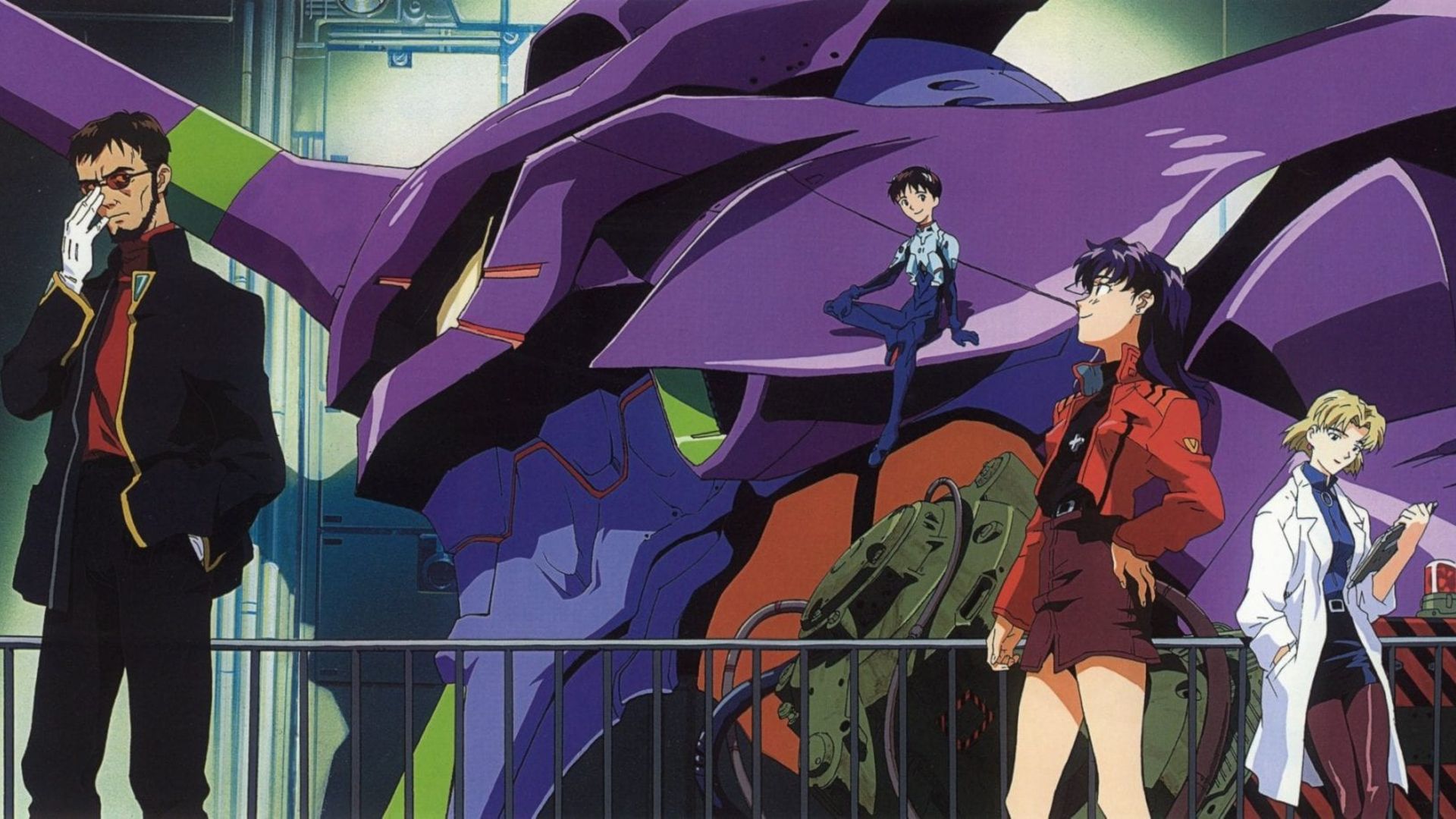
Initially, Neon Genesis Evangelion seems like a typical giant robot show – a reluctant teen is tasked with piloting a massive machine to protect the world. But creator Hideaki Anno quickly subverts that expectation, using the story as a powerful exploration of identity, depression, and the feeling of being utterly alone. While the first part of Evangelion features exciting robot battles against bizarre enemies, a sense of unease and darkness steadily builds throughout the series.
Wow, Neon Genesis Evangelion really hit me hard! The way it just unleashes so much raw emotion – anger, sadness, and just pure aggression – was super controversial when it first came out in the ’90s, and honestly, it still feels incredibly powerful. That bold ending, and especially what happens in The End of Evangelion movie, is what cemented its place as an all-time classic, in my opinion. So many shows have tried to capture that same overwhelming sense of dread and explore similar themes, but nothing has ever quite matched it.
Found an error? Send it so it can be corrected.
Read More
- Last Furry: Survival redeem codes and how to use them (April 2026)
- Gear Defenders redeem codes and how to use them (April 2026)
- Honor of Kings April 2026 Free Skins Event: How to Get Legend and Rare Skins for Free
- Clash Royale Season 83 May 2026 Update and Balance Changes
- Gold Rate Forecast
- Brawl Stars April 2026 Brawl Talk: Three New Brawlers, Adidas Collab, Game Modes, Bling Rework, Skins, Buffies, and more
- Brawl Stars Starr Patrol Skins: All Cosmetics & How to Unlock Them
- Silver Rate Forecast
- Laura Henshaw issues blunt clap back after she is slammed for breastfeeding newborn son on camera
- Total Football free codes and how to redeem them (March 2026)
2026-05-02 19:45