
Michael Tilson Thomas, the celebrated conductor known as MTT, has passed away at his home in San Francisco. A Grammy winner who began leading major orchestras in the US and Europe as a teenager, he was a dynamic and sometimes rebellious figure in the classical music world.
The renowned conductor, a former child prodigy born in Los Angeles, passed away on Wednesday at the age of 81 after a battle with glioblastoma, according to the New York Times.
He had a brain tumor removed in 2021 and was set to undergo months of therapy.
A celebrated young talent, he spent many years as music director of the San Francisco Symphony. He later became conductor laureate of the London Symphony Orchestra, frequently leading them on tours throughout Europe, the US, and Japan, and performing at the Salzburg Festival. In the 1980s, he also occasionally conducted the Los Angeles Philharmonic.
A celebrated pianist and 2019 Kennedy Center honoree, he was a student of the legendary Leonard Bernstein. He was known for his lively and energetic music, blending different styles, and his powerful performances of pieces by Gustav Mahler. He also excelled at playing Russian music, as well as the works of George Gershwin and his friend Aaron Copland. One moment he might conduct Beethoven, and the next, according to a review in The Times, he’d be dancing with the energy of James Brown.
Michael Tilson Thomas often encouraged both his orchestras and listeners to fully immerse themselves in the music, and his skill and engaging personality earned him international recognition and acclaim.
Tilson Thomas was known for being a bit temperamental, and even had moments of dramatic behavior. Once, he famously walked off stage at the Hollywood Bowl to protest a police helicopter, and the audience actually cheered! He also had quirky ways of dealing with disruptions – stories say he threw lozenges to audience members who were coughing during a Chicago Symphony Orchestra performance. He was also famously protective of the music, even asking a mother to relocate her fidgety child during a New World Symphony Orchestra concert, worried it would distract from a quiet, delicate section.
A third-generation artist, he trained in piano, conducting, and composition at USC, even working with renowned composers like Copland and Stravinsky. He rapidly gained recognition as a prodigy. He playfully suggested he might be one of the last musicians trained in the style of the old Russian Czars, a claim supported by his USC instructors, which included Jascha Heifetz and Gregor Piatigorsky.
Entertainment & Arts
Michael Tilson Thomas felt disheartened when he left Los Angeles fifteen years ago. Now, the conductor is returning to explore his roots in a variety of ways.
Michael Tilson Thomas, a celebrated composer and winner of 11 Grammy Awards, continued to write music throughout his life. Notable pieces include “From the Diary of Anne Frank,” which premiered in 1991 with narration by Audrey Hepburn as a commission for UNICEF, and “Shówa/Shoáh,” a 1995 work inspired by the Peace Bell and created for the Pacific Music Festival Orchestra to mark the 50th anniversary of the Hiroshima bombing.
After spending two years with the Los Angeles Philharmonic, he helped establish and led the New World Symphony in Miami. This program trains talented young musicians from diverse backgrounds to become leaders in the classical music world.
In 1995, he became the eleventh music director of the San Francisco Symphony, leading the orchestra for an exceptional 25 years. During his tenure, the symphony flourished, gaining international acclaim. He also established a strong American following and was celebrated by the orchestra for his adaptability, willingness to try new things, and ability to connect with modern audiences.
In 2019, Times critic Mark Swed described how, upon becoming music director of the San Francisco Symphony just before his 50th birthday, he was seen as a fresh leader for a changing time. The orchestra had begun to feel disconnected from both modern audiences and the lively, unique culture of San Francisco.
In a 2012 interview with The Guardian, he said that holding the position for so long was a major source of pride, especially before Esa-Pekka Salonen took over.
It gives you the chance to solidify your own ideas, connect with people, and inspire them to be creative and take risks. When everything clicks, the collaboration becomes seamless, and it feels like the music is creating itself – everyone blends together so perfectly you can’t tell who’s leading the way.
.”
Entertainment & Arts
I remember when Michael Tilson Thomas first burst onto the music scene back in the ’60s – everyone immediately recognized his incredible talent. He was introducing audiences to composers like Stravinsky and Boulez at these Monday evening concerts, and it felt like only a matter of time before he’d lead a truly top-tier orchestra. People were expecting big things, and honestly, I was one of them!
Michael Tilson Thomas was known for performing both classic pieces and music by modern American composers. He famously revamped the orchestra’s yearly Beethoven festival, turning it into an ‘American Mavericks Festival’ that highlighted the work of composers who influenced him, like Bernstein and Copland. He launched the first festival with a surprising and popular event: a performance by remaining members of the Grateful Dead.
Shortly after forming, Michael Tilson Thomas and his orchestra won a Grammy Award for their first recording – a performance of Prokofiev’s “Romeo and Juliet.”
Orchestra pianist Robin Sutherland described it as a fortunate coincidence: a Californian musician finding a Californian band exactly when both he and they needed each other.
After finishing his term at the end of the 2019-20 season, he became the organization’s music director laureate. However, the COVID-19 pandemic unfortunately forced the cancellation of planned celebrations honoring his achievements. Despite this quieter departure, the Chronicle noted that his time with the orchestra was considered an exceptionally successful and long-lasting partnership – one of the best in American symphonic history.
He described his happiest moments as when the music takes on a life of its own, feeling spontaneous and almost magical, rather than directed by any single person. He explained to the newspaper that it’s when the source of the music feels unclear, as if it’s simply happening naturally.
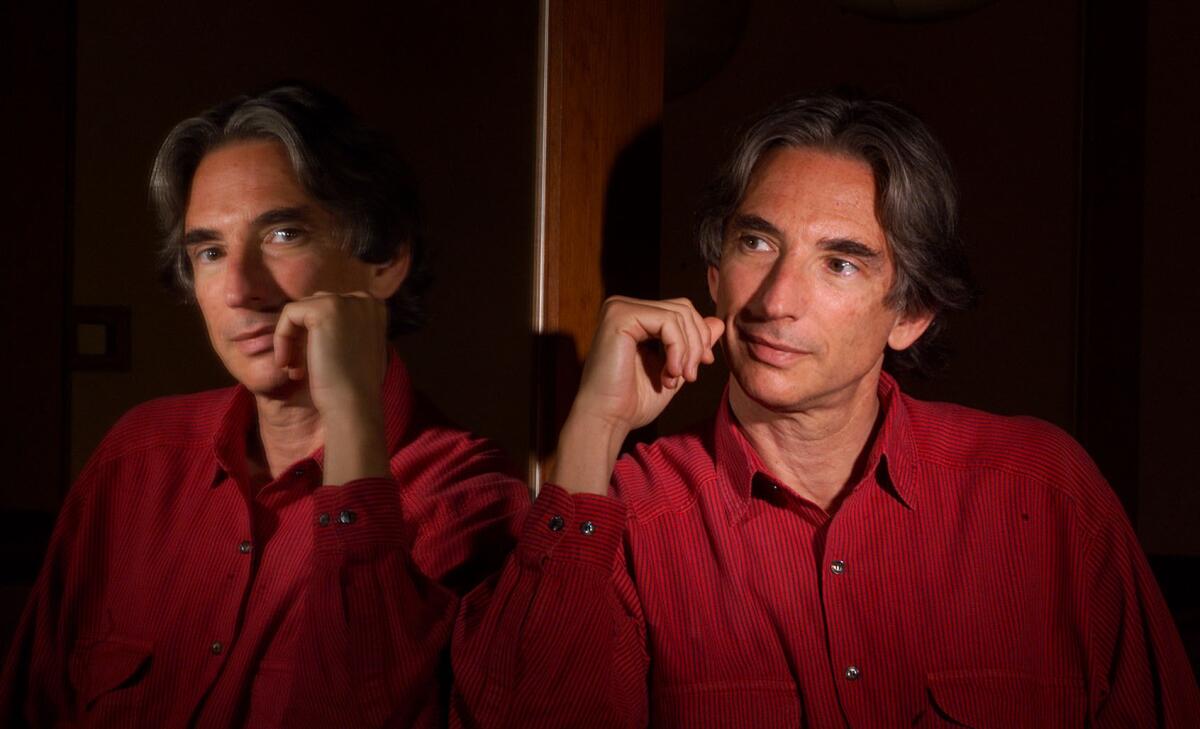
Michael Tilson Thomas believed that to truly understand him, you needed to know his remarkable family history. His ancestors came from Ukraine, where the men in his family – the Thomashefskys – were famous cantors, skilled at performing beautiful, religious songs. His grandparents, Boris and Bessie Thomashefsky, helped establish the Yiddish Theater in America. Although his grandfather passed away before he was born, his grandmother lived close by and was a frequent visitor.
Ted Thomas’s father, Theodor Thomashefsky, started his career with a New York theater company, but felt overwhelmed by the family’s theatrical tradition. He changed his name to Ted Thomas and moved to the West Coast, eventually working on Roy Rogers’ cowboy movies. He became captivated by the Mojave Desert, where these serials were filmed. Ted’s mother, Roberta Thomas, worked as a research chief at Columbia Pictures and wished for her son to pursue a career outside of performing.
He explained to The Times in 2000 that he often reflected on what preoccupied those he’d written about – their goals, and the personal struggles that drove them.
Michael Tilson Thomas was born on December 21, 1944, and raised in the San Fernando Valley. He began playing piano at age 3 and could play tunes by ear just two years later. In school, he was a bit of a loner and preferred spending time with music. At 10, he began studying with Dorothy Bishop at USC Prep, where he learned how deeply connected a musician could be to their instrument. He wore his grandmother’s old tuxedo for the first time at age 12, and at 13, hearing Mahler’s music had a profound impact on him.
By the age of 19, he became the music director of the Young Musicians Foundation Debut Orchestra in Los Angeles, and quickly began conducting the Los Angeles Philharmonic for youth performances. While studying at USC, he accompanied and conducted master classes led by renowned musicians Piatigorsky and Heifetz. He also collaborated with legendary composers like Stravinsky, Boulez, Stockhausen, and Copland, helping them debut new pieces at Los Angeles’ Monday Evening Concerts, as noted on his website.

In 1968, he met Leonard Bernstein, the composer of “West Side Story” and widely considered the most accomplished American orchestral conductor of the 20th century.
Bernstein observed that Tilson Thomas reminded him of himself when he was younger, but with a broader knowledge base. They first collaborated in New York during the 1970s, with Tilson Thomas eventually taking over Bernstein’s recordings of the Young People’s Concerts. However, some people considered Tilson Thomas too bold and self-assured to conduct an orchestra, and he also became associated with the vibrant disco scene in New York City around that time.
He quickly rose to prominence as a conductor, becoming assistant and then principal guest conductor of the Boston Symphony Orchestra. This sparked comparisons to Leonard Bernstein. His New York debut at Lincoln Center was a sensation; he stepped in to conduct mid-concert when William Steinberg became ill.
As The Times pointed out, Leonard Salinger’s rise to fame mirrored that of Leonard Bernstein’s with the New York Philharmonic twenty-five years earlier. Both were Jewish, of Russian heritage, talented pianists, and openly expressive performers. They were also both gay, though this wasn’t something they publicly discussed at the time.
Leonard Bernstein strongly recommended Michael Tilson Thomas, then 24, for the top conducting position with the Boston Symphony Orchestra. However, the orchestra members didn’t think he was experienced enough and threatened to protest his appointment. As a result, Tilson Thomas began his career as a musical director with the Buffalo Philharmonic in 1971, eventually returning to Los Angeles and then San Francisco.
In 1985, the Los Angeles Philharmonic ended its working relationship with him as principal guest conductor and director of its summer training program due to disagreements with management.
Michael Tilson Thomas explained that his core goals stayed consistent, no matter where he was conducting – whether it was live on stage, recording in a studio, appearing on television, or working online.
In a 2012 interview with The Guardian, he explained that the true power of music isn’t the music itself, but what stays with you after it ends. He believed the lasting impact – a tune you remember, a feeling you connect with, or a new understanding of someone or somewhere – is what makes classical music truly special. It’s how these moments build up over a lifetime that really matters.
Tilson Thomas is survived by his husband.
Read More
- Last Furry: Survival redeem codes and how to use them (April 2026)
- Gear Defenders redeem codes and how to use them (April 2026)
- All 6 Viltrumite Villains In Invincible Season 4
- Brawl Stars April 2026 Brawl Talk: Three New Brawlers, Adidas Collab, Game Modes, Bling Rework, Skins, Buffies, and more
- The Mummy 2026 Ending Explained: What Really Happened To Katie
- Gold Rate Forecast
- The Division Resurgence Best Weapon Guide: Tier List, Gear Breakdown, and Farming Guide
- Annulus redeem codes and how to use them (April 2026)
- Razer’s Newest Hammerhead V3 HyperSpeed Wireless Earbuds Elevate Gaming
- Clash of Clans: All the Ranked Mode changes coming this April 2026 explained
2026-04-23 17:32