Some people might think “Costume Art” is a straightforward title for the Met’s upcoming costume exhibition, and like their “Fashion Is Art” gala, it gets right to the point: the exhibit will explore how clothing and art history are closely connected.
In February, the curator of the upcoming exhibition, Andrew Bolton, explained his vision: to highlight how clothing relates to the human body itself. He wants to explore fashion not just as something to look at, but as an art form experienced through the body. Bolton noted that the exhibit will emphasize the textures and physical connection we have with our clothes, rather than just their appearance. The 2026 exhibition will also celebrate the opening of the new Condé M. Nast Galleries, a 12,000-square-foot space dedicated to future Costume Institute shows.


Instead of focusing on how clothes look, Costume Art emphasizes what they’re made of and how deeply connected clothing is to our bodies and the way we experience the world. — Andrew Bolton
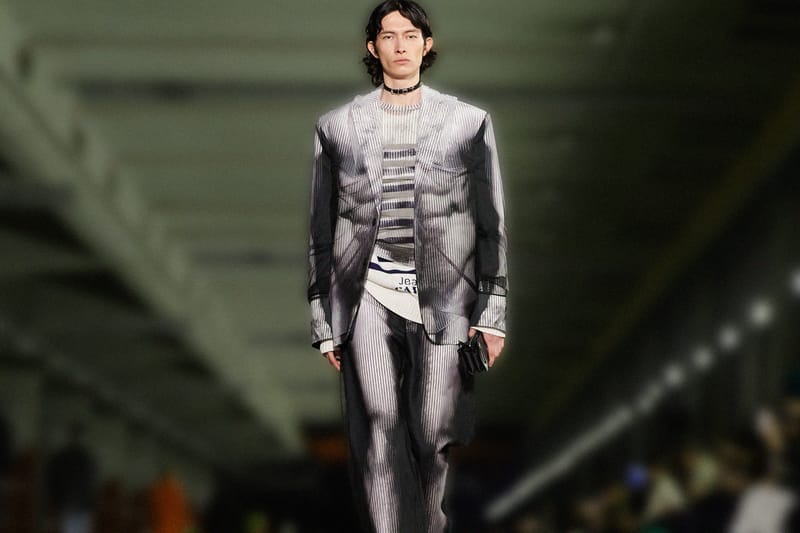
This year’s fashion trends are making a bold statement, and the Y/Project suit, frequently previewed, is a prime example. Created for the Fall/Winter 2022 season by Glenn Martens (then creative director) and Jean Paul Gaultier, the suit features a striking optical illusion: a classic men’s suit design overlaid with a halftone image of a nude figure.
Throughout the exhibition, a sheer, body-shaped suit will be displayed alongside a marble statue of Diadoumenos from the 1st or 2nd century CE. This pairing highlights how both pieces represent the ideal human form in classical art. The other garments on display will be grouped into themes like the nude form, the effects of aging, and anatomical studies.
The suit is striking in the preview images because of its honest portrayal of the male form. Unlike the detailed dresses by Dilara Findikoglu and Rei Kawakubo, and other designs that play with shape and emphasize feminine figures, this Y/Project suit focuses on creating an optical illusion and highlighting a strong, masculine build.

At first glance, the Y/Project suit might seem to go against the exhibit’s focus on fashion as a visual experience, especially with its flat, graphic designs. However, this focus on visuals is actually central to the ‘trompe l’oeil’ technique – which literally means ‘to fool the eye’ – and emphasizes visual deception.
The designs don’t ignore the human form; instead, they draw focus back to the body itself, effectively blending artistic depictions of the body with fashion as a physical art. As the curator explains, the exhibition suggests that clothes and bodies are inseparable, and this idea is presented almost like a visual metaphor: the body seems to break free from the clothing, then reappear on its surface.
This suit appeared shortly before Glenn Martens left Y/Project and the brand shut down. It was part of the Y/Project Fall/Winter 2022 collection, which featured designs inspired by Jean Paul Gaultier’s iconic 1990s optical illusion prints. Specifically, the collaboration referenced Gaultier’s Spring/Summer 1996 “Pin Up Boys” collection, known for its halftone-printed muscular torsos on shirts—a look famously worn by Robin Williams.


Their 2022 performance went even further, showing completely nude bodies, including genitalia, for both men and women. Then, Duran Lantink’s first collection for Jean Paul Gaultier pushed boundaries even more by featuring a full-body nude photograph as a print on the clothing.
Jean Paul Gaultier, and designers following in his footsteps, use clothing as a way to challenge expectations and disrupt norms, much like the Surrealist artists of the 20th century. Artists like Méret Oppenheim, who famously covered a teacup in fur, and Salvador Dalí, known for his melting clocks, played with perceptions of reality by transforming familiar objects. These artists essentially paved the way for Surrealist ideas to influence fashion. However, Elsa Schiaparelli was already experimenting with these concepts, creating illusionary designs like her Bow Knot sweater, even before many of those artworks were finished.

While Jean Paul Gaultier popularized the modern take on realistic, illusionary designs, he wasn’t the first to use this technique. Elsa Schiaparelli began creating dresses with these illusionary details, like her famous Bow Knot dress, as early as 1927. Schiaparelli’s connection to the Surrealist art movement was cemented when she and Salvador Dalí created the Lobster Dress in 1937. Hermès also explored this idea in the 1950s, but with a more understated style, using brushstroke patterns to suggest the shapes of pockets, collars, and buttons on their dresses.
Gaultier’s work evolved to focus on nudity itself, rather than simply using clothing to create the illusion of exposure. He began designing garments that seemed to disappear, revealing the body beneath. Interestingly, the bodies he and later Martens at Y/Project showcased weren’t just any bodies – they were highly sculpted, emphasizing muscular and hourglass figures, which reflect specific beauty standards. This approach, especially when seen alongside classical sculptures like the Diadoumenos, echoes the ancient Greeks’ admiration for the nude human form, particularly the male physique, and how they celebrated it in their art.

Gaultier and other contemporary designers often use irony in their work. It’s likely they’re less focused on promoting a specific body ideal and more interested in challenging those ideals completely. For example, Duran Lantink’s designs for Gaultier’s Spring/Summer 2026 collection featured realistic-looking nude prints that weren’t conventionally attractive. Instead of showcasing muscular, hairless bodies, Lantink presented leaner figures with body hair, blurring the lines between male and female models. Considering the Y/Project suit within this evolving context, it becomes part of a larger conversation about how bodies are depicted in art and fashion.
As a longtime art fan, it’s always fascinating to think about how clothing has been around way longer than what we typically consider ‘art.’ It really makes sense that once people had their basic needs covered – food, shelter, and clothes – they started to explore creative expression. This year’s exhibition, focusing on Western art through the ages, really highlights how what we wear – or don’t wear – can tell you so much about a person’s status, and even what was considered appropriate for different genders back then. It’s amazing how much meaning can be packed into something as simple as clothing, or the lack of it!
Nudity is usually considered inappropriate in public, but it’s often celebrated as art within museums, displayed as sculptures or realistic paintings. The recent collaboration between Jean Paul Gaultier and Y/Project, and similar fashion trends, flipped this idea around by bringing exposed skin out of the art world and into everyday fashion.

It encourages everyone involved – both those attending and watching – to look beyond just how clothes appear, and to connect with the true, dynamic heart of fashion as it’s worn and experienced on the body.
Similar to how last year’s celebration of Black Dandyism highlighted men’s fashion, the 2026 Met Gala is predicted to influence style trends for the coming year. This year’s exhibition is different from previous ones because it doesn’t focus on a particular culture or aesthetic. Instead, it encourages people to look beyond how clothes appear and connect with the deeper meaning of fashion – how it’s experienced and embodied. The collaboration between Glenn Martens and Jean Paul Gaultier perfectly embodies this idea, both in the designs themselves and what they represent.
For a long time, fashion has been considered separate from art, often seen as less important and more focused on sales than painting or sculpture. But with the opening of the new Condé M. Nast Galleries – a space specifically for Costume Institute exhibitions – this show aims to truly establish the idea that “Fashion Is Art,” and not just for the upcoming gala.
Read More
- First Look at Bad Bunny’s Exclusive Zara x Benito Antonio Collection
- Total Football free codes and how to redeem them (March 2026)
- PUBG Mobile x Harley-Davidson Partnership to introduce new Motor Cruise event with rewards and Skins
- Farming Simulator 26 arrives May 19, 2026 with immersive farming and new challenges on mobile and Switch
- Honor of Kings x Attack on Titan Collab Skins: All Skins, Price, and Availability
- Clash of Clans May 2026: List of Weekly Events, Challenges, and Rewards
- Honor of Kings April 2026 Free Skins Event: How to Get Legend and Rare Skins for Free
- ALLfiring Companion Tier List
- All Mobile Games (Android and iOS) releasing in May 2026
- Clash of Clans “Clash vs Skeleton” Event for May 2026: Details, How to Progress, Rewards and more
2026-05-01 17:26