Finance
What to know:
- Bubblemaps’ analysts, armed with a magnifying glass and perhaps a cup of tea, discovered a suspicious cluster of 80 bets on U.S. military actions against Iran on Polymarket so precise, one might think the bettors had been eavesdropping on generals’ breakfast conversations.
- Bubblemaps’ CEO, Mr. Vaiman, frets that adversaries might mine these markets for secrets, turning them into a playground for espionage and risking lives with the subtlety of a rogue elephant at a garden party.
- Lawmakers, ever the buzzkills, push the DEATH BETS Act to ban war-related contracts, while Polymarket boasts new Chainalysis-backed oversight, though it denies tolerating insider trading with all the sincerity of a fox guarding a henhouse.
An in-depth investigation by Bubblemaps’ analysts, who clearly enjoy a good puzzle, revealed that bets on U.S. strikes on Iran were so accurate, one might suspect the bettors had access to a time machine-or perhaps a particularly chatty general with a penchant for social media.
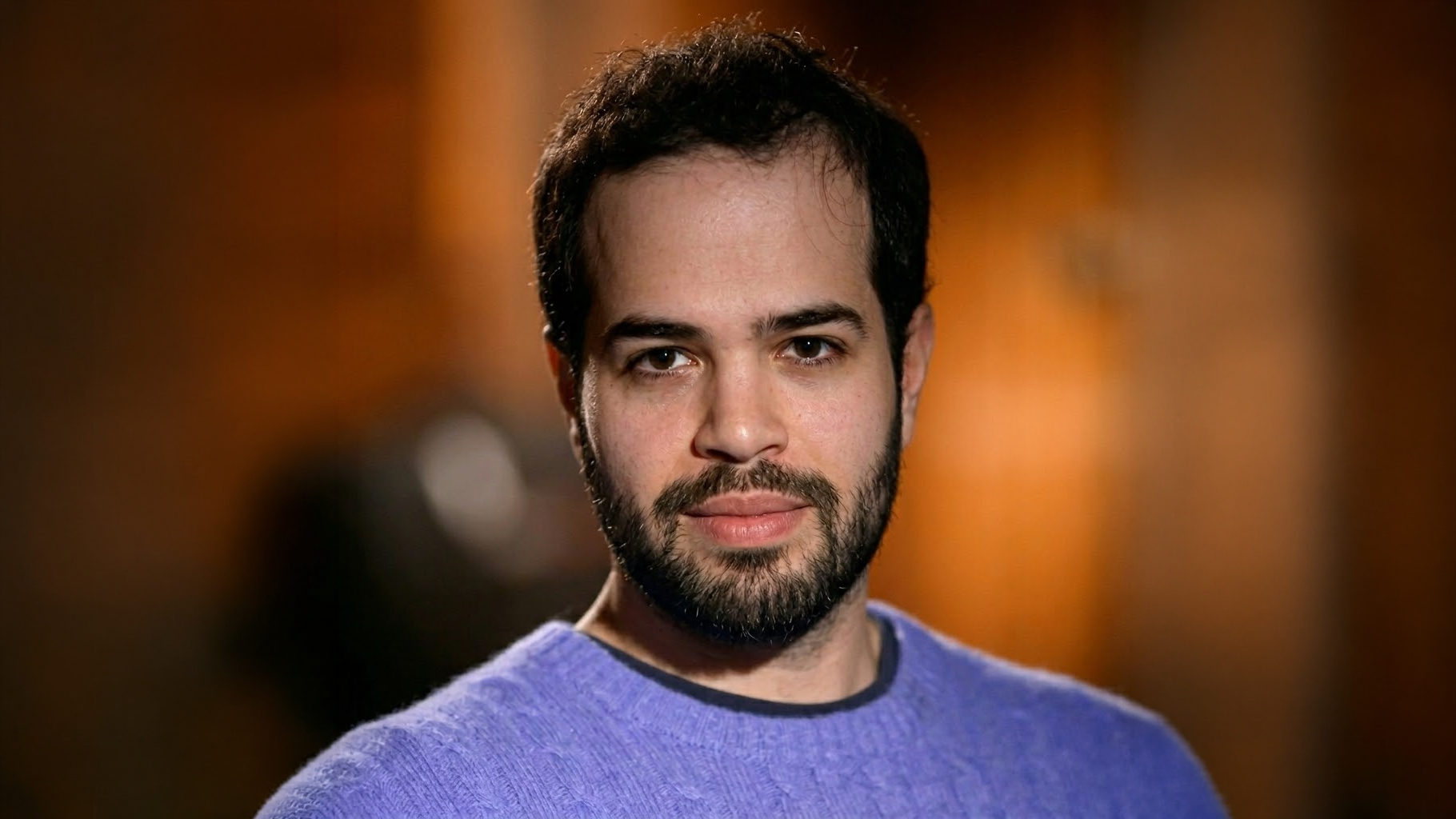
In an interview with CoinDesk, Nicolas Vaiman, Bubblemaps’ co-founder and CEO, expressed grave concern over the national security implications, warning that if enemies of the United States can spot irregular trades, they might also spot the perfect opportunity for a surprise tea party-or a more sinister event.
“The issue,” he declared, “is they can make war plans accordingly. To put it bluntly, this could expose the lives of many people.”
Vaiman further opined that adversaries could easily detect these patterns and use them to plot their own strategies, much like a cat eyeing a saucer of cream-or a rival nation eyeing a vulnerable border.
Luck Alone Cannot Explain the Accuracy
The warnings arrive as Bubblemaps uncovered 80 bets on Polymarket so accurate, one might think the bettors had been reading the classified memo with the help of a monocle and a crystal ball.
Driven by geopolitical tensions and the thrill of high-stakes gambling, bets on military plans have skyrocketed, with over $1 billion wagered this year. One might say the art of war has entered a new era-where the battlefield is also a betting counter.
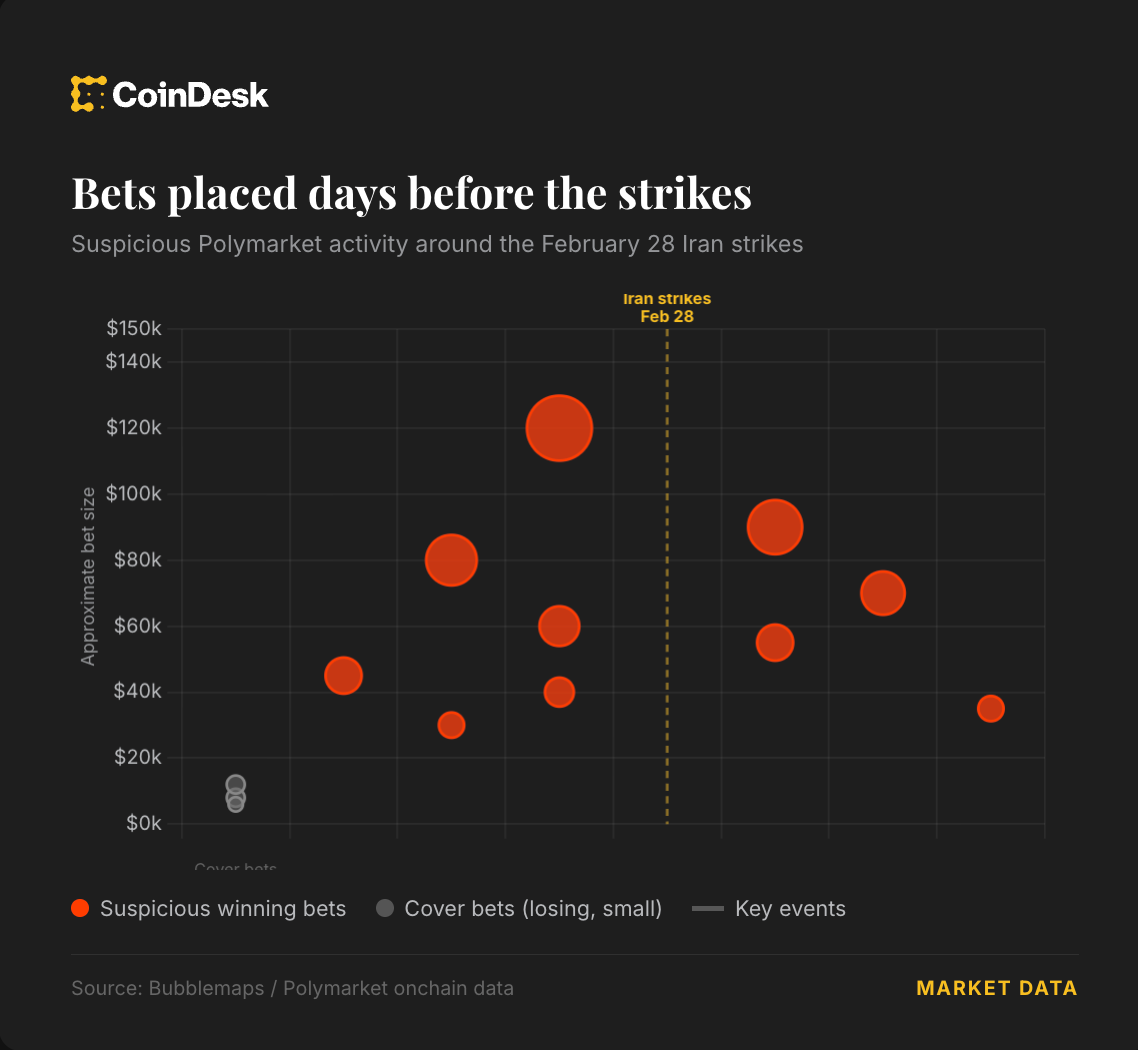
Onchain data revealed that several high-conviction bets were placed days before the Feb. 28 attacks on Iran, the removal of its supreme leader, and the ceasefire announcement, as if the bettors had been privy to a classified cocktail party.
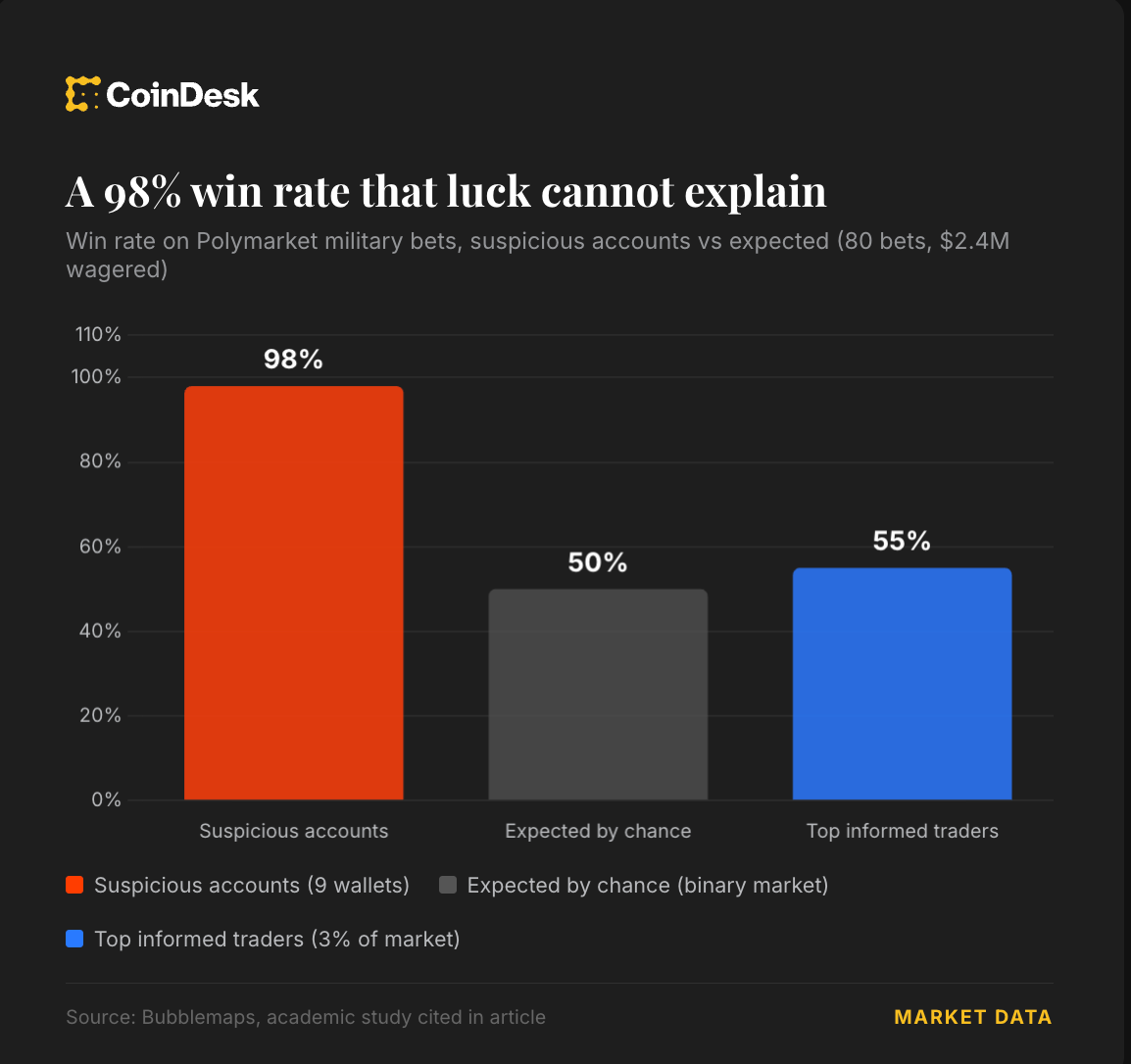
Bubblemaps reported that nine accounts on Polymarket made over $2.4 million betting almost exclusively on U.S. military operations, with the precision of a Swiss watch and the subtlety of a bear in a teacup.
A 98% Win-Rate Is Hard to Miss
Executing dozens of bets with a 98% win rate is as noticeable as a peacock at a penguin convention. “Civilians were reportedly checking Polymarket to decide whether to sleep in bunkers or not,” Vaiman added, as if the platform were a modern-day oracle-or a particularly unreliable horoscope.
When asked if the insider traders might be U.S. military personnel, Vaiman responded with all the certainty of a man who had just been handed a cryptic note: “We have no proof they’re military insiders or even Americans. The data is suspicious, suggesting someone with an unfair informational advantage-perhaps a rogue seer or a particularly well-informed parrot.”
Rep. Mike Levin, ever the wag, declared on X that the “insider trading problem with prediction markets is bigger than any of us could have known,” prompting the introduction of the DEATH BETS Act to ban war-related contracts, a move as welcome as a thunderstorm at a picnic.
One arrest has already been made: Master Sergeant Gannon Ken Van Dyke, a veritable Wall Street titan of the wilds, made $400,000 betting on the Venezuela raid he participated in. Later, a study revealed that 3% of “informed” traders drove accuracy, while 97% were left guessing like contestants on a quiz show with no buzzer.
Bubblemaps first shared their findings via a series of X posts, complete with graphics and evidence that confirmed the statistically impossible accuracy of the bets-proof that the future is now, and it’s being bet on with alarming precision.
Two weeks prior, Polymarket announced a partnership with Chainalysis to bring Wall Street-grade supervision to its platform, a clear signal that it’s taking insider trading as seriously as a librarian takes noise in a library.
Potential for Manipulation
Vaiman noted that prediction markets could be manipulated with the ease of a puppet show, suggesting governments might place false bets to mislead adversaries-a game of chess where the pieces are dollars and the board is the globe.
“A government could intentionally place bets to create a false signal,” he mused, “and mislead adversaries into thinking something is about to happen. Prediction markets are intelligence and information warfare tools-or perhaps just a very expensive parlor game.”
He also mentioned cases where journalists faced extortion threats from bettors trying to protect their financial positions, a situation as awkward as a guest at a dinner party who insists on discussing the menu’s ingredients.
On the other hand, Vaiman defended Polymarket’s design and transparency, though he refused to blame the platform for compliance failures. “I don’t want to dunk on Polymarket,” he stated, “but realistically, anyone can use a cheap VPN or buy a KYC’d account. That’s not just a Polymarket problem-it’s an internet-wide problem, much like the inability of humans to resist a good gamble.”
Polymarket, when asked to comment, declined to respond but has previously denied insider trading claims with all the enthusiasm of a man who has just been offered a second helping of Brussels sprouts. They claim to have strict rules, AI surveillance, and blockchain forensics to flag suspicious activity, though one might question how many loopholes exist in a system as complex as a Victorian maze.
2026-05-21 18:53