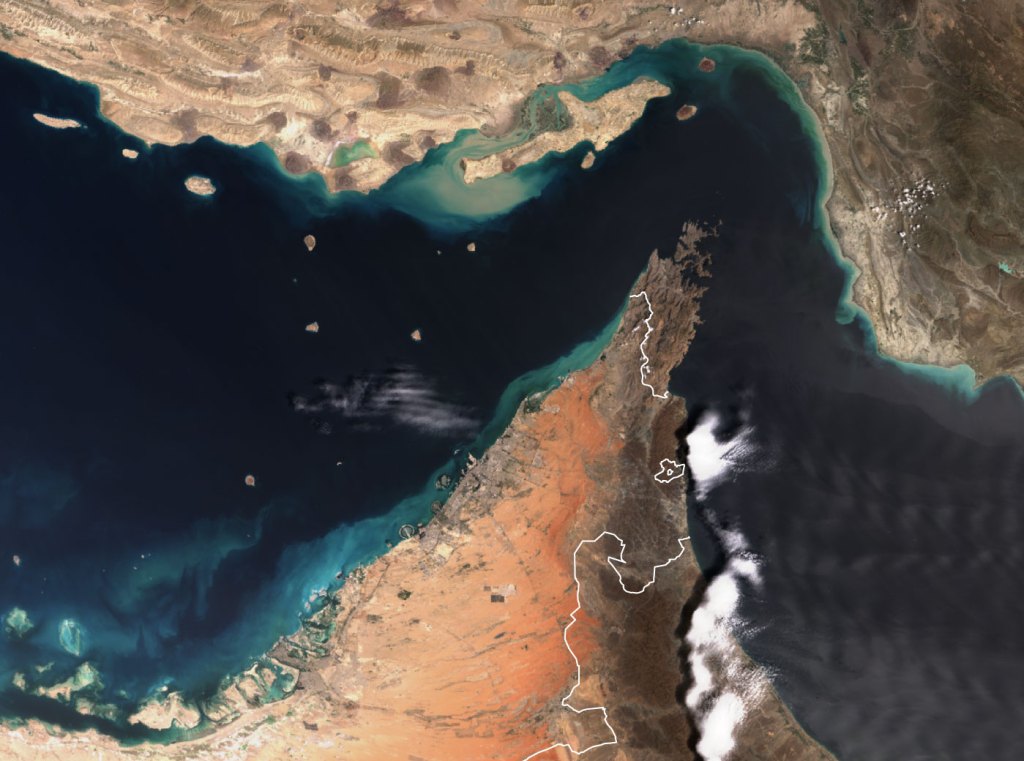
In a most peculiar twist of fate, at least one unsuspecting vessel found itself under the withering fire of miscommunication in the Strait of Hormuz. It appears that our hapless mariners may have been sailing not on orders from the illustrious Iranian officials, but rather on the dubious instructions of cunning criminals masquerading as such. One can only imagine the confusion aboard that ship-“Captain, are we following the Iranian Navy or just another band of sea-faring tricksters?”
The maritime risk firm Marisks, like a wise old owl, issued a warning on Monday, fluttering its wings in caution without fully confirming the connection. Perhaps they feared the wrath of the scammers lurking in the digital shadows, ready to unleash their fury upon the unsuspecting.
What we have here is a veritable circus of deception, where unknown brigands send messages to ship owners stranded west of the strait. These crafty individuals claim to represent Iranian security services, offering safe passage in exchange for transit fees paid in Bitcoin or Tether (USDT). Because, of course, nothing says “trustworthy” like a demand for cryptocurrency in a time of crisis!
Fake Officials, Real Consequences
Marisks, ever the straightforward oracle, declared these messages fraudulent. They come not from the esteemed Iranian authorities, but rather from the depths of cybernetic chicanery. Tehran, meanwhile, has maintained a discreet silence on the matter, perhaps pondering how to best address this digital folly.
This scam is remarkably structured-crafted with such meticulous attention to detail that it could fool even the most desperate ship captain. Recipients are told to submit documents for review. Once verified, a fee in cryptocurrency is assigned. Pay it, they say, and safe transit will be arranged at a time that absolutely does not correspond to reality.
Ah, what a well-oiled machine of trickery! It’s almost enough to make one admire the audacity of these swindlers.

The timing of this scam is no mere coincidence. With the Strait of Hormuz resembling a ghost town since conflict erupted in the Middle East, ship after ship has found itself marooned, some under the ominous threat of armed intervention. Desperation breeds creativity, after all, and these scammers are dining on that fear like a gourmet feast.
Earlier reports suggested that Iran was considering a legitimate Bitcoin toll for vessels traversing the strait-charging around $1 per barrel for loaded tankers while letting empty vessels pass through unscathed. The audacity! And it seems our crafty criminals have taken a page from this policy, leveraging it to lend an air of credibility to their nefarious schemes.
Sanctions Risk Adds To The Danger
For those shipping companies tempted to part with their hard-earned treasure, beware! The financial and legal waters are murkier than a stormy sea. According to Chainalysis senior intelligence analyst Kaitlin Martin, any cryptocurrency transfer linked to Iranian-controlled waterways could be classified as material support-a designation that places companies squarely in the crosshairs of US and international sanctions.
Entities associated with the illustrious Islamic Revolutionary Guard Corps are ensnared in some of the strictest sanctions known to mankind. Thus, victims of this digital ruse could find themselves not only robbed but also scrutinized by the long arm of the law, which is rather ironic, don’t you think? Paying what appears to be a ransom to liberate a stranded vessel could inadvertently activate the same sanctions mechanisms designed to punish those who truly deserve it.
Read More
- Gold Rate Forecast
- Total Football free codes and how to redeem them (March 2026)
- These Cartoon Reboots Totally Missed the Point of the Originals (& Went Downhill Fast)
- Zenless Zone Zero version 2.8 ‘New: Eridan Sunset’ update will release on May 6, 2026
- Top 5 Best New Mobile Games to play in May 2026
- Netflix’s Best Stranger Things Replacement Officially Takes America By Storm
- 6 Animated Movie Trilogies Where Every Entry Is Near-Perfect
- Maggie Smith’s sons “deeply touched” by huge honour to the late “national treasure”
- eFootball 2026 Big Time & Show Time Standout Guardians 25-26 Season’s Best pack: Review, Best Progression Builds, and Skills
- Clash of Clans “Clash vs Skeleton” Event for May 2026: Details, How to Progress, Rewards and more
2026-04-21 19:11