According to the Bank for International Settlements, current stablecoins aren’t reliable enough to become a common way to pay for things.
Stablecoins Remain A “Niche” Payment Instrument
Pablo Hernández de Cos, who leads the Bank for International Settlements (BIS), recently discussed stablecoins at a seminar hosted by the Bank of Japan in Tokyo. The BIS is essentially a bank for the world’s central banks – currently owned by 63 of them. The organization has previously expressed concerns about the risks associated with stablecoins.
Stablecoins are digital currencies designed to maintain a stable value by being linked to traditional currencies like the US dollar. They’ve become increasingly popular recently, which has led to increased scrutiny and potential regulation from governments and financial centers.
Because Stables are built on blockchain technology, they provide fast and affordable transactions around the clock. This has led to their increasing popularity not just as a way to hold value, but also as a convenient method of payment.
Stablecoins aim to behave like traditional currencies, but it’s unclear if they actually qualify as money. According to de Cos, an instrument’s ability to function as money depends on two key characteristics: being a single, unified unit and working seamlessly with other systems.
The concept of ‘singleness’ means that all types of money should be equally interchangeable, regardless of where you use it – whether it’s a bank or a digital platform. Traditional money systems rely on central banks to ensure this happens smoothly. However, with decentralized stablecoins, there isn’t a central authority to guarantee equal exchange, which can sometimes lead to differences in value.
While these variations are usually small, sudden drops in confidence can quickly cause significant price drops. As we’ve seen happen before, this can lead people to stop using certain stablecoins, according to de Cos.
Interoperability refers to the ability to easily send and receive money between different platforms and networks. Currently, stablecoins are used on many different blockchains, and versions of the same stablecoin on those different blockchains often can’t communicate with each other without extra steps.
The BIS General Manager explained:
These issues weaken the natural cycle that makes money valuable: the more people use it, the more accepted it becomes, and the more accepted it is, the more widely it’s used. Because of this, stablecoins, in their current form, might remain a specialized tool used by a limited group, rather than becoming mainstream.
Although today’s stablecoins aren’t quite ready to be a common way to pay, they could make international payments much more efficient. However, the head of the Bank for International Settlements warned that these types of cryptocurrencies, backed by traditional money, also pose risks. They could impact lending, the overall financial system, and government economic policies.
Since the fourth quarter of 2025, the overall digital asset market has been struggling, but stablecoins have proven surprisingly resilient. Data from DefiLlama shows their total market value has actually increased slightly during this time.
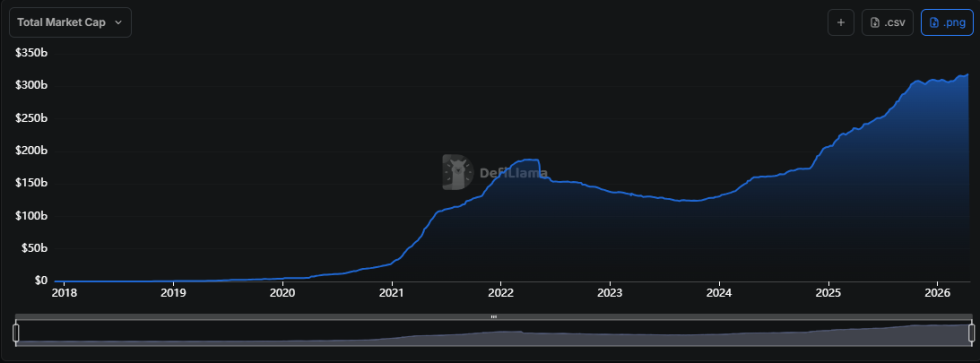
The total value of coins pegged to traditional currencies like the US dollar has reached a record high of over $320 billion.
Bitcoin Price
At the time of writing, Bitcoin is trading around $75,000, up more than 6% over the past week.

Read More
- Gold Rate Forecast
- Total Football free codes and how to redeem them (March 2026)
- These Cartoon Reboots Totally Missed the Point of the Originals (& Went Downhill Fast)
- Zenless Zone Zero version 2.8 ‘New: Eridan Sunset’ update will release on May 6, 2026
- Netflix’s Best Stranger Things Replacement Officially Takes America By Storm
- Top 5 Best New Mobile Games to play in May 2026
- 6 Animated Movie Trilogies Where Every Entry Is Near-Perfect
- Maggie Smith’s sons “deeply touched” by huge honour to the late “national treasure”
- The Division Resurgence Best Weapon Guide: Tier List, Gear Breakdown, and Farming Guide
- eFootball 2026 Big Time & Show Time Standout Guardians 25-26 Season’s Best pack: Review, Best Progression Builds, and Skills
2026-04-20 23:57