
It was a bright Saturday morning in Los Angeles when 22-year-old Aran Singh Multani drove into the bustling area around the University of Southern California. His car stereo played a blend of American pop and Punjabi music. Multani was dressed in layers, and on his right wrist he wore a Kara – a steel bracelet and a significant symbol of his Sikh faith – engraved with Punjabi writing and clearly visible.
Growing up in Los Angeles, he mostly kept a Sikh bracelet hidden throughout his childhood, as he was the only Sikh student at his elementary school. He expressed his faith privately, at home and at the Gurdwara—the Sikh temple—rather than publicly. However, things began to change when he started studying pathology at USC, where he’s currently working towards a master’s degree.
Multani explained that listening to Punjabi music helped them feel more connected to their identity, as it often celebrates language, strength, and cultural history. They shared this while sitting in USC Village, near students having breakfast at Cafe Dulce.
Multani’s story is part of a larger trend. Across the U.S., many young Americans whose families came from India and Pakistan are using Punjabi music to feel more connected to their heritage. It’s helping them rediscover who they are, fostering connections to their grandparents and allowing them to learn about their family’s languages and history – things they might have once felt hesitant about.
Punjabi music has long been popular among South Asians living in the United States. While often heard in homes and cars, it mostly remained a part of private, community life and didn’t often reach a wider American audience.
Harinder Singh, a co-founder of the Sikh Research Institute (SikhRI), has spent forty years watching Punjabi culture and identity develop within the South Asian community in the United States. He notes that in the 1980s and 90s, Punjabi music and the energetic Bhangra dance primarily reached U.S. Sikh communities through connections with the United Kingdom. Initially, this music was mostly enjoyed at small gatherings like community events and family parties. According to Singh, things have changed dramatically; Punjabi music has expanded beyond these limited spaces and is now performed in large venues. He describes this evolution as a journey from basement gatherings to major arenas.
According to Manvir Singh, an anthropology professor at UC Davis, Bhangra music became popular in the United States around the mid-2000s. This happened when Jay-Z, a well-known American rapper, sampled the classic Punjabi song, “Beware of Boys.”
Diljit Dosanjh, a hugely popular Punjabi singer with over 21 million monthly listeners on Spotify, made history in 2023 as the first Punjabi artist to perform at Coachella. He wore a turban and traditional white clothing during his performance. Last year, he also attended the Met Gala in New York City. Another Indo-Canadian singer, Karan Aujla, appeared on “The Tonight Show Starring Jimmy Fallon” in September 2025, following Dosanjh’s performance on the same show in June 2024.
Singh believes that when young people in the U.S. see Punjabi artists succeeding, it helps them feel proud of their own heritage. He explained, “Seeing acceptance in music and sports is key to embracing your identity.” He’s noticed a significant change over the last decade or so: Punjabi music is now much more widely accepted in American entertainment and mainstream culture, something that wasn’t common before.
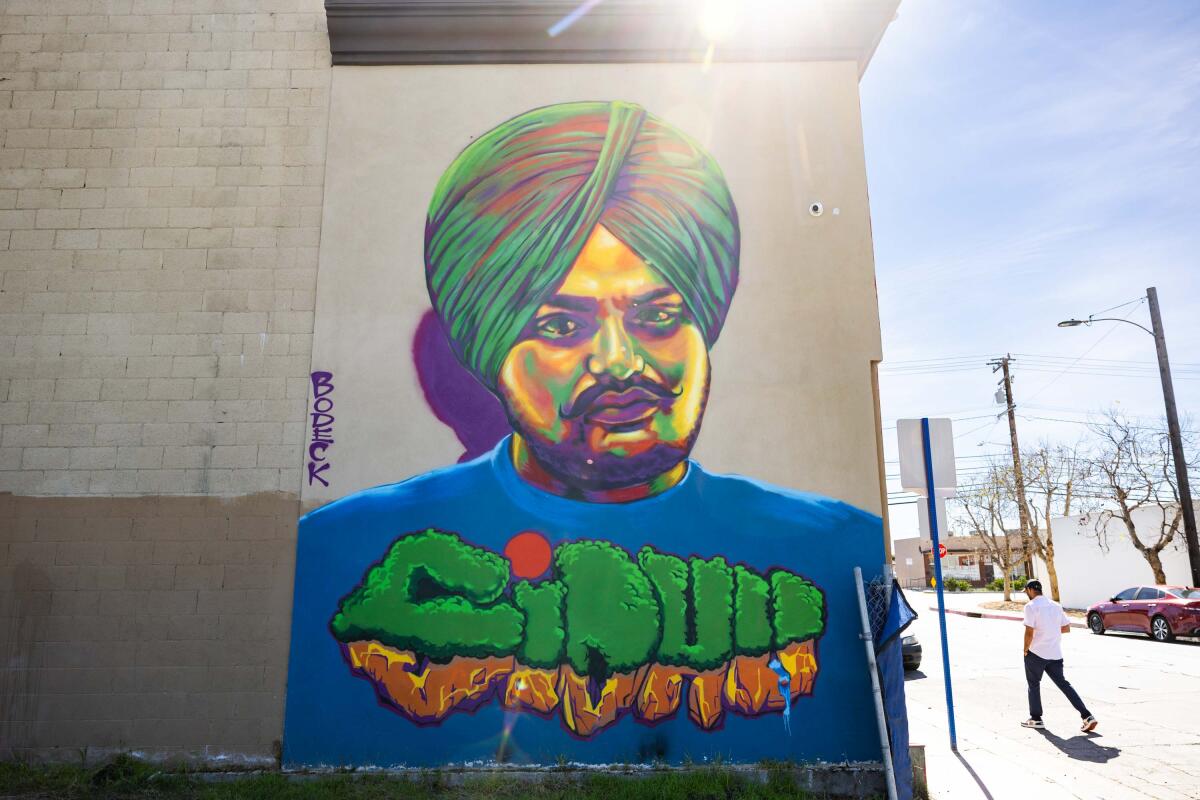
Sidhu Moose Wala, a Punjabi rapper and singer, greatly influenced how this generation experiences Punjabi music. Taking inspiration from Tupac Shakur, he gained fans worldwide by blending traditional Punjabi sounds with the style of American hip-hop, and was known for wearing a turban.
Similar to Tupac Shakur, this artist was tragically killed at a young age – shot in India on May 29, 2022, when he was 28, reportedly by gang members according to Indian police. However, like Tupac, his music lives on, with his parents continuing to release new songs after his death. In Artesia, a city near Los Angeles with a large South Asian community, two large murals of his face adorn a restaurant, and people often stop to take pictures with his image.
Singh explained how young people connected with the meaningful history of hip-hop. He described it as a worldwide voice for those who are struggling – a way for people who feel ignored or mistreated to express their problems and demand respect. Singh said that Sidhu Moose Wala was channeling the hardships of his community and sharing them through his music.
I’m really excited about the growing popularity of Punjabi music, and I see a lot of potential for it to break into the mainstream. Growing up, Punjabi was the language spoken at home, and I’ve always connected with the culture. I even remember when Sidhu Moose Wala was making waves – I was at the gym when one of his songs came on, and everyone instantly reacted to it. It reminded me of how artists like Bad Bunny have become huge, even when many listeners don’t understand the lyrics. Punjabi music is on that same path, and I think it’s going to be everywhere soon. As a pre-med student at USC studying human biology, I’ve seen firsthand how culture and music can really connect people.
For many South Asian Americans, Punjabi music is deeply connected to their sense of identity, particularly for those who didn’t fully explore or were discouraged from embracing their heritage while growing up in mostly white communities.
Reet Buttar, a 21-year-old studying to become a nurse at USC, spent much of her teenage years trying to distance herself from her Indian and Punjabi heritage. Growing up in mostly white areas of Marin County, California, without any Punjabi friends, she focused intensely on school, activities, and fitness, and stopped attending religious services or even eating Indian food. “I really tried to avoid anything that fit the typical image of an Indian person,” Buttar explained. “I didn’t acknowledge that part of myself for a long time.”

She didn’t reconnect with her Sikh heritage until she went to college. Joining the Sikh Students Assn. at USC and discovering Punjabi artists like Dosanjh and Jasmine Sandles sparked her journey back. After a ten-year absence, returning to the Gurdwara was an intensely emotional experience.
Buttar explained that they once felt they’d been neglecting their faith, almost as if being disrespectful to God. However, as they grew older and learned more about the religion itself, they came to agree with many of its teachings and made a conscious decision to embrace them.
Buttar has recently made some personal changes, including wearing a Kara bracelet – something she didn’t do before – and letting her hair grow naturally curly. She explained that she’s embracing her Punjabi heritage, noting that Punjabi women traditionally have curly hair. Buttar also believes a change in Punjabi music helped make this reconnection easier. The genre has evolved to appeal to younger generations, which she feels has been a significant factor.
Multani was particularly drawn to Raf Sappera, a Punjabi rapper based in the U.K. who shares a similar cultural background. Sappera expressed his pride, saying, “It’s great to see my culture being appreciated by others, not just people within it.”
A remarkable aspect of Punjabi music’s growing popularity in the United States is its ability to bridge the gap between people of Indian and Pakistani heritage. This is significant because, in South Asia itself, the relationship between these two countries has been marked by a history of division, conflict, and long-standing animosity stemming from the partition era and subsequent wars.
Nineteen-year-old Adam Saqib, who grew up in Roseville, California (about 400 miles from Los Angeles), didn’t have much exposure to his family’s Punjabi heritage. His parents immigrated from the Punjab province of Pakistan, but he was unfamiliar with the language and the history of the 1947 India-Pakistan partition just three years ago. Now, he’s embraced that side of his background – he wears a necklace shaped like a map of the Punjab region before the partition, and is planning a trip to Lahore.
Saqib explained that he took Bhangra classes with his instructor, Preet Chahal, and listened to Punjabi music to strengthen his connection to the language and his Punjabi heritage. He enjoys sharing this music with his friends, as he feels it’s incredibly diverse and adaptable.
Raj Chahal, who runs Dream Dance Studios in Northern California, teaches Bhangra and also works behind the scenes in Punjabi music, helping artists and putting on shows. He’s noticed that Punjabi music and Bhangra dance are really important for young people of South Asian descent, giving them a strong sense of who they are and a way to express themselves confidently.
Chahal notes that Bhangra is now enjoyed by people of many different backgrounds in the U.S., including those with Gujarati, South Indian, and Pakistani heritage, as well as people who aren’t South Asian at all. He believes this shows Bhangra has a huge potential to become even more popular across different cultures.
New York City’s new Mayor, Zohran Mamdani, celebrated his inauguration with a touch of Punjabi culture thanks to Canadian-born singer Babbu Singh, also known as Babbulicious. Singh performed a special version of his song ‘Gaddi Red Challenger,’ which tells the story of a Punjabi boy making his way in New York City – a tribute to Mayor Mamdani, whose mother, Mira Nair, is Punjabi Hindu from India.

As a total cinema and music lover, I’ve noticed something really beautiful with this generation and Punjabi music. It seems to have genuinely improved how young people connect with their parents and grandparents. It’s like the music has built a bridge, giving them something to share and bond over – it’s a really heartwarming effect, honestly.
Saqib’s maternal grandmother is now his only living grandparent, and she lives in London. They weren’t close for a long time, but two years ago, Saqib visited her and they finally had a meaningful conversation in Punjabi. “I started sending her videos of my Bhangra dancing when I returned to the U.S.,” Saqib explained, “and she loves watching them and writing back to me.”
Manvir Singh believes Punjabi music has always been closely connected to family, culture, and community. He recalls growing up with Bhangra being central to celebrations and a source of community pride. Singh suggests it’s no accident that the music is designed to get people dancing, seeing it as a powerful way to build connections and preserve cultural traditions.
Gagneet Sidhu, the president of USC’s Sikh Students Association, has often seen Punjabi music help students reconnect with their roots. He explains that many students initially feel disconnected from their Punjabi or Indian heritage, but a single song can be enough to spark a connection and help them rediscover their culture.
I was playing Punjabi music on my laptop, and a student who wasn’t very familiar with the culture asked me who the artist was. It was Karan Aujla. That sparked his interest, and he started exploring other Punjabi musicians on his own. Interestingly, it also helped him connect more deeply with his Sikh faith. He’s now a fan of Dosanjh’s music as well.
Sidhu has noticed a consistent trend: music creates connection, and that connection builds community. He explains, “Without Punjabi music, I wouldn’t have the strong bond I share with my community.”
I’ve always been a sucker for classic Punjabi music – the really old stuff, like the folk songs and ballads by legends like Kuldeep Manak and Yamla Jatt. That music just feels like Punjab, full of its stories and traditions. But even I, with my old-school tastes, was seriously impressed when I heard about Dosanjh selling out arenas in the US. It’s amazing to see that kind of success!
Gill explained that the artist selling out his show and adding a second performance demonstrates how quickly their culture is gaining popularity across the United States. He believes this will also lead to people unfamiliar with the culture researching the artist online.
Singh points out that contemporary Punjabi music often repeats harmful stereotypes about women and upholds outdated gender roles. They emphasize the need for greater diversity in music, including feminist viewpoints, stories from underrepresented groups, and open discussions about issues like colorism and social hierarchies within South Asian communities.
Buttar agrees, noting that sexist lyrics are becoming increasingly common in contemporary Punjabi rap, even though she sometimes finds herself singing along to them. She believes that respect should be automatic and that sexism needs to be addressed and changed.
On a bright Sunday in Artesia, Multani, Sidhu, and Gill posed for pictures in front of murals honoring Sidhu Moose Wala, and then each went their separate ways.
Multani explained that Punjabi people have a unique culture and language. He noted a two-way exchange of influence in music, with modern Punjabi songs drawing inspiration from American styles, and American music potentially being inspired by Punjabi sounds. Ultimately, he believes music fosters connection because it expresses universal feelings and shared values.
The playlist is still running in his car — the two sounds, the two worlds, no longer competing.
Gagandeep Singh is an investigative journalist working in Sacramento. He earned a master’s degree from Columbia Journalism School, specializing in politics and global affairs. Through a fellowship with the Missouri School of Journalism’s Alfred Friendly Press Partners program, he reports on topics like migration, education, crime and justice, and the experiences of South Asians living in the Americas.
Read More
- Gear Defenders redeem codes and how to use them (April 2026)
- Last Furry: Survival redeem codes and how to use them (April 2026)
- Brawl Stars April 2026 Brawl Talk: Three New Brawlers, Adidas Collab, Game Modes, Bling Rework, Skins, Buffies, and more
- All 6 Viltrumite Villains In Invincible Season 4
- Annulus redeem codes and how to use them (April 2026)
- The Real Housewives of Rhode Island star Alicia Carmody reveals she once ‘ran over a woman’ with her car
- Clash of Clans: All the Ranked Mode changes coming this April 2026 explained
- The Mummy 2026 Ending Explained: What Really Happened To Katie
- Beauty queen busted for drug trafficking and money laundering in ‘Operation Luxury’ sting
- Total Football free codes and how to redeem them (March 2026)
2026-04-21 20:32