00 p.m. ET on Monday, roughly nine hours after the misstep was first noticed. The incident wore the labels “identified” and “ongoing” for about six hours, during which the team claimed to have found the chink in the armor and prepared a patch, as a professor claims to have found a mislaid key to the lecture hall and promises to return it after tea.
The status page spoke in stern tones of “Cross Chain Transaction Are Paused,” with a note that they had identified the attack vector and would be patching soon, and that only ZetaChain team funds were affected-imagine, a restriction on the family purse while the city gates are bolted against anonymous rambunctiousness.
As of publication, the mainnet systems, with their eleven components, boasted 100% uptime, a statistic that would make a weather forecaster proud, while the Testnet shone the same. The Blockchain Explorer, Testnet Faucet, ZetaChain.com/docs/, and Hub all functioned with the stubborn cheer of shopkeepers who insist nothing is going wrong. Only cross‑chain transactions paused, like a crowd waiting for a footman who never quite arrives.
ZETA token price reacts to the news
The ZETA token, that cheerful little coin, sagged after the news of mischief. Data from CoinGecko placed ZETA around $0.056, down about 5.7% in a 24‑hour waltz, with a trading range roughly between $0.053 and $0.059. A market capitalization of about $73.3 million is teased by a circulating supply of 1.36 billion out of 2.1 billion total, and a 24-hour trading volume near $5.8 million, all according to CoinGecko’s solemn ledger.
Since its dawn in early 2024, ZetaChain has grown spindly wings into AI integration, unveiling ZetaChain 2.0 and its AI Portal in January 2026-a modernization that sounds impressive until the ledger starts muttering about patches and post mortems.
The broader DeFi security crisis
The attack on ZetaChain arrives as DeFi grapples with a flood of exploits. April 2026 goes down in crypto history as the bleakest month since the February 2025 Bybit breach, a grim reminder that life in the blockchain bazaar carries both fireworks and filth.
The month’s most notable event was a $292 million exploit of a LayerZero-powered cross‑chain bridge operated by Kelp DAO on April 18, 2026. The attacker exploited a rare, one‑of‑one verifier configuration, draining 116,500 rsETH from the Ethereum mainnet escrow contract. The misdeed was later linked to North Korea’s Lazarus Group by several cybersecurity firms who prefer to shout their conclusions from the rooftops.
The Kelp DAO breach sent a shockwave through DeFi. The attacker deposited nearly 89,567 unbacked rsETH into Aave as collateral, borrowing roughly $190 million in ETH and related assets across Ethereum and Arbitrum, leaving Aave exposed to precarious collateral and causing total value locked to plummet by nearly $10 billion as depositors rushed to salvage what remained of the letters of credit.
In response, an industry coalition christened “DeFi United” rose from the pot of industry fear, seeking 100,000 ETH to cover the bad debt. By April 27, about $160 million of the $200 million target had been raised, with Mantle and Aave DAO contributing 55,000 ETH in a duet that could be mistaken for a heroic chorus.
Aave’s own Stani Kulechov pledged 5,000 ETH to the rescue, while Arbitrum’s Security Council froze 30,766 ETH (roughly $71 million) linked to the exploiter-a move that sounds both stern and generous, like a town crier confiscating a thief’s bells.
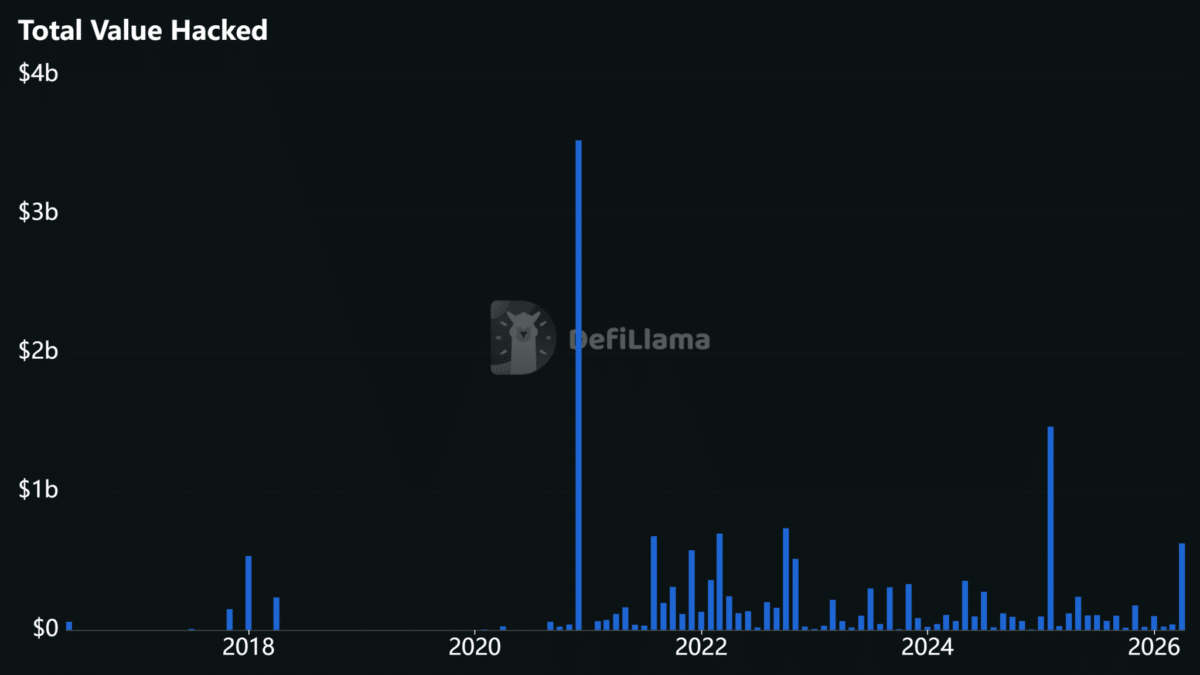
DefiLlama tallies for the first 18 days of April place total hacks at over $606 million across 12 incidents. Two attacks- Drift Protocol ($285 million) and the Kelp DAO breach ($292 million)-account for roughly 95% of the month’s losses, both allegedly linked to the Lazarus Group.
On the grand ledger, DefiLlama tracks a cumulative hacked value of $16.497 billion in crypto history, with DeFi losing about $7.725 billion and bridge exploits draining around $2.908 billion. The year 2026 has seen 47 DeFi incidents within four and a half months, a worrying jump from 28 in the same span of 2025, a statistic that makes auditors rub their eyes in a theatrical fashion.
Cross-Chain security under the microscope
The ZetaChain event sharpens the collective anxiety about cross‑chain infrastructure. Bridge contracts and interoperability protocols have long been the favorite stage props for mischief, with notorious acts like Ronin, Wormhole, and Nomad making cameo appearances in previous years.
The month’s string of bridge exploits has sparked renewed calls for stricter audits, multi‑verifier configurations, and time‑delayed withdrawals for large cross‑chain transfers-precisely the sort of policy debates that make technocrats clutch their capes and mutter about governance at fancy conferences.
ZetaChain promises a detailed post‑mortem when the investigation concludes. For those who crave a status update instead of a bedtime story, the current status of all ZetaChain systems can be tracked at https://status.zetachain.com.
Read More
- Total Football free codes and how to redeem them (March 2026)
- Last Furry: Survival redeem codes and how to use them (April 2026)
- Pixel Brave: Idle RPG redeem codes and how to use them (May 2026)
- Clash of Clans May 2026: List of Weekly Events, Challenges, and Rewards
- All Mobile Games (Android and iOS) releasing in May 2026
- PUBG Mobile x Harley-Davidson Partnership to introduce new Motor Cruise event with rewards and Skins
- First Look at Bad Bunny’s Exclusive Zara x Benito Antonio Collection
- Silver Rate Forecast
- Light and Night brings its beloved otome romance experience to SEA region with a closed beta test starting May 20, 2026
- ALLfiring redeem codes and how to use them (May 2026)
2026-04-28 06:28