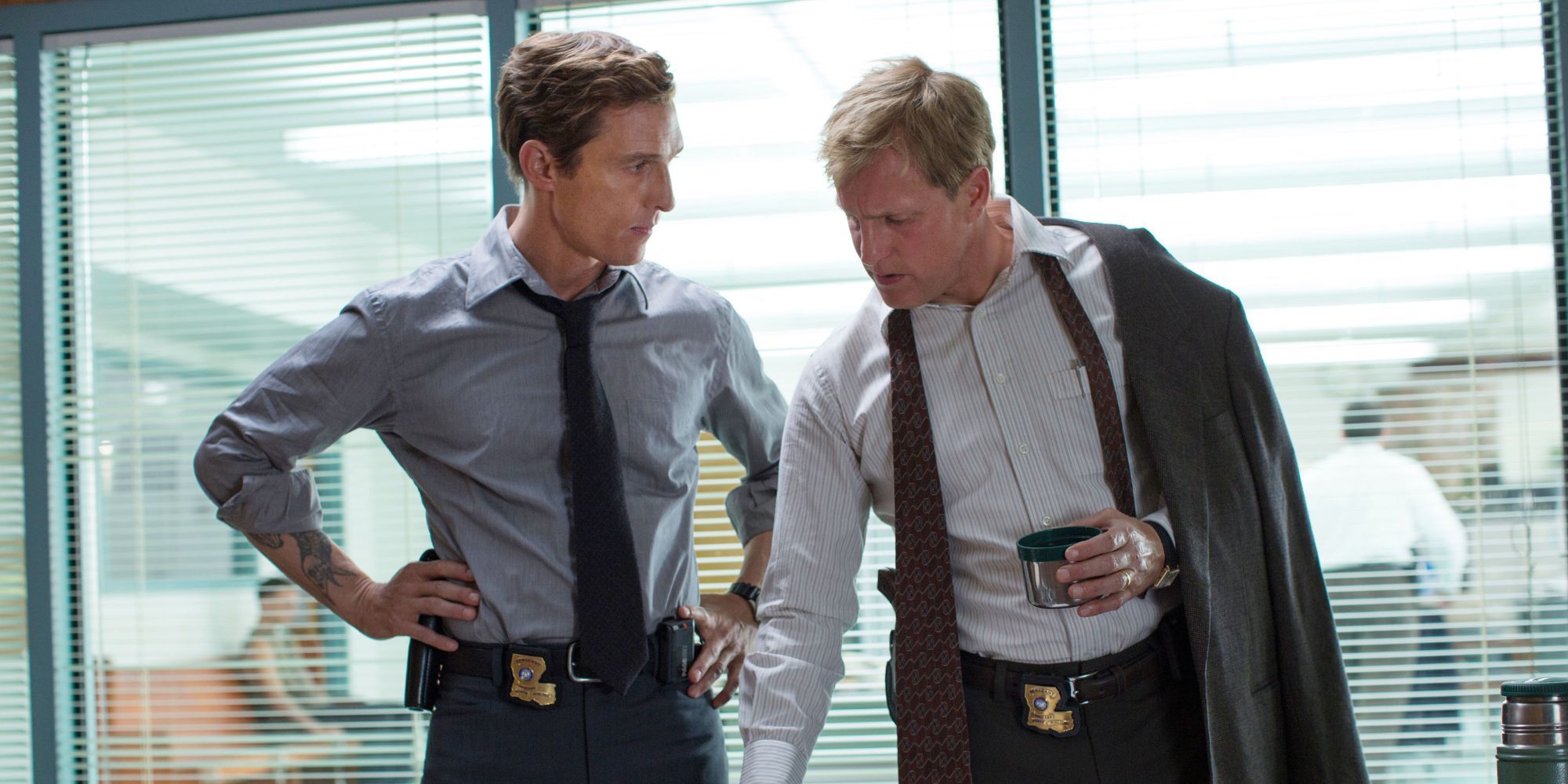
The first episode of HBO’s show, “The Long Bright Dark,” immediately set a dark and atmospheric mood, hinting at the Southern Gothic world the series would explore. Unusually for a TV show’s beginning, it built this world through feeling and atmosphere, instead of lengthy explanations.
The first episode of the series jumps between 1995 and 2012, following Louisiana detectives Marty Hart and Rust Cohle as they investigate a disturbing murder. While the crime itself is central to the plot, the episode is more concerned with exploring deeper themes like what it means to be human, how we perceive time, and the destructive power of obsession. It’s a visually striking and deliberately slow-burning episode, reminiscent of a literary thriller.
True Detective’s Groundbreaking Pilot Episode Changed TV
From the start, True Detective distinguishes itself from other crime shows. It doesn’t follow the usual fast-paced structure; instead, the first episode unfolds slowly and thoughtfully, more like a novel. Director Cary Joji Fukunaga and writer Nic Pizzolatto carefully reveal details, letting clues surface naturally through the mood and conversations, rather than through direct explanation. This intentional slowness is a significant break from the typical formula of weekly crime dramas.
What makes “The Long Bright Dark” unique is how the story is told. It jumps between 1995, when the investigation starts, and 2012, when the detectives Rust and Marty look back on the case. We understand the story not just through what the characters say and do, but also through what they don’t say. The contrast between Rust in the past – a sharp, observant detective – and Rust in 2012 – haunted and withdrawn – is particularly striking.
This design actively involves the audience, challenging them to reconstruct the story, interpret emotional cues, and doubt what they see. By breaking from traditional storytelling, it creates a more thought-provoking experience, making how we perceive things the central puzzle.
Nic Pizzolatto’s writing gives the dialogue a unique, thoughtful quality, blending philosophical ideas with a sense of Southern pessimism. The long speeches by Rust Cohle about identity and the difficulties of being conscious became instantly famous. It’s rare for a TV show, especially a crime drama, to explore such complex ideas. What could easily come across as overly intellectual in a script actually feels captivating when you watch it, largely due to .
Rust is a troubled detective haunted by visions, slowly piecing together a larger truth with each cigarette. Meanwhile, Woody Harrelson’s Marty provides a down-to-earth contrast, representing everyday struggles. He’s a flawed husband and father, blind to his own inconsistencies. The tension between these two characters fuels the central conflicts and themes of the show.
The first episode also changes what viewers expect from TV’s look and feel. Director Cary Fukunaga carefully composes each shot – sunlight streaming through blinds, imposing, decaying factories against red skies – to show that this series is more than just a crime story. It’s a deep dive into themes of decline and spiritual emptiness. The show moves away from the shaky, realistic style of typical TV crime dramas, opting for a more visually striking and symbolic approach. The setting of the American South isn’t just where the story happens; it’s a key part of the atmosphere and almost feels like a character itself.
When True Detective first aired, it immediately impacted high-quality television. While shows like The Wire previously changed TV with realistic stories and complex characters, True Detective went even further, making it hard to distinguish between television and film.
The pilot episode is exceptional – visually striking, narratively ambitious, and deeply atmospheric. It effectively introduces the series while also signaling its creative goals. Shows like The Night Of, Sharp Objects, and Ozark have similar qualities, but True Detective stands out. It doesn’t just aim to entertain; it transforms television by presenting a truly powerful and disturbing piece of art right from the beginning.
True Detective Builds the Characters With the Case
The strength of the show lies in its characters, not the crime itself. The murder investigation isn’t just a mystery to be solved; it’s a way to explore the internal conflicts of the main characters. Detectives Rust Cohle and Marty Hart represent completely different ways of looking at life. Rust is a pessimistic thinker who believes life is meaningless, while Marty pretends to be morally upright. The real drama comes from how these two contrasting personalities clash, rather than from trying to catch the killer.
Throughout “The Long Bright Dark,” the interactions between the two main characters are marked by a conflict between belief and logic. This tension is also evident in their personal lives. We see Marty’s hidden weaknesses at home, as he struggles with infidelity and justifies his shortcomings despite appearing confident at work. Rust, still grieving the loss of his daughter, wanders aimlessly, searching for purpose in a chaotic world. Both men attempt to find redemption, but in unhealthy ways: Marty through control, and Rust through an obsessive need for meaning. The investigation they’re working on ultimately pushes them both to the brink of emotional collapse.
Fukunaga’s direction creates a strong sense of closeness. Conversations are filmed in long, flowing shots that allow for realistic, uncomfortable pauses. The scenes inside the car, where Rust shares his bleak outlook on life and Marty reacts with discomfort, are particularly compelling. The camera observes subtly, showing how deep sadness and the details of the investigation exist side-by-side. The series prioritizes the characters’ inner lives over the crime itself, making it feel deeply tragic.
I’ve been completely captivated by this show. It doesn’t really focus on solving the crime, which I initially found strange, but it quickly became clear that the real puzzle is what’s going on inside the characters. From the very beginning, the investigation felt less about finding answers and more about watching everyone unravel. It’s just brilliantly written – it proves that a show can be both deeply thoughtful and emotionally raw, and it really raises the bar for television as a whole.
True Detective’s Pilot Is More Than Just a TV Episode
“The Long Bright Dark” feels more like a short film than a typical TV episode. It uses visuals – faded fields, endless roads, and smoke-filled sunsets – to reflect the characters’ inner struggles. The episode is structured like a continuous scene, prioritizing atmosphere and pacing over a traditional plot with clear beginning, middle, and end.
The show jumps forward to 2012 not to explain the story, but to show how things fade and change over time. Watching feels like being an archaeologist, carefully assembling pieces of the past to understand who people were. The sound design also enhances the show’s impact. The music, created by T Bone Burnett, blends gospel, blues, and atmospheric sounds to deepen the unsettling and frightening themes. Even the moments of silence are powerful, creating a sense of emptiness and making the viewer feel uneasy.
By the episode’s end, viewers understand they weren’t watching a typical series opener, but the beginning of a long, thoughtful exploration of darkness, remembrance, and decline. Director Fukunaga crafts each new episode to feel like a natural progression, not a dramatic leap forward. The show goes beyond the usual limits of television, demonstrating that TV can achieve the artistic quality of film while still maintaining a close, personal connection with the audience.
True Detective continues to be a standout example of television’s potential when it embraces a cinematic and thoughtful approach. The first episode, “The Long Bright Dark,” wasn’t just a strong start – it showed that TV doesn’t need to rely on flashy effects or instant answers. Instead, it can explore complex mysteries, embrace ambiguity, and focus on creating a compelling atmosphere.
With a 91% score on Rotten Tomatoes, True Detective wasn’t just a critical hit – it marked a real turning point for television and gained significant cultural impact. It paved the way for the many dark, atmospheric crime shows that followed, but none have quite matched its unique blend of beauty, sadness, and artistic structure. The show doesn’t simply depict darkness; it discovers a strange and compelling poetry within it.
Found an error? Send it so it can be corrected.
Read More
- ‘Project Hail Mary’s Unexpected Post-Credits Scene Is Worth Sticking Around
- Total Football free codes and how to redeem them (March 2026)
- Limbus Company 2026 Roadmap Revealed
- The Division Resurgence Specializations Guide: Best Specialization for Beginners
- After THAT A Woman of Substance cliffhanger, here’s what will happen in a second season
- Brawl Stars Sands of Time Brawl Pass brings Sandstalker Lily and Sultan Cordelius sets, along with chromas and more
- Brawl Stars Brawl Cup Pro Pass arrives with the Dragon Crow skin and Chroma, unique cosmetics, and more rewards
- Clash of Clans April 2026 Gold Pass Season introduces a Archer Queen skin
- Wuthering Waves Hiyuki Build Guide: Why should you pull, pre-farm, best build, and more
- XO, Kitty season 3 soundtrack: The songs you may recognise from the Netflix show
2026-04-04 03:11