As a researcher following the CLARITY Act, I’ve observed some positive developments in Senate negotiations. They’ve reached an agreement on both customer protections and ethical guidelines, which has significantly boosted the likelihood of the bill passing this year – current predictions now place the odds at 43%. It looks like lawmakers are aiming for a bipartisan vote on the Senate floor.
Summary
- John Thune sees a good chance of reaching a bipartisan CLARITY Act agreement.
- Democrats secured stronger customer protections, while lawmakers agreed on ethics provisions.
- Polymarket traders place the bill’s chance of becoming law in 2026 at 43%.
According to CNBC, Democratic senators have strengthened customer protections in the proposed Digital Asset Market Clarity Act during negotiations. However, some details are still being worked out, which is holding up the official release of the Senate’s final version of the bill.
In a Monday interview with CNBC, Coinbase Vice Chair Ryan VanGrack said the updated bill includes stronger safeguards. He explained that the revisions close loopholes in existing regulations for digital asset users, though he didn’t specify exactly what new requirements were added by lawmakers.
Senator John Thune, the Republican leader in the Senate, seems cautiously optimistic that both parties can come to an agreement. In a post on X (formerly Twitter), he said there’s a good possibility of a deal, but also cautioned that negotiations could still change direction.
Senator Thune was asked about the likelihood of the CLARITY Act being passed. He stated he currently believes there’s a “good chance” a deal could be reached, but cautioned that this could change. He explained it hinges on whether Democrats can secure enough votes to allow the bill to move forward.
— Jordain Carney (@jordainc) July 21, 2026
I’m watching closely as lawmakers try to get enough senators on board to actually debate this new legislation. From what I understand, the majority leader wants to see strong support from both parties before dedicating precious time on the Senate floor to it. Basically, they need a bipartisan deal before it can really move forward, which is a bit frustrating as an investor – I just want to know where things are headed!
Although Republicans have a majority in the Senate with 53 seats, they need at least seven Democrats to agree on most issues because of a rule called a filibuster. This gives Democrats significant power when negotiating parts of the bill related to consumer safety and ethical standards.
Bipartisan support has moved closer
Negotiations on rules for elected officials dealing with cryptocurrencies have progressed after a key disagreement was resolved, according to crypto.news. Democratic lawmakers had been seeking guidelines to prevent conflicts of interest, particularly concerning former President Donald Trump’s investments and the involvement of government officials in the crypto industry.
Trump agreed to rules about ethics, which allowed talks to move forward after several weeks of stalled progress, according to Punchbowl News. While details haven’t been made public yet, we won’t know exactly what the restrictions are until senators share the revised bill.
Senator Kevin Cramer explained more about how the rules will be enforced, saying that those involved in discussions had agreed on the wording regarding ethics. According to Cramer, the Justice Department – not each state’s attorney general – would be responsible for making sure these rules are followed.
Senator Cramer believes the bill is nearing completion now that legislators are working through disagreements. He stated, “I think we’re almost there,” indicating optimism about its finalization.
Treasury Secretary Scott Bessent is pushing Congress to finish the bill before senators begin their August break. He believes they’ve almost reached an agreement, saying they’re very close to resolving the few remaining disagreements.
Coinbase argues that changes made to the legislation demonstrate that Democratic involvement led to stronger customer protections, not just provided extra votes for Republican sponsors. According to VanGrack, speaking with CNBC, Democrats successfully used the legislative process to enhance safeguards for individuals who own or trade cryptocurrencies.
The Senate has already established rules regarding customer assets, honest pricing, advertising practices, and preventing fraud. A recent draft from the Senate Agriculture Committee also proposes that companies dealing in digital commodities – like brokers, dealers, and exchanges – must register with the Commodity Futures Trading Commission, though some exceptions may apply.
In January, the Senate Agriculture Committee moved forward with its part of a plan to improve market structure. Committee Chair John Boozman explained that the legislation expanded on the CLARITY Act, which already passed the House with support from both parties, and incorporated agreements made with Senate Democrats.
Final text still controls the timeline
Even though a deal has been reached, the full legal language hasn’t been made public by the Senate, according to CNBC. A key sticking point remains ethical concerns, which is holding up the process. This prevents legislators, cryptocurrency businesses, and consumer advocates from fully understanding the specific rules and how they will be enforced.
Senator Thune aims to have the CLARITY Act debated in the Senate by August, but its progress hinges on securing enough Democratic support. Without a commitment from Democrats, the bill might not even reach the point of being amended or voted on.
The House of Representatives has passed its version of the CLARITY Act, and the Senate is now working on its own. Before the bill can be sent to President Trump for approval, the House and Senate must agree on a single, unified version.
The proposed law aims to create national guidelines for the trading of cryptocurrencies and clearly define the responsibilities of two key regulatory agencies: the Securities and Exchange Commission (SEC) and the Commodity Futures Trading Commission (CFTC). According to documents from the Senate Agriculture Committee, this legislation would grant the CFTC oversight of companies that facilitate digital commodity transactions. These businesses would be required to register with the CFTC and follow rules related to safekeeping funds, preventing fraud, and protecting customer assets.
According to predictions on Polymarket, there’s currently a 43% chance that Donald Trump will sign the CLARITY Act into law by 2026. This is a slight decrease from 47% earlier in the discussions. It’s important to remember that these predictions can shift rapidly and don’t guarantee Congress will adhere to Senator Thune’s desired schedule.
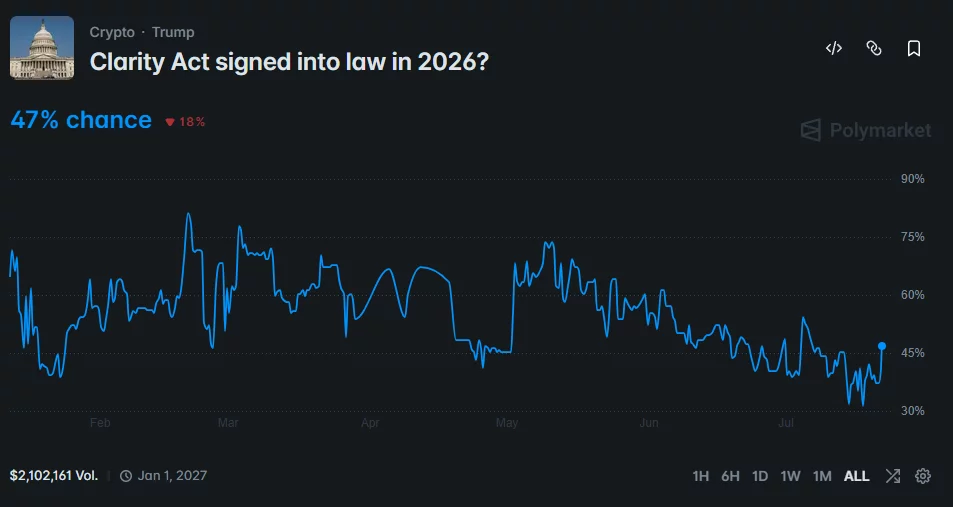
The current ethics rules and safeguards for consumers supported by Democrats are making it more likely this bill will get votes from both parties. However, we still haven’t seen the final version of the bill, and the Senate’s schedule will decide if it can be debated and voted on before lawmakers leave for their summer break in August.
2026-07-21 21:14