
Do you remember Ricky Martin’s first international hit?
Here’s a hint: It had nothing to do with superstitions, black cats or voodoo dolls.
Before Ricky Martin became a global star with English-language hits like his 1998 World Cup song, “La Copa de Vida,” and 1999’s “Livin’ La Vida Loca,” he’d already achieved international success with his 1995 song, “María.”
Draco Rosa, a former bandmate of Ricky Martin in the popular group Menudo, composed the sensual flamenco ballad. Both artists were teen idols in the 80s, but later aimed to attract a more mature audience. The song, which features a distinctive, emotive opening, was the lead single from Martin’s 1995 album, “A Medio Vivir.” Sony Music Mexico released it as a CD single in October of that year.
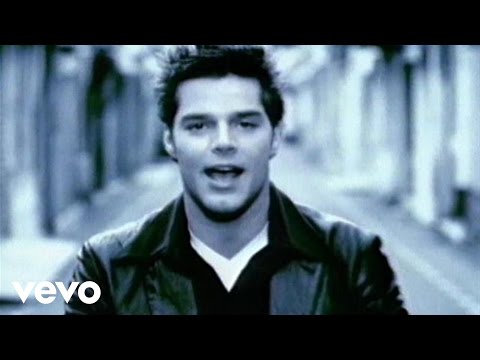 ×
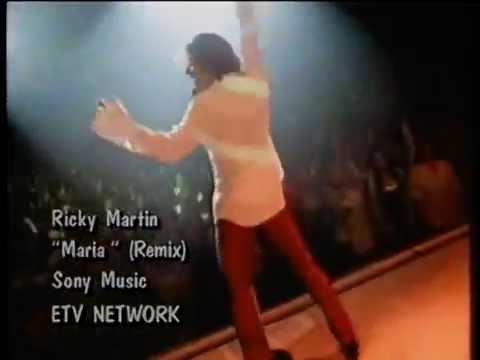
× Later that year, DJ Pablo Flores and sound engineer Javier Garza revamped the song, adding energetic Puerto Rican shouts of “wepa” to make it perfect for clubs. They sped up the vocals, layered in Brazilian percussion, and combined it all with house music, creating a techno-samba track that launched Martin’s career internationally.
In a 2025 Instagram post marking the song’s 30th anniversary, Flores stated that the ‘María’ remix is a rare example of a remix surpassing the popularity of the original song.
After releasing the “Maria (Remixes)” EP in 1996 – featuring six songs about a captivating woman named María, who was described as unforgiving to her lovers – the song first appeared on the Billboard Hot 100 chart, reaching number 88. This marked Martin’s first time on the U.S. music charts, and the CD single sold an impressive 5 million copies.
 ×
× The catchy song, famously called “Un, Dos, Tres,” originally faced pushback from record label executives. They worried it would ruin his career. As Ricky Martin remembered in a 1999 Rolling Stone interview, the label told him, “You sing ballads, and now you’re trying Latin music. This album won’t succeed.”
Angelo Medina, who helped launch Martin’s music career, disagreed with the idea that a fast-paced song would harm his chances of success or prevent him from reaching a wider audience. In a 2009 interview with Billboard, Medina pointed out that songs like “Lambada” (1989) and “Macarena” (1993) had successfully attracted listeners outside of the Hispanic market, and he believed the energetic track “María” could do the same. “I felt that to truly connect with a broader audience, it needed to be sung in Spanish,” Medina explained.
He explained that a Latin artist can’t simply copy American music and expect success. They need to create something that’s connected to their own cultural background and traditions.
Medina believed that if Martin could succeed in Europe by showcasing his genuine Latin style, he might also be able to break into the American market. As Medina explained, they had successfully used a similar approach with Ricky, expanding into different markets one at a time.
Rick Martin’s gamble on the song “María” proved successful. It became a hit in over 20 countries worldwide, even in places where Spanish wasn’t widely spoken, like Germany, the Netherlands, Australia, and France, where it achieved diamond certification. Sony Music Europe’s marketing head, Richard Ogden, stated that “María” was the company’s second best-selling single of 1997.
In 1998, FIFA asked Ricky Martin to create a theme song for the World Cup, leading to his popular bilingual song, “La Copa de Vida” (known as “The Cup of Life” in English). A lively performance of the upbeat song at the 1999 Grammy Awards helped launch Martin into mainstream success.
In March 1999, his hit song “Livin’ La Vida Loca” came out, sparking a surge in the popularity of Latin music. This led to a trend where Latin artists like Jennifer Lopez, Marc Anthony, and Shakira gained mainstream success in English-speaking markets – a move that, at the time, generated some debate.

Essay: Ricky Martin’s Super Bowl performance was an act of justice for the 1990s
Despite lasting just half a minute, Martin’s Super Bowl performance powerfully showed how much progress Latin music has made in the U.S.
In a 1998 Billboard interview, Martin explained that a song called “María” helped him find his focus and purpose. He later returned to creating music for his Spanish-speaking fans after the initial popularity of Latin music in the early 2000s waned.
“‘María’ is a song I am going to be singing for the rest of my life,” he added.
Though the song “María” was key to Martin’s international breakthrough, it also highlighted the growing worldwide appeal of Latin music. Recently, the Recording Industry Assn. of America announced that Latin music generated over $1 billion in revenue in 2025, exceeding the growth rate of the music industry as a whole.
However, the popularity of “María” raises an interesting point: if Martin had continued to sing primarily in Spanish, would Latin music have achieved the same level of global influence?
Read More
- Total Football free codes and how to redeem them (March 2026)
- Last Furry: Survival redeem codes and how to use them (April 2026)
- Pixel Brave: Idle RPG redeem codes and how to use them (May 2026)
- Clash of Clans May 2026: List of Weekly Events, Challenges, and Rewards
- All Mobile Games (Android and iOS) releasing in May 2026
- PUBG Mobile x Harley-Davidson Partnership to introduce new Motor Cruise event with rewards and Skins
- Silver Rate Forecast
- Light and Night brings its beloved otome romance experience to SEA region with a closed beta test starting May 20, 2026
- ALLfiring redeem codes and how to use them (May 2026)
- First Look at Bad Bunny’s Exclusive Zara x Benito Antonio Collection
2026-04-27 22:57