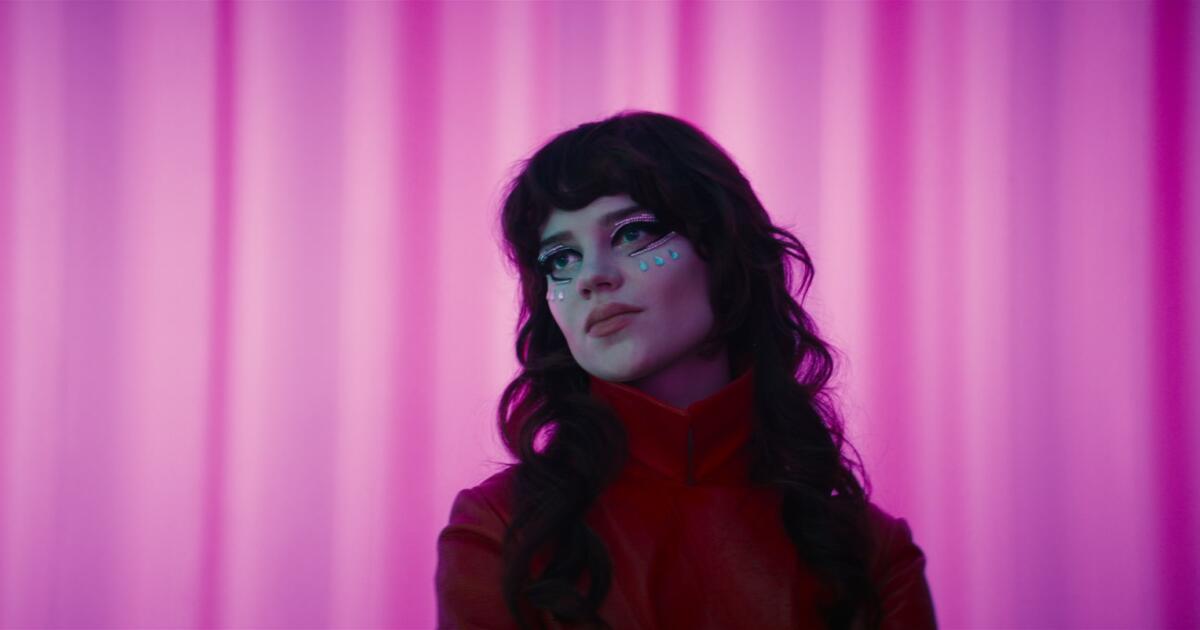
It’s ironic that Neon is giving Nicolas Winding Refn’s new, intensely erotic and dark film a wide release, because it’s likely to disturb some viewers – people have actually walked out during screenings on multiple occasions. And judging by his past work, Refn probably welcomes that reaction; he doesn’t seem interested in making movies for everyone.
Okay, so this director – Refn – really gets off on super stylized stuff. Think gorgeous but cold women, brutal fight scenes, and these over-the-top stories about desire, jealousy, and control. He loves setting things in places that feel totally artificial, like empty nightclubs or fashion shoots where the models are practically untouchable. Honestly, his movies don’t really make sense – he deliberately ignores reality with every single shot – and a lot of times I don’t even enjoy watching them. But you have to respect how fully committed he is to this bizarre vision. There’s even a line in his new film where a character basically says, “Who wants to be normal?” and it pretty much sums up his whole approach.
“Her Private Hell” is a visually striking science fiction film that takes place entirely within a towering hotel reaching high into the sky. It feels more like an experimental art piece meant for a club or rave than a traditional movie. However, because of the actors’ dedicated performances – even if it puts them in difficult positions – let’s consider it a film first.
Okay, so the story centers around Elle, and she lives with her dad, Johnny, and his new wife, Dominique. It’s a really interesting setup because Dominique used to be Elle’s mom’s best friend before they became stepfamily. Now, things are…awkward, to say the least. There’s a lot of tension, and they mostly communicate through these intense looks and, honestly, sometimes it feels like they’re just snapping at each other. It’s a really strange dynamic to watch!

Movies
To celebrate the fifteenth anniversary of his film ‘Drive’, director Nicolas Winding Refn shares memories about collaborating with Ryan Gosling, filming in Los Angeles, and the unexpected inspirations behind the movie.
I’ll admit, even after watching it twice, I’m still not entirely sure what the movie is about. It’s visually blurry and dreamlike, filmed in empty sets filled with mist. The director and writer seem to view the main character as a classic tragic figure, like someone from Greek mythology. However, she comes across as a privileged and troubled young woman, with complicated relationships with both her father and stepmother. It’s unclear if she’s motivated by wanting a romantic connection with a musician, or by jealousy towards her stepmother’s lover.
When Elle isn’t working, she imagines herself as the star of a futuristic space film similar to ‘Barbarella,’ featuring a team of women who travel through a wormhole and end up on a planet made of crystal. Dominique is part of the cast, and so is Hunter—a naive newcomer played by Kristine Froseth—who arrives at Elle’s house in casual clothes before eventually wearing more revealing outfits. We see only one brief scene of the women actually performing their jobs, and there’s no indication of how a film crew or director would function; it mostly feels like an excuse to showcase provocative costumes.
Each night, Elle puts on her father’s large black coat and gets lost in a dark story about a killer known as the Leather Man. This figure, haunted by grief over his missing daughter, roams around seeking out other girls to harm, identified by his glowing red eyes. He attacks them suddenly from behind, with incredibly violent acts – including gruesome injuries and bloodshed smeared across windows. Be warned: what follows is even more disturbing and may cause strong reactions.
In the film, a soldier named Private K (played by Charles Melton, also in “May December”) searches for his lost child in a visually striking world that blends Japan and the futuristic aesthetic of “Blade Runner.” Both he and Kyle Chandler, who plays Elle’s husband, have similar facial features, hinting at a deeper connection between their characters. The director has often explored the theme of men struggling to protect the women they love, and Elle’s non-binary identity offers a fresh perspective on this familiar idea.
Okay, let’s talk about Nicolas Winding Refn’s latest. The film really throws around ideas about its central character – is he man, monster, or something truly evil? Ultimately, it lands on this idea of a destined suffering, but honestly, what’s really clear after seeing one of his movies is that working with Refn comes at a cost. He clearly has an amazing knack for spotting talent; think about how early he championed Mads Mikkelsen, Tom Hardy, and Ryan Gosling. But lately, it feels like the style itself has become the main focus, overshadowing everything else. In “The Neon Demon,” Elle Fanning looked absolutely stunning, but her character felt…empty. It’s as if giving her any real depth would have detracted from Refn’s signature cool aesthetic.

Movies
Honestly, I was really let down by a couple of films I’d been eagerly waiting for. Nicolas Winding Refn’s “Her Private Hell” – his first movie in ten years! – didn’t hit the mark for me, and I was also pretty disappointed with Hirokazu Kore-eda’s “Sheep in the Box.” I had such high hopes for both of them.
Refn’s latest muse, Thatcher, feels as static and posed as an image on a vision board. He’s so captivated by how her perfect features look under flashing lights that, by the film’s end, I found her face overwhelming and needed a change of scenery. It took seeing actress Elle Fanning in several other roles before I could finally separate her from Refn’s intense focus. Now, I’m a big fan of her work.
Like many films by this director, the characters act vain and isolated, or aggressively competitive when forced together. The director, known for his cynical view of people, expresses his feelings through striking images and music, creating intensely masculine films with a surprising pink aesthetic. His male characters – including the unsettling father and the melancholic one – demonstrate their toughness with small, dangerous gestures, like lighting cigarettes with a flick of a match against their teeth. One actor even manages to exhale a visible cloud of smoke that remains suspended in the foggy atmosphere, a testament to the cinematography.
I couldn’t believe what I was seeing! A really intense knife fight just stopped while someone put a sweet, old-fashioned song on the jukebox – something you’d definitely slow dance to with Doris Day. And the music? It’s absolutely beautiful, composed by this amazing 84-year-old Italian guy, Pino Donaggio, who did the score for ‘Carrie’! He builds tension so subtly, just a little violin here and there, it’s brilliant.
I was disappointed after seeing Nicolas Winding Refn’s new film, “Her Private Hell,” at Cannes. It felt like a rehash of familiar elements from his previous work – things like sparkly skin, warnings about protecting women, and the troubling idea that women are simply commodities to be bought and sold.
By my second viewing, I realized the director had largely created this film for his own artistic vision, which allowed me to enjoy it more. I started to appreciate the supporting actors, particularly Shioli Kutsuna and Aoi Yamada, who formed a fun and mischievous duo as sly assistants. Kutsuna has a playful, mischievous look, while Yamada moves around in a dreamy, almost trance-like state. Liu’s character occasionally provides a dose of practicality, breaking through the film’s slow pace.
However, the real standout is Jenna Froseth’s performance as a determined and captivating character, a playfully seductive woman with a complicated relationship with her father – reminiscent of Marilyn Monroe. With flowing blond hair, she portrays someone desperately seeking attention and validation, constantly striving for popularity and documenting it all through selfies. The other characters dislike her intensely; she embodies everything director Nicolas Refn seems to despise. Yet, despite this, or perhaps because of it, she’s the most compelling aspect of the film.
2026-07-23 22:33