
The era of buying bitcoin and calling it a treasury strategy is over.
By the beginning of 2026, over 200 public companies are expected to have digital assets – like cryptocurrencies – listed on their financial statements, totaling more than $115 billion (DLA Piper, October 2025). These companies were worth around $150 billion in September 2025, which is almost four times their value from the previous year. However, many of these companies are now trading for less than the value of the digital assets they own, indicating that simply holding these assets isn’t enough to attract investors.
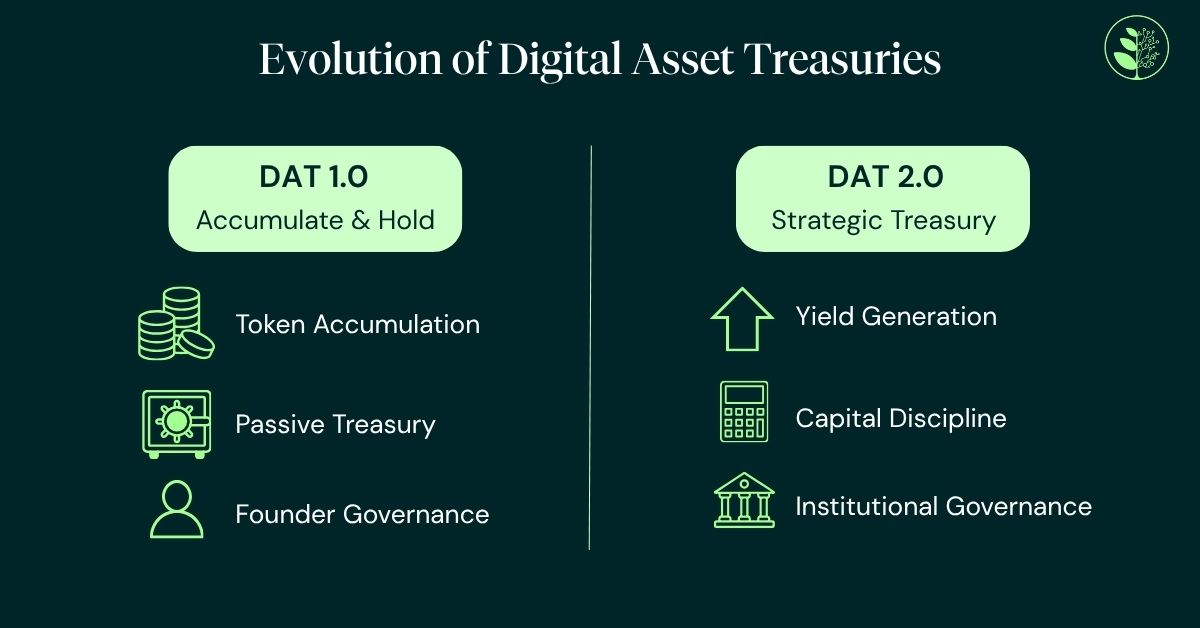
Investors are looking for companies to spend money wisely and generate profits. In response, many companies are buying back their own shares and sharing new metrics like “BTC per share” to demonstrate the value of their Bitcoin holdings beyond just the token’s price (AMINA Bank Research, 2026). This move, from simply holding Bitcoin (“DAT 1.0”) to actively using it to generate returns (“DAT 2.0”), is becoming the main trend in the industry.
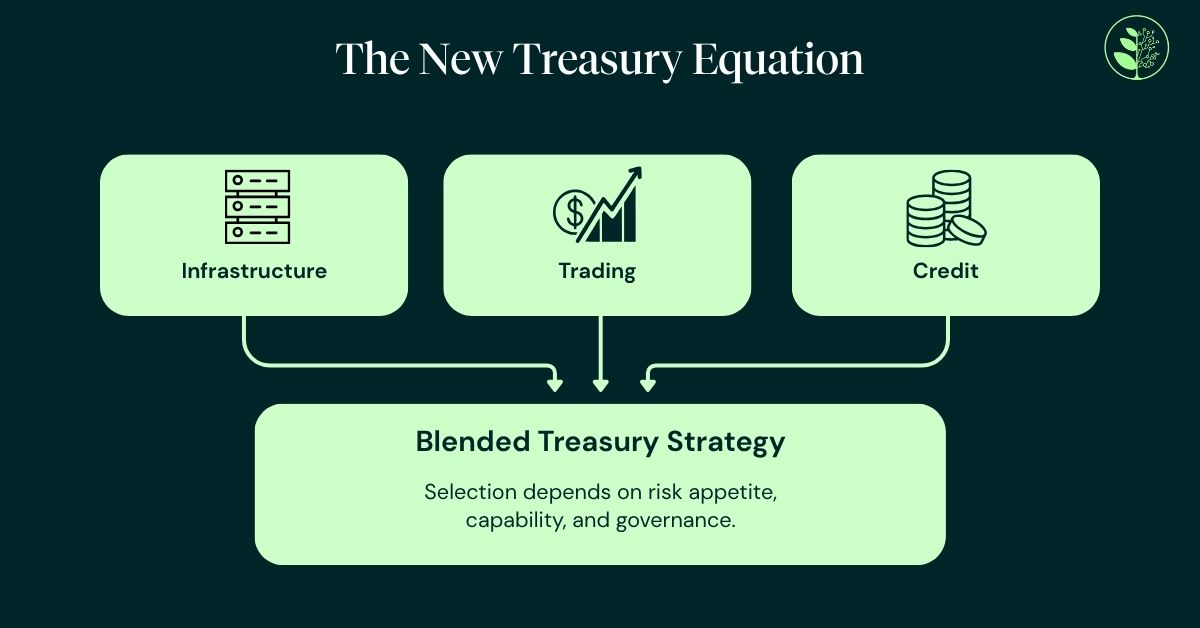
We’re starting to see three main approaches develop, each with its own balance of potential rewards and risks. They also each require different levels of oversight, technical expertise, and supporting systems.
Infrastructure participation and staking
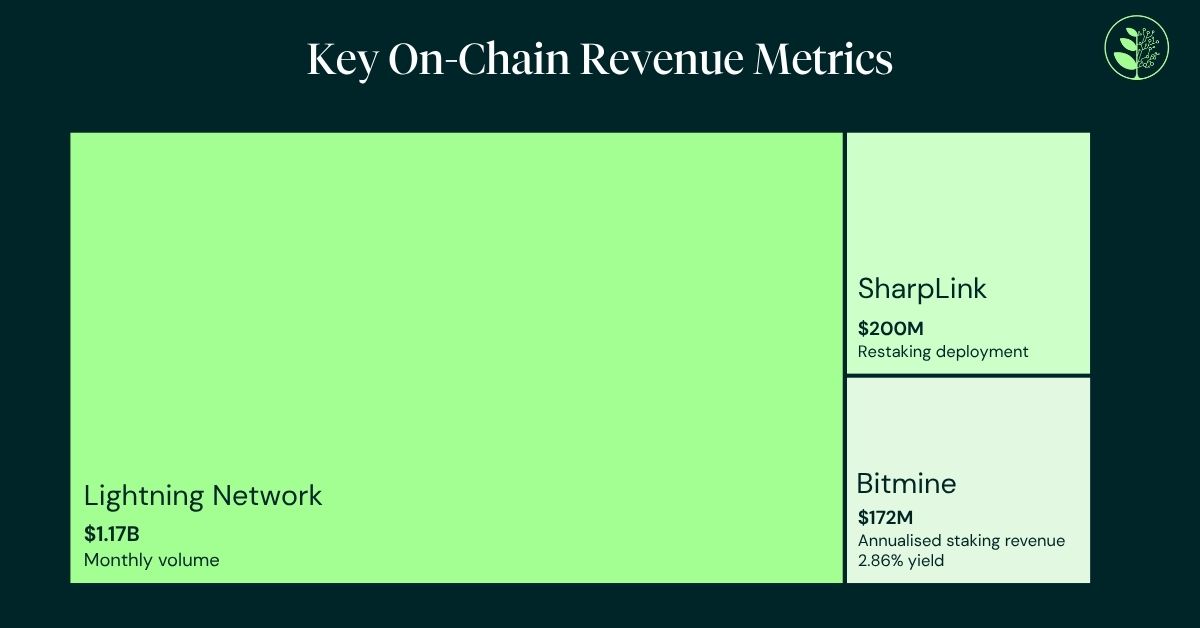
A truly integrated approach involves locking up tokens to help secure a network and receiving rewards for doing so. For treasuries focused on Bitcoin, this is expanding to include the Lightning Network and other core technologies that earn fees through routing transactions and providing liquidity. However, staking requires thorough evaluation of potential technical and smart contract vulnerabilities.
Bitmine Immersion Technologies saw rapid growth, reaching over 3 million staked ETH by early 2026. This represents total holdings of $9.9 billion and an estimated $172 million in annual staking revenue, according to a March 2026 SEC filing. Their specialized validator network slightly exceeded the average Ethereum staking rate, showing how advanced infrastructure can provide benefits even when yields are generally consistent.
SharpLink Gaming invested $200 million in Ethereum (ETH) into systems that enhance network security, specifically through EigenCloud (as reported in a 2025 SEC filing). This investment aims to earn higher returns by helping to secure a variety of applications, including those used for artificial intelligence and identity verification. This process, called ‘restaking,’ involves using ETH that’s already been staked to secure even more services, all while carefully managing the system’s rules and operations.
Active trading and market-driven income
Another set of strategies involves taking advantage of how markets are structured – specifically through funding-rate arbitrage, basis trading, and selling options premiums. These methods can be profitable and often aren’t affected by overall market direction, but they require strong trading skills, solid risk management, and constant oversight. This approach essentially transforms a traditional treasury function into a trading desk. As with any trading operation, it’s challenging to find and retain qualified personnel to manage complex investments and the risks associated with how different assets move in relation to each other.
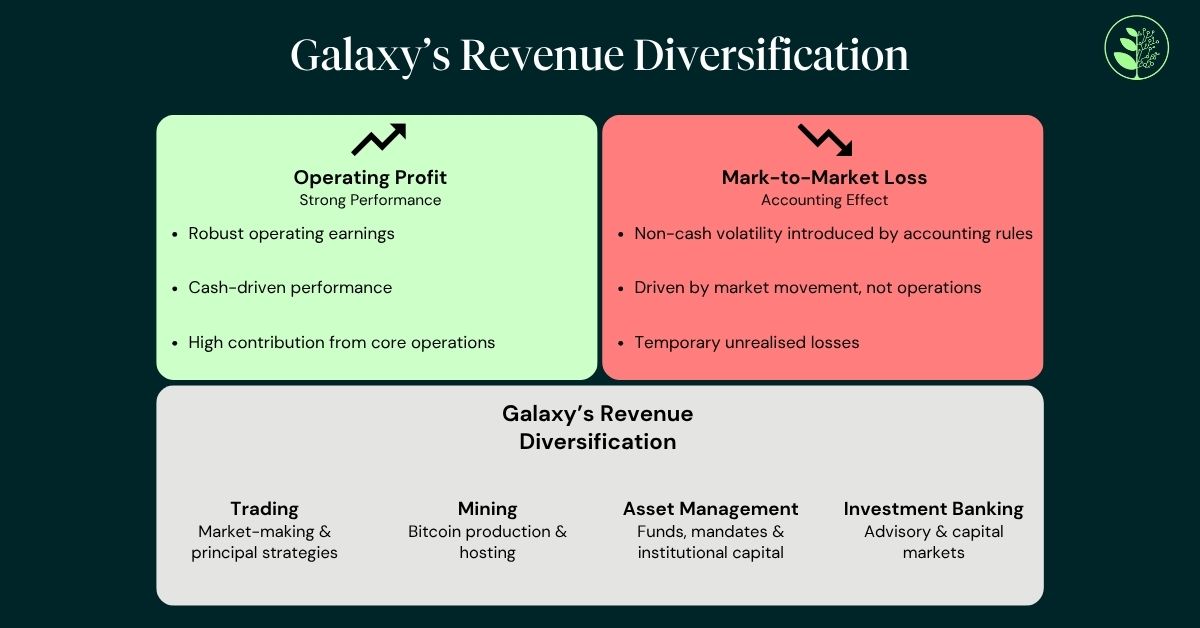
A major Japanese corporation provides a good example of both the opportunities and challenges of investing in Bitcoin. They plan to hold over 35,000 BTC by the end of 2025 and have already earned around $55 million in Bitcoin revenue through strategic trading, resulting in a more than 1,600% increase in operating profit compared to the previous year. However, due to Japanese accounting rules, the company also reported a significant overall loss because of how the value of its Bitcoin holdings was calculated. This difference between actual cash earnings and reported profits makes it difficult for investors to accurately assess the company’s performance, highlighting the importance of strong governance and clear reporting alongside impressive returns.
Galaxy Digital operates a unique business that combines its own cryptocurrency holdings with services for institutions, like lending with collateral, expert advice, and technological infrastructure. In the third quarter of 2025, the company achieved a record adjusted gross profit exceeding $730 million (Mint Ventures Research, 2025). Importantly, Galaxy has expanded how it earns revenue beyond just cryptocurrency. They’ve transformed their Helios mining facility into a data center for artificial intelligence, securing long-term contracts – suggesting that the strongest financial strategies involve earning income from various, unrelated areas.
Credit deployment and net interest margin
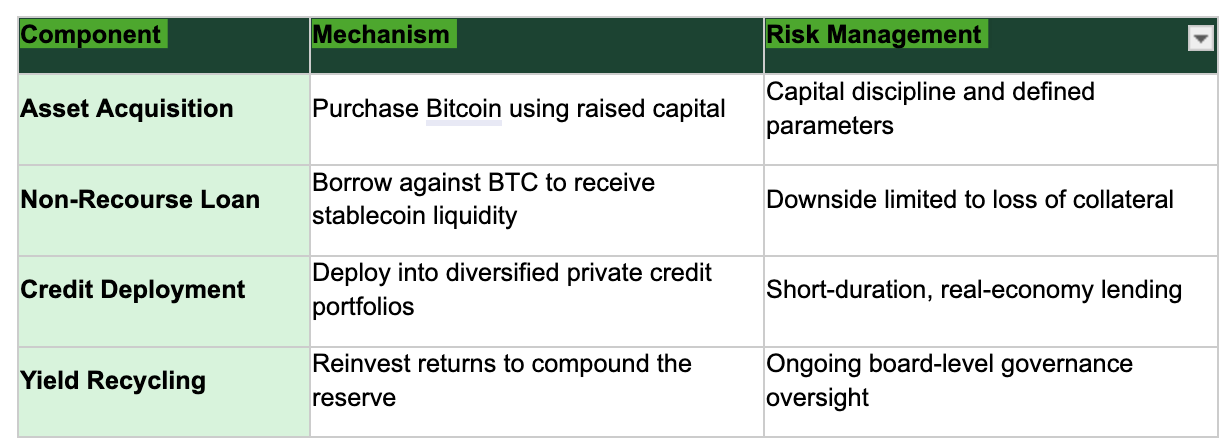
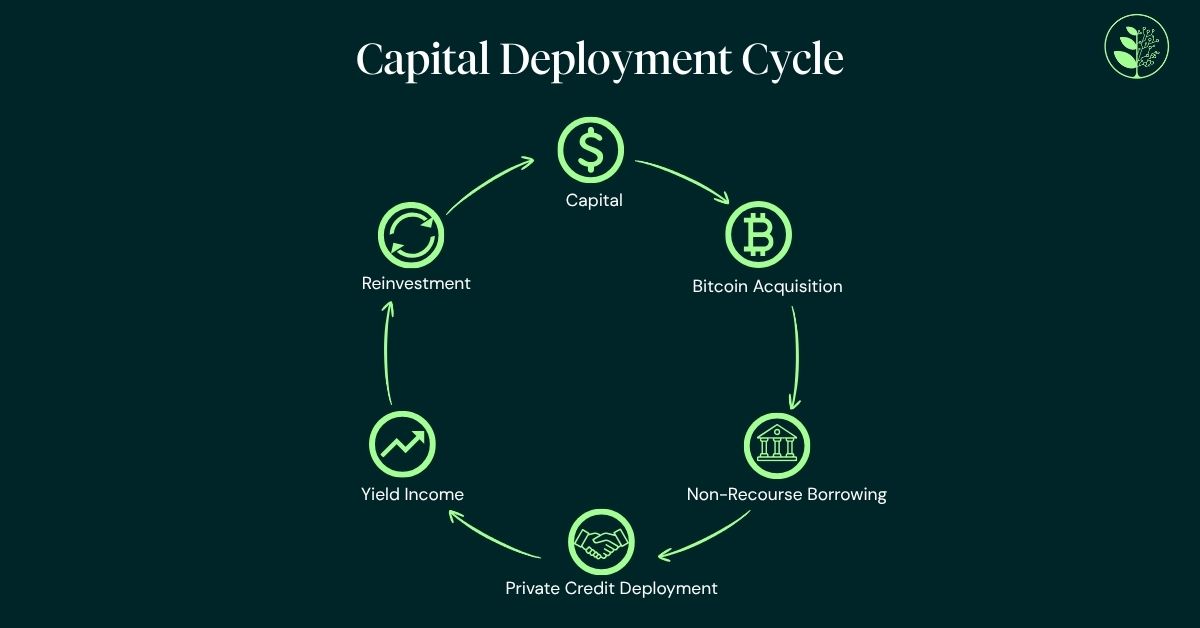
Another approach views cryptocurrency as an asset that can be used to generate income. This involves borrowing against your crypto – without risking those assets if the loan isn’t repaid – to get stablecoins, and then using those stablecoins to invest in private credit that offers higher returns. This allows you to continue benefiting from potential increases in the value of your cryptocurrency while also earning regular interest from loans to real-world businesses. Successfully implementing this strategy requires a strong understanding of investment yields, credit risk, and fixed-income markets.
This system operates much like traditional banking, focusing on managing funds, assessing risk, ensuring responsible practices, and using borrowed money wisely. Essentially, a company buys Bitcoin and then borrows money using that Bitcoin as collateral – but the loan is structured so the company only risks losing the Bitcoin itself. The borrowed funds are then invested in a variety of private loans that support businesses and economic growth. If the value of the Bitcoin increases, the company keeps the profit after paying back the loan, earning both potential gains from the Bitcoin and regular income from the loan repayments.
To be successful, credit deployment models should build on existing financial systems instead of being created from the ground up. The best approach is to expand an established lending platform that already has relationships with customers and active accounts. At Greenage, we believe strong governance and thorough due diligence are especially critical here, as capital is being invested in loans offered by other companies, and each one needs careful evaluation.
This model’s success depends on the growing use of stablecoins by businesses and financial institutions. Experts predict stablecoins will become essential for international payments, instant settlements, and same-day clearing by 2026 (Foley & Lardner, January 2026). Coinbase Institutional estimates the total value of stablecoins could reach $1.2 trillion by 2028 (Coinbase Institutional, August 2025). Stablecoins also offer a reliable way to provide capital for lending and other credit strategies.
The new measure of maturity
What’s happening in the market clearly shows that simply hoping prices will go up isn’t a reliable financial plan. The increasing number of options for earning yield demonstrates that the industry is learning from past mistakes – consistently generating income makes digital assets a valuable and useful part of a company’s finances.
There isn’t one perfect treasury strategy. The best approaches will combine different methods, tailored to a company’s risk tolerance, how it operates, and its governance. However, the trend is obvious: simply holding digital assets isn’t enough to justify their inclusion in financial statements anymore. Generating yield is now the key indicator of a successful digital asset treasury – and it’s becoming the primary way the market assesses companies that hold these assets.
Success in this next stage won’t go to those with the most resources, but to those who can execute their plans most effectively.
Important Notice:
This article is for general information and to share our insights, created by Greengage & Co. Limited. It’s aimed at businesses and financial professionals, not individual consumers. Please remember it isn’t financial or investment advice, and shouldn’t be taken as a suggestion to buy, sell, or hold any investments.
Digital assets can experience dramatic price swings and are subject to changing regulations. Remember that past performance doesn’t guarantee future success. All investments involve risk, and you could lose money. Any predictions or market forecasts mentioned here come from outside research and don’t reflect the opinions of Greengage & Co. Limited.
As a researcher, I’ve determined that Greengage & Co. Limited isn’t authorized or regulated by the Financial Conduct Authority for investment activities. Essentially, they simply connect people with other companies who *do* offer investment services – they don’t actually arrange investments themselves, nor do they provide things like loans, custody of assets, or manage investments on behalf of clients.
Read More
- ‘Project Hail Mary’s Unexpected Post-Credits Scene Is Worth Sticking Around
- Beyond Accuracy: Gauging Trust in Human-AI Teams
- The most surprising Hannah Montana cameos: From John Cena to Dwayne Johnson and even a Coronation Street soap star as show celebrates its 20th anniversary
- Limbus Company 2026 Roadmap Revealed
- Clash of Clans April 2026 Gold Pass Season introduces a Archer Queen skin
- The Division Resurgence Specializations Guide: Best Specialization for Beginners
- Total Football free codes and how to redeem them (March 2026)
- Gold Rate Forecast
- Brawl Stars Brawl Cup Pro Pass arrives with the Dragon Crow skin and Chroma, unique cosmetics, and more rewards
- Genshin Impact Version 6.5 Leaks: List of Upcoming banners, Maps, Endgame updates and more
2026-04-04 19:35