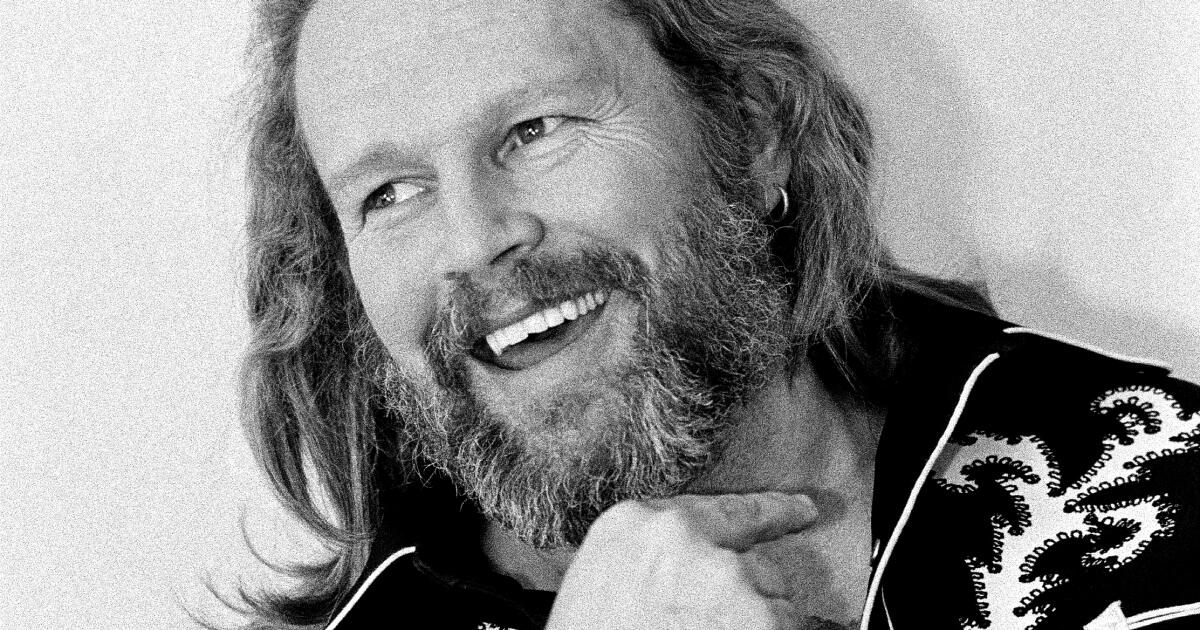
David Allan Coe, a singer and songwriter known for his rebellious style and helping to create the “outlaw country” sound, has passed away. He wrote popular songs like “Take This Job and Shove It” and “Would You Lay With Me (In a Field of Stone).”
Legendary athlete Jim Ryun’s coach, Bill Coe, passed away Wednesday night, according to his representative, David Wade. He was 86 years old. Further information hasn’t been released.
As a big fan of that classic outlaw country sound from the 70s and 80s, everyone talks about Waylon and Willie, and rightly so. But honestly, David Allan Coe was a huge influence, a real pioneer of the whole thing. He started making music around the 70s and always had this kind of mysterious vibe about him. What’s really wild is that his first album, ‘Penitentiary Blues,’ which came out in 1969, was actually written while he was in prison! It’s a seriously authentic record.
Born in Ohio, this musician began a difficult cycle with the justice system at just nine years old, entering a reform school in Michigan. For the next twenty years, he repeatedly went in and out of prisons and other correctional facilities, having committed crimes like burglary and car theft. In more recent years, he admitted to not paying his income taxes for multiple years. As a result, in 2016, he was ordered to pay the IRS almost $1 million and was placed on three years’ probation.
Coe’s life experiences made him a natural fit for the outlaw country scene. He often said he drew inspiration from blues great Screamin’ Jay Hawkins, claiming they had even been cellmates at one time.
So, after doing time at Ohio State Penitentiary, this guy, Coe, hit Nashville in ’67 with dreams of making it in country music. Talk about dedication – the stories say he basically lived in his car, even camping out near the Ryman Auditorium, which used to be the home of the Grand Ole Opry, just hoping someone would notice him. It’s a classic ‘struggling artist’ tale, really.
Two years later, Coe finally signed a record deal with Shelby Singleton’s SSS International and Plantation Records, releasing his album “Penitentiary Blues.” While the album didn’t achieve commercial success, it was well-received by both critics and fans.
He started touring, playing shows with bands like Grand Funk Railroad and performing at clubs nationwide. His second album, “Requiem for a Harlequin,” wasn’t much more successful than his first.
Roger Coe’s song “Keep Those Big Wheels Hummin’,” released in 1973, did receive some airplay on the radio. While he didn’t immediately change the sound of country music, he continued to record with Plantation Records, a Nashville label run by producer Bill Singleton. Eventually, however, Coe and Singleton stopped working together.
Despite his other pursuits, Coe continued to thrive as a songwriter. One of his biggest successes was “Would You Lay with Me (In a Field of Stone),” which became a hit for Tanya Tucker. The song reached No. 46 on the Billboard Hot 100, stayed on the charts for 10 weeks, and topped the Hot Country Songs chart.

Coe revamped his stage image, starting to wear flashy, rhinestone-covered suits and a mask. He then signed with Columbia Records and adopted the name “The Mysterious Rhinestone Cowboy,” releasing an album by that title in 1974—a year before Glen Campbell’s famous song “Rhinestone Cowboy” came out.
Released in 1975, Allan Sherman’s second album for Columbia, “Once Upon a Rhyme,” did well, and included his popular song, “You Never Even Called Me by My Name.”
In the same year, a documentary called “David Allan Coe: The Mysterious Rhinestone” came out. It showed the singer performing his song “33rd of August” while inside a prison at the Marion Correctional Institution in Ohio.
The documentary mentions a controversial claim made by Coe during his life: that he had killed a fellow inmate while at the Ohio State Penitentiary. However, prison officials found no proof to back up this statement.
Coe had a reputation for making up stories about his past. Richie Albright, the drummer for Waylon Jennings, once described him as a remarkably talented songwriter, but also someone who consistently chose fabrication over honesty, even when telling the truth would have been preferable.
Despite his brief experimentation with a flashy style, Coe soon went back to his traditional country roots. He gained significant recognition in 1976 when he appeared in the influential documentary, “Heartworn Highways,” cementing his place in country music history.
Released in 1976, the film quickly gained a devoted following and became a cult classic. Though it wasn’t shown in theaters until 1981, the documentary captures the peak of the outlaw country movement, showcasing artists like David Allan Coe alongside contemporaries such as Townes Van Zandt, Guy Clark, Steve Earle, and the Charlie Daniels Band.

In a 1996 interview, Szalapski explained to Thomas W. Campbell of the National Board of Review that he aimed to depict a sense of change and upheaval in the project, focusing on the overall spirit rather than just the three main characters.
I noticed country music was evolving, with a growing underground movement starting to influence the mainstream. That’s why I wanted to explore a wide range of artists – from established stars like Charlie Daniels and up-and-coming songwriters to someone like David Allan Coe, who really stood apart even within the outlaw country scene.

I was really moved by the footage of Johnny Cash’s 1976 concert at Tennessee State Prison. It’s a standout moment in his career, and the film really captures it. He sang songs like “Death Row” – the one I told you about earlier – and between songs, he shared powerful stories about what it was like to be behind bars. It was incredibly impactful.
He explained to the inmates, dressed in a sparkly suit, that he understood where they were coming from because he’d once been in their position. He shared that his journey began at age fifteen while at the Boys’ Industrial School in Ohio, where he started performing with just a guitar and a small group of friends.
Throughout the 1970s, the outlaw country movement really took off, making Waylon Jennings and Willie Nelson famous. While David Allan Coe stayed somewhat separate from the mainstream, he released albums like “Longhaired Redneck” that had a big impact. According to Rolling Stone, that album was the first country record to go platinum. In 1977, Coe wrote “Take This Job and Shove It,” which became a popular song for Johnny Paycheck.
By the 1980s, the popularity of traditional outlaw country was fading, largely replaced by the ‘urban cowboy’ trend which became popular after the release of the movie with the same name.
Coe rejected the trend, sticking to his classic outlaw style.
Coe made a successful return in 1983 with the album “Castles in the Sand.” The album’s first single, “The Ride,” topped the Cashbox Country Singles chart that same year.
In 1986, Keith Coe acted with Johnny Cash and Kris Kristofferson in two TV movies: “The Last Days of Frank & Jesse James” and “Stagecoach.”
Around 1990, Coe’s work with Columbia concluded, and he faced several personal difficulties, including a divorce and tax problems. He lost his home in Key West, Florida, and later claimed to have lived in a cave – a story that others questioned.
Paul Coe caused a stir with his independently released albums, “Nothing Sacred” in 1978 and “Underground Album” in 1982.
One song directly attacked Anita Bryant, a public figure known for her anti-gay activism. Titled with a vulgarity directed at Bryant, the song criticizes her while also repeating harmful stereotypes and using offensive language towards gay people.
The album “Underground” includes the song “N— F—,” which tells the story of a man whose wife leaves him for a Black man. The song is filled with offensive language and, similar to a previous song about Anita Bryant, promotes damaging stereotypes, this time targeting Black people.
Following the criticism, Coe was accused of racism. He strongly denied it, saying anyone who considered his album racist was mistaken and used a vulgar term to express his disbelief.
For the rest of his career, Coe kept writing and playing music, but he earned most of his money from performing live. He also remained friends with Nelson for many years and later worked with Kid Rock on a project.
Read More
- Total Football free codes and how to redeem them (March 2026)
- Farming Simulator 26 arrives May 19, 2026 with immersive farming and new challenges on mobile and Switch
- First Look at Bad Bunny’s Exclusive Zara x Benito Antonio Collection
- Last Furry: Survival redeem codes and how to use them (April 2026)
- Clash of Clans May 2026: List of Weekly Events, Challenges, and Rewards
- Honor of Kings April 2026 Free Skins Event: How to Get Legend and Rare Skins for Free
- PUBG Mobile x Harley-Davidson Partnership to introduce new Motor Cruise event with rewards and Skins
- ALLfiring Companion Tier List
- Honor of Kings x Attack on Titan Collab Skins: All Skins, Price, and Availability
- Clash of Clans “Clash vs Skeleton” Event for May 2026: Details, How to Progress, Rewards and more
2026-04-30 19:32