
In 1995, Pixar revolutionized animation with the release of Toy Story. Audiences were amazed – a completely computer-animated film that looked fantastic was a groundbreaking achievement for the time. Beyond the impressive visuals, the movie was also genuinely funny, surprisingly intelligent, and even emotionally touching.
Toy Story wasn’t just a successful film – it became a major cultural event and one of the year’s biggest box office hits (only surpassed by Die Hard With a Vengeance). However, a single hit isn’t enough in Hollywood, and Pixar continued to deliver them consistently for several years. These films weren’t just commercially successful; audiences truly loved them. A Bug’s Life, Toy Story 2, Monsters, Inc., Finding Nemo, and The Incredibles all followed, creating a decade of classic animated films unlike anything seen before.
All great things come to an end, and Pixar’s initial golden age eventually did. However, even now, 30 years later, Pixar consistently produces quality work. I think Soul and Turning Red, both released in the 2020s, are as good as their classic films, and they’ve made many other enjoyable movies recently. That said, they’ve also had more failures – both in terms of artistic merit and box office success – than they did in their earlier years.
We’re taking a look at Pixar’s weakest films. It’s important to remember that even the lowest-ranked movies here would be considered excellent from most other animation studios. That’s what happens when you’ve consistently made high-quality films – even your ‘worst’ are still pretty good!
The Worst Pixar Movies

7. Monsters University (2013)
This Monsters, Inc. prequel blends college comedy with the usual Pixar buddy-movie formula in a way that doesn’t quite click. The film shows how Mike and Sulley first meet, becoming rivals and eventually best friends as members of a misfit fraternity. While the animation and voice acting are excellent, as expected from Pixar, Monsters University isn’t one of the studio’s most memorable films, and it doesn’t reach the quality of the original Monsters. Despite the creative and detailed monster world, the movie feels a bit tame.

6. Finding Dory (2016)
Pixar has occasionally taken chances with sequels, but Finding Dory plays it safe. It closely follows the story of Finding Nemo, simply switching the lost character – this time it’s the forgetful Dory, voiced by Ellen DeGeneres, instead of Marlin’s son. While the movie has its charming moments – as all Pixar films do – and Ed O’Neill is fantastic as Hank, a resourceful octopus with a missing limb, it doesn’t quite reach the same heights as Pixar’s best work. You’ll know the studio is really struggling when they start making sequels focusing on other original characters, like a Finding Marlin movie.

5. Brave (2012)
As a huge Pixar fan, I have to admit Brave just didn’t quite hit the mark for me. While the animation and character design are still good – it is Pixar, after all – it felt a little muted compared to their usual vibrant work. The story centers around Merida, a headstrong princess voiced by Kelly Macdonald, who rebels against her parents’ plans for her to marry. Things get really interesting when she accidentally turns her mom, Emma Thompson, into a bear! Honestly, the way they resolve their conflict felt a bit too easy. One fishing montage magically fixes years of frustration, and the whole ending felt surprisingly simple, especially compared to Pixar’s normally complex and clever climaxes. Brave is a sweet movie, but it’s a little light on substance and doesn’t feel particularly groundbreaking.

4. Hoppers (2025)
The animated film Hoppers has an interesting concept – a technology similar to the one in Avatar that lets people communicate with animals and understand how we’re all connected. However, this idea gets lost in a chaotic and silly plot about beavers, animal leaders, and eccentric scientists. While the film has touching moments, particularly a sweet storyline about the main character, Mabel Tanaka (voiced by Puper Curda), and her grandmother (Karen Huie), these heartfelt scenes don’t quite fit seamlessly with the rest of the movie’s over-the-top action.

3. Elemental (2023)
Pixar is known for creating incredibly detailed and imaginative worlds, like those filled with living toys, emotions, or monsters. However, the world in their new film, Elemental, doesn’t feel as fully realized. Much of the movie focuses on simply explaining this strange and somewhat illogical city, as it’s essentially a sweet, lighthearted story about a fire character and a water character falling in love. It’s a rare misstep for Pixar, and it feels like the initial concept wasn’t quite right.

2. Cars 2 (2011)
Okay, so I just watched Cars 2, and honestly, it’s a pretty standard kids’ movie…except for all the weird stuff. It’s about cars that are alive and basically live in a world just like ours, but without any people! They’re spies, and there’s all this car-specific stuff – car toilets, car bidets, even car food! It really makes you think… like, how do they even eat? And they use sleeping gas… so are cars supposed to breathe? Where are their lungs?! The plot centers around Mater, and it’s super strange, but it does give you a lot to overthink about how this whole Cars universe actually works. Seriously, where does the car food come from? It’s a lot to take in.

1. The Good Dinosaur (2015)
Many Pixar films go through changes during development, but The Good Dinosaur feels particularly disjointed, like several different movies combined into one. (Pixar spent years on one version of the film before starting over almost completely.) The final result mixes incredibly realistic landscapes with very cartoonish dinosaurs – a strange and awkward pairing. While the beautiful, almost photographic backgrounds suit a story about the wilderness, they don’t quite fit the Western theme or the unexpectedly dark story about death, sadness, and anger. The Good Dinosaur isn’t just Pixar’s weakest film, it’s also one of its most unusual – and that’s saying a lot considering films like Cars 2 exist.
10 TV Shows People Love That Are Actually Bad

The West Wing
Aaron Sorkin’s show, The West Wing, is famous for its fast-paced dialogue and optimistic view of politics. However, looking at it today, it feels increasingly unrealistic. While it’s comforting to see a president and his team motivated purely by public service, the show presents a highly idealized and fantastical version of Washington.
The series often portrays the main characters as effortlessly defeating their opponents with flawless arguments, while those who disagree are left speechless. It’s a bit like how people imagine themselves winning arguments online – a perfect display of logic and rhetoric, but far removed from reality.

Heroes
From the start, Heroes struggled because the show’s creators and its audience had different visions. What began as a promising series lost its way in later seasons, constantly changing direction instead of focusing on the original characters and their developing powers – which is what viewers really wanted. Beyond that, Heroes was typical of a trend in sci-fi TV at the time: shows that favored style over substance, using cheap costumes and minimal sets to save money, and relying on characters simply talking to each other in empty spaces.

How I Met Your Mother
The series finale of How I Met Your Mother is truly disappointing – the kind that makes you reconsider whether the entire show was worth watching. And honestly? It had problems all along. HIMYM initially stood out by playfully experimenting with the typical sitcom format, using flashbacks, flash-forwards, and unreliable storytelling to keep viewers guessing. But after five or six seasons, that novelty wore off. The characters, intentionally flawed and irritating, became simply unlikeable, making it hard to care about their stories. The biggest issue, though, is the show’s central mystery – who is the mother of Ted’s children? The character, finally introduced late in Season 8, barely gets any screen time before (spoiler alert) she tragically dies at the end of Season 9, leaving viewers wondering what the point of the entire series was.
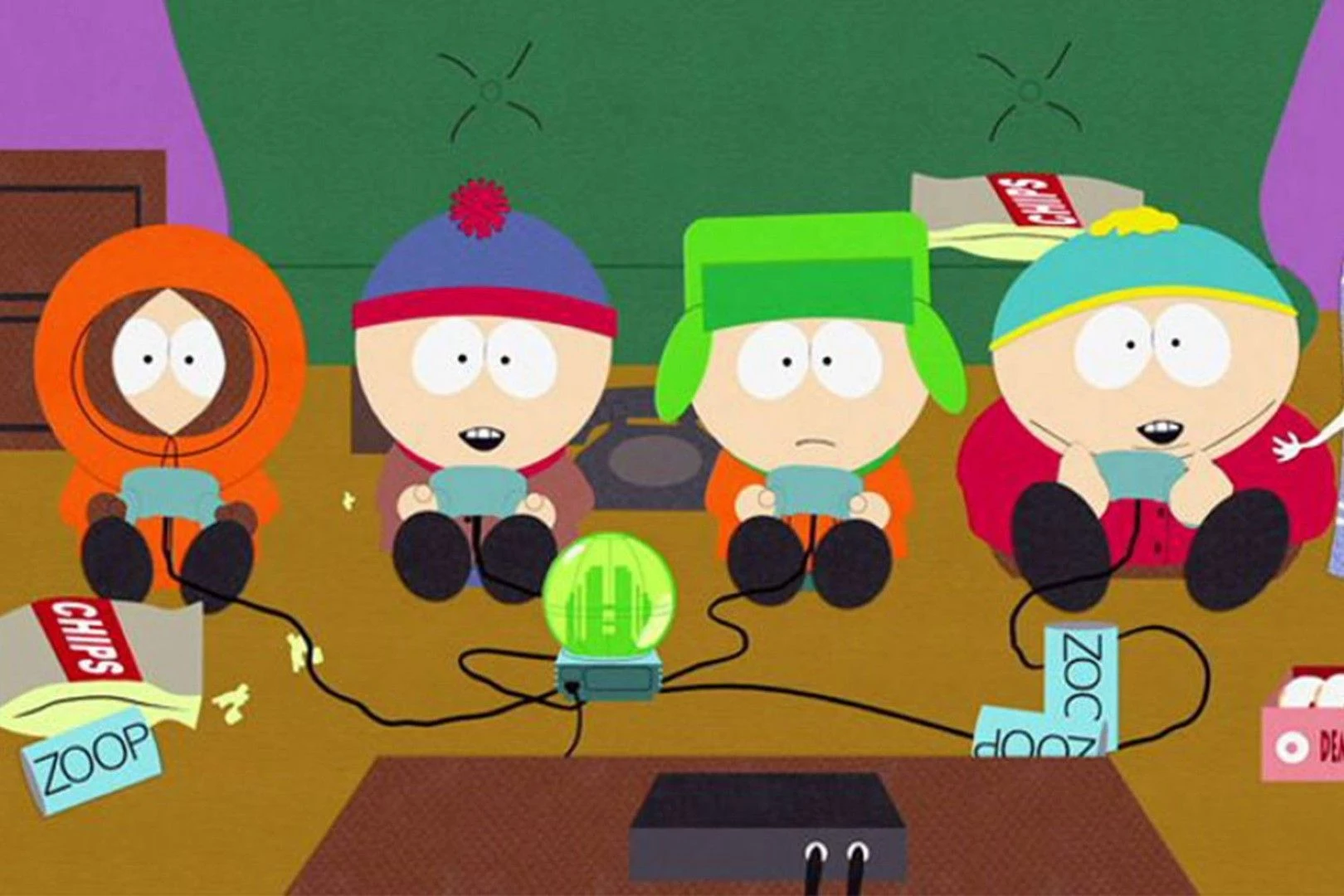
South Park
It seems like there’s always someone criticizing South Park. While people often praise its simple animation style, its ability to poke fun at anything, and how quickly it’s made, it’s still easy to find fault with the show. Its deliberately provocative and often offensive humor creates a defensive reaction – a kind of childish “are you offended?” response – and a sense that nothing is off-limits. We’re not claiming South Park is solely responsible for the difficulty we have having reasonable conversations these days, but it’s definitely a contributing factor.

The Big Bang Theory
It’s simple to dismiss a comedy as unfunny, but The Big Bang Theory was particularly disappointing. The show was supposed to be about a group of nerdy friends—plus one conventionally attractive woman—and their amusing adventures. However, the humor consistently relied on tired, predictable jokes. Like, guys who are into nerdy things can’t talk to attractive women—how original! It constantly poked fun at interests like comics, Dungeons & Dragons, and superhero shirts, implying that these hobbies make people childish. As someone who isn’t a nerd, I can say that if I were, I’d be frustrated that such a popular show portrayed nerds as immature. And to top it off, it led to the creation of Young Sheldon. I guess that’s just… something.

The Handmaid’s Tale
Viewers who stuck with all five seasons of The Handmaid’s Tale consistently criticized the repetitive storylines. Progress felt nonexistent, as any forward momentum was immediately countered by setbacks. Characters repeatedly escaped and were recaptured, making their efforts to dismantle Gilead ultimately feel pointless. Beyond the difficult-to-watch violence inflicted on women (and, to a lesser extent, men) simply to create tension, the show suffered from a lack of new ideas, diminishing its impact. Many viewers felt the story would have been better served if the Canadians had destroyed Gilead at the end of the first season.

Stranger Things
Let’s be honest about Stranger Things. While it once revolutionized the sci-fi/horror genre, influenced tons of other shows, and even revived Kate Bush’s music career, the show has really lost its spark. What began as a charming series tapping into ’80s nostalgia has become bloated and overcomplicated. The constant references and expanding backstory feel tired, and the monsters just aren’t frightening or original anymore. I’d much rather watch the classics like The Goonies, Ghostbusters, or Evil Dead than these pale imitations.

Ozark
If you’re curious about a crime drama similar to Breaking Bad, you might come across Netflix’s Ozark. However, while it’s not a bad show, it doesn’t quite live up to the praise it receives. Ozark was a personal project for Jason Bateman, who directed many episodes and also starred in it. Despite his involvement, the show features consistently dull and humorless conversations. It lacks the cleverness found in other successful crime series, which makes its four-season run somewhat surprising.

Ted Lasso
Ted Lasso arrived at a perfect moment – when people were craving feel-good TV and becoming more interested in soccer. This combination turned the show into a surprising Emmy winner and gave Jason Sudeikis the chance to play a charmingly naive character with a good heart. However, the show’s relentlessly positive messages about kindness started to feel repetitive after a while. Viewers began to lose interest when the show moved away from its original premise – an optimistic American coach turning around a struggling British soccer team with his personality – and tried to give Ted a dark past. It just didn’t fit; this wasn’t a gritty origin story like Batman Begins, it was a show about a relentlessly upbeat guy who constantly shared inspiring quotes!

Yellowstone
It’s no surprise Yellowstone is a hit. It combines classic American ideals of the Wild West with dramatic conflicts between ranchers, all set against stunning scenery. The dialogue is unique – sometimes philosophical like the show True Detective, and other times surprisingly melodramatic. Ultimately, Yellowstone is a soap opera elevated by high production values and a strong lead actor, one of the last of his kind. However, if you’re looking for truly compelling ranching drama, the prequel series 1883, starring Tim McGraw, is actually the better choice.
2026-03-05 19:58