In the labyrinthine world of cryptocurrency exchanges, where shadows dance with digits and trust is a commodity as volatile as the coins themselves, the question of transparency stands as a beacon-or perhaps, a mirage. Proof of Reserves (PoR), that sacred incantation whispered by platforms to soothe the anxious investor, is not the monolithic guardian it pretends to be. Oh no, it is a tapestry woven with threads of varying thickness, some strong enough to bear the weight of scrutiny, others as frail as the promises of a charlatan.
Recent rankings, those modern-day oracles, have laid bare the chasm between exchanges that embrace transparency with the fervor of a true believer and those that cloak themselves in opacity, like a priest hiding sins behind a veil. The difference, my dear reader, is as stark as the Siberian winter and as unforgiving as its winds.
The Crown of Transparency
KuCoin, that audacious upstart, sits atop the Proof-of-Reserves Transparency Score with an A+ rating and a score of 96 points, according to the CryptoQuant sages. Its methods are as public as a town square execution: wallet addresses laid bare for all to see, monthly Merkle-tree reserve reports, and third-party attestations that whisper, “Trust us, we are not the next Mt. Gox.” Together, these rituals form a system that shuns the shadows of internal reporting, allowing the masses to verify user balances and reserves with their own eyes. A noble endeavor, indeed-though one wonders if it is but a performance, a ballet of numbers designed to lull the gullible.
Hayes Issues Dire Warning About Bitcoin‘s Impressive Price Rally
Yet, let us not be naive. This transparency, this PoR, is but a reaction to the specter of exchange failures that haunt the cryptosphere like ghosts of Christmas past. It is a promise, a vow that exchanges hold enough assets to cover user deposits. But promises, as we know, are as reliable as a politician’s word-their worth lies in the rigor of their verification, not in their utterance.
The Frameworks of Judgment
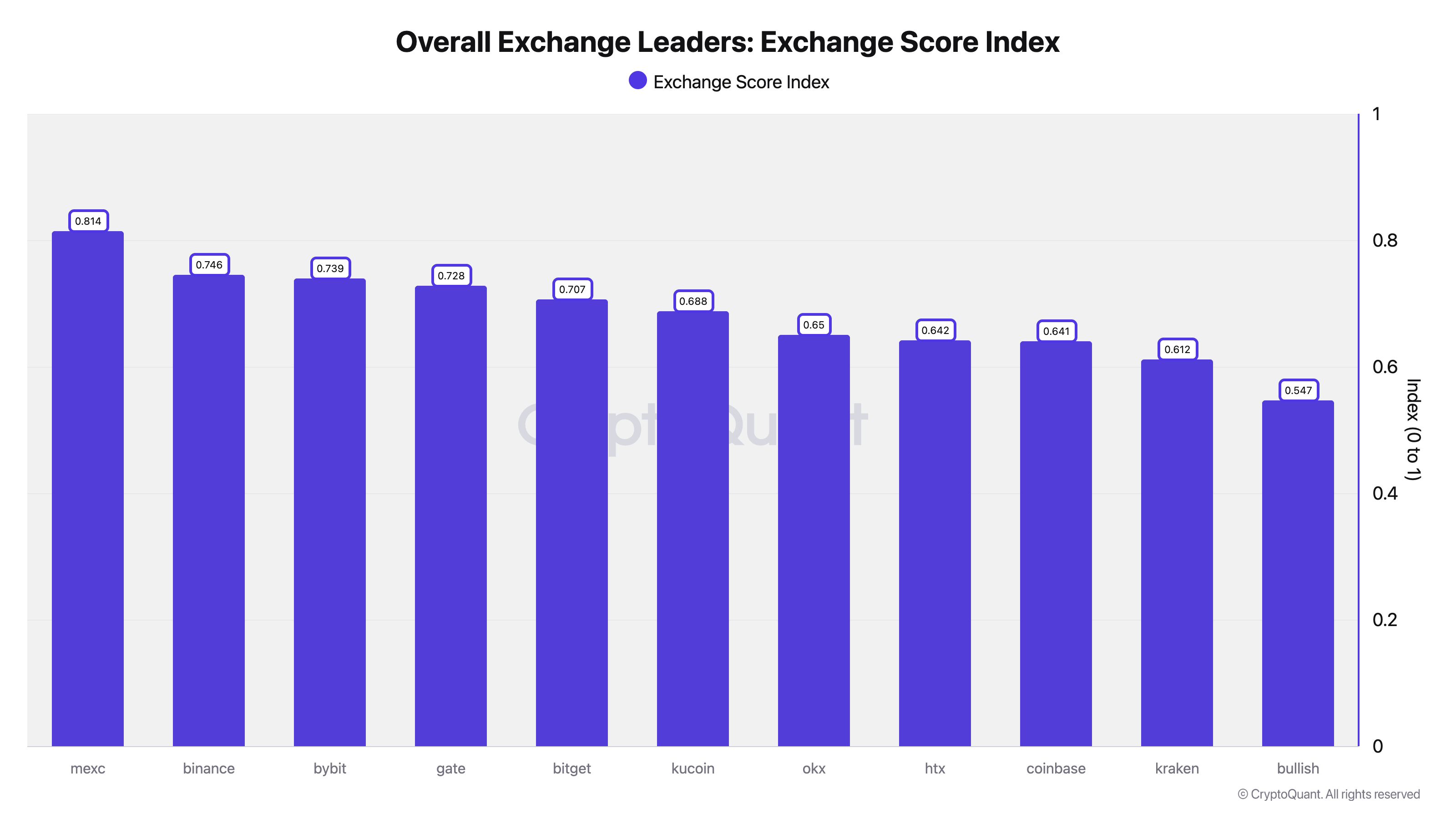
Enter the Exchange Score Index, a modern-day Inquisition that judges platforms on six pillars: trading volume, reserve levels, trading-mix balance, PoR transparency, volume growth, and reserve growth. Each pillar, equally weighted, as if the architects of this framework believe in a utopia of balance. MEXC, with its robust derivatives activity and near-90% surge in spot and perpetual trading volumes, claims the top spot in this grand pageant of numbers. A triumph, perhaps, but one built on the quicksand of derivatives-a realm where fortunes are made and lost in the blink of an eye.
Binance, that behemoth of the cryptosphere, trails behind, its unparalleled trading volume and reserves unable to mask its middling transparency and growth metrics. Bybit, with its deep derivatives liquidity and relatively robust transparency policies, completes the triumvirate. Yet, let us not forget the others-Gate, Bitget, and KuCoin-each vying for relevance with their high PoR transparency scores and rapid growth in trading volume. A crowded stage, indeed, where every actor claims the role of protagonist.
And so, we stand at the precipice of this grand theater, watching as exchanges don their masks of transparency, each claiming to be the guardian of trust. But trust, like truth, is a fickle mistress. In this world of zeros and ones, where wealth can vanish with a keystroke, perhaps the only certainty is uncertainty. And in that uncertainty, my friends, lies the true comedy-or tragedy-of it all.
2026-03-05 17:47