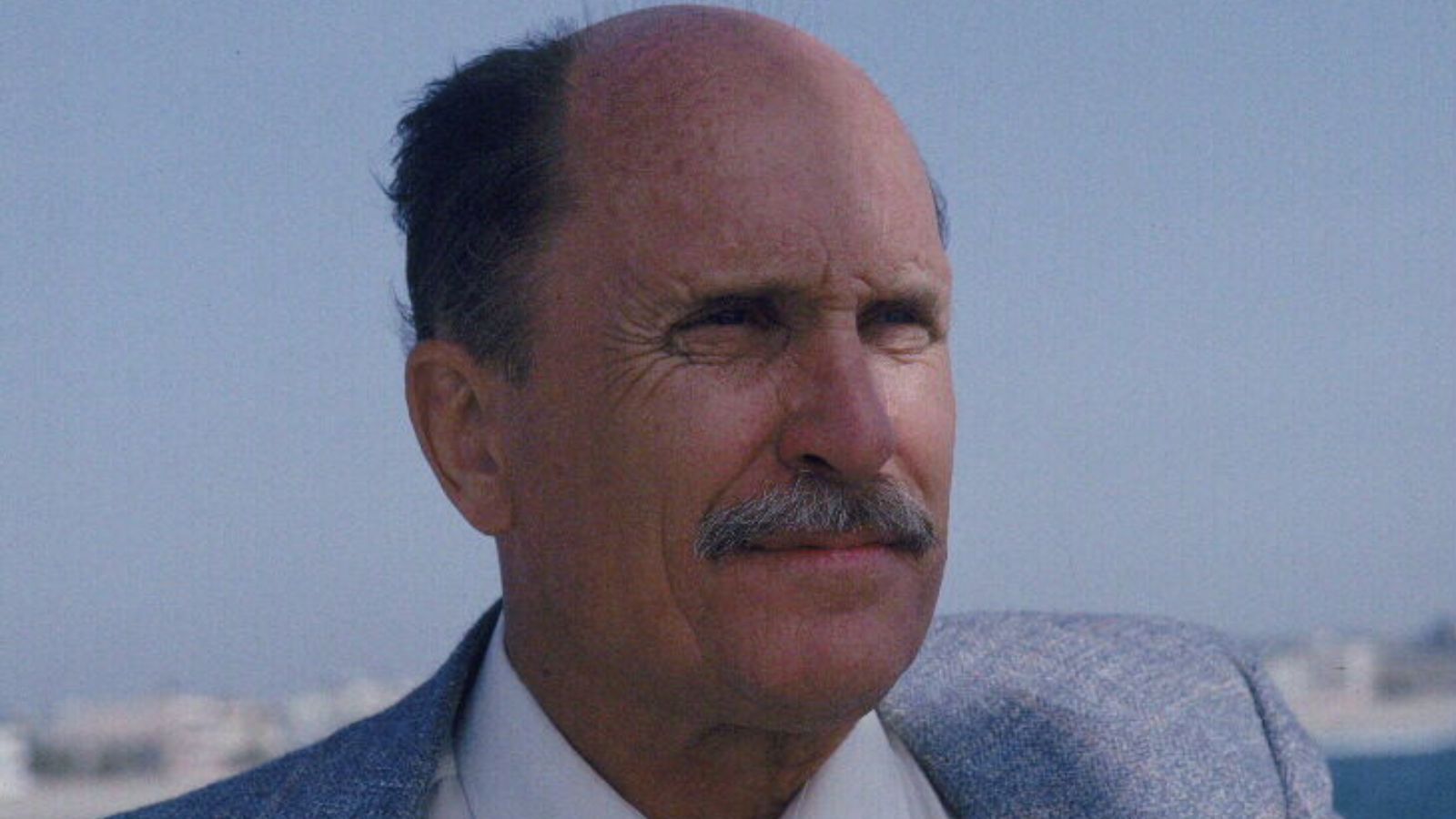
As a critic, I’ve always considered Robert Duvall a cornerstone of American cinema. From the haunting intensity of Apocalypse Now to the classic power of The Godfather and the raw energy of Falling Down, he consistently delivered unforgettable performances. Following his passing in February 2026, it’s wonderful to see people revisiting his incredible body of work – truly one of the strongest in film history. But there’s one 1993 thriller in particular that I think still doesn’t get the attention – or the understanding – it deserves.
Robert Duvall acted for more than five decades, appearing in many different kinds of films and working with some of Hollywood’s best directors. Like other talented actors of his time, he was attracted to strong stories with good writing that dealt with important issues. However, some of his work hasn’t always been fully understood by audiences. A prime example is his role in Joel Schumacher’s 1993 film, Falling Down, which often sparked misinterpretations.
Falling Down Explores A Tense Psychological Breakdown
I recently watched Falling Down and it’s a really intense movie! It starts with this guy, William Foster, who just snaps during a crazy heatwave. He ditches his car in traffic and decides to walk all the way across Los Angeles to get to his family. But things quickly go wrong when he gets into an argument with someone at a convenience store and just… loses it. From there, it’s a non-stop series of increasingly violent encounters. It’s fascinating because you also have this detective, Pendergast, who’s on his last day of work and is trying to figure out what’s going on with this guy.
The film Falling Down centers on Foster’s increasingly erratic behavior as he moves through the city. His actions swing between justifiable self-defense and random acts of violence, like holding people hostage at a fast-food restaurant just to get breakfast. Initially, the police see these incidents as separate crimes, but Agent Pendergast begins to recognize a connection, leading him to suspect a single perpetrator. As Pendergast investigates, he discovers Foster is deliberately traveling a specific route, ultimately towards his former wife and daughter. Seeing parallels between Foster’s journey and a series of murder-suicides, Pendergast fears the worst and races to intercept him.
William Foster is a complex character who often gets a one-sided interpretation. While some see him as simply a harmful and destructive person, others try to excuse his behavior. The reality is likely more nuanced. Foster may be struggling with hidden mental health issues, and his feelings of being left behind by a changing society – feeling like he no longer fits in or can provide for his family – could be contributing to his breakdown. However, it’s important to remember that even if social pressures play a role, his actions still make him the antagonist of the story. It’s difficult for some to accept that both things can be true: someone can be driven to a breaking point by societal issues and be responsible for their own harmful behavior.
The movie highlights the similarities between Foster and Pendergast, portraying them as two sides of the same coin. Both appear to be upstanding citizens, quietly observing the world while feeling left behind. Despite this, their different perspectives lead them to opposite sides of the law, culminating in Foster questioning his own morality – “Am I the bad guy?” Both characters grapple with a desire for control and share a sense of disappointment. While Pendergast regains his standing by taking control, Foster’s descent into madness prevents him from ever returning to a normal life.
How People Misunderstand Falling Down
Due to a lack of familiarity with the full movie – often from only seeing short clips online or simply misunderstanding it – Falling Down gained a reputation it didn’t entirely deserve. For those who haven’t seen it recently or haven’t finished it, the film is essentially a story about someone reacting to the overwhelming demands of modern life.
Foster expresses feelings that many people can relate to – everyday annoyances like waiting for breakfast at a fast-food restaurant. However, even when his frustrations are understandable, his reactions are excessive and don’t fit the bigger picture of the movie. He’s already spiraling and is set on harming his family. This isn’t a story about a final, minor annoyance pushing someone over the edge; it’s about a man who convinces himself he’s the hero in order to justify his actions.
While it’s true that Falling Down depicts a man struggling to regain control, this resonates more strongly with the character of Pendergast than with Foster. Foster is already established as a villain, destined to become even worse. Pendergast, however, is a fundamentally good person who has consistently let others take advantage of him – whether it’s difficult colleagues or simply trying to please his wife. It’s the dramatic downfall of ‘D-Fens’ that finally allows Pendergast to stand up for himself, and that transformation feels far more satisfying than anything Foster accomplishes.
Ultimately, Falling Down explores themes of what it means to be a man, personal worth, and human dignity in a city and society that feel like they’re falling apart. As both Foster and Pendergast navigate the harsh realities of Los Angeles, it’s hard not to feel sympathy for them. The film presents a flawed main character who embodies the effects of a crumbling society. While viewers aren’t necessarily meant to cheer for him, they’re likely to feel pity, even if they find themselves agreeing with some of his frustrations.
It’s important to realize Foster isn’t an ordinary person from the start, despite what some fans believe. He wasn’t always going to become a villain, but he already had a temper, held grudges, and was prone to violence when the story begins. He was never intended to be the hero; that role clearly belongs to Pendergast.
The 1990s is Full of Misunderstood Movies
Films from the 1990s, like The Matrix and Starship Troopers, often offered challenging and satirical stories that were easily misinterpreted. Similar to Schumacher’s 1993 film, audiences frequently viewed these movies through a contemporary lens, missing the original, intended message. Whether it was turning Neo’s “red pill” into a political buzzword or sympathizing with the destructive Tyler Durden, these films sparked varied and often unintended reactions from viewers.
The 1990s saw a surge in independent filmmaking and movie adaptations. Unlike the broadly appealing films of the 1980s, these new stories often didn’t succeed at the box office initially, but later gained a dedicated following as cult classics. This was partly because many films focused on deeper themes and relied heavily on symbolism, which didn’t always resonate with audiences simply looking for entertainment. Falling Down was an exception, gradually gaining popularity, but even its success came more from being seen as a relatable story about an ordinary person taking a stand than from a complete understanding of its complex message.
Because of the internet and short video clips like those on YouTube, many people now know older movies only through isolated scenes. These clips can easily distort a character’s full journey, which is particularly true when looking at Michael Douglas’s performance as Foster. Despite what you might see online, his story is actually a dark tragedy, but he isn’t meant to be someone we feel sorry for. He’s a product of a flawed system, not a solution to it.
Robert Duvall Leaves Behind a Powerful Movie Legacy
Following his early success, Robert Duvall continued to have a remarkable career, consistently choosing diverse roles. He skillfully balanced major productions like Jack Reacher and Apocalypse Now with smaller, lesser-known films such as Secondhand Lions and Open Range, leaving behind a lasting and impressive body of work.
He consistently proved himself to be a top performer in his field, and that quality is still evident in his work. For example, in the movie Falling Down, Robert Duvall and Michael Douglas delivered memorable performances in a film that remains surprisingly misunderstood, even today.
2026-02-26 07:08