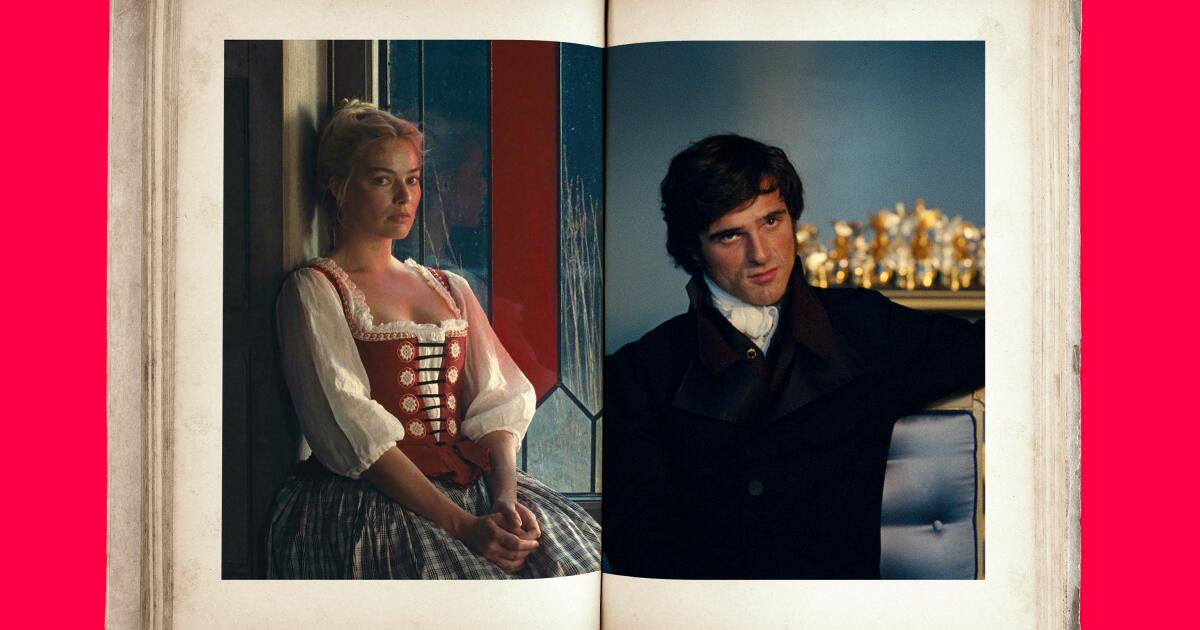
The film “Wuthering Heights,” directed by Academy Award winner Emerald Fennell, begins by stating it’s inspired by Emily Brontë’s novel.
However, as Emerald Fennell has explained in several interviews about her new film, which came out on Friday and has already sparked debate, the connection between Charlotte Brontë’s original novel and this adaptation is surprisingly complex.
Emily Brontë’s “Wuthering Heights,” written by a young woman, was shockingly rebellious for its time in 1847, and remains so today. The story features characters driven by revenge, and its love stories – like that of Catherine Earnshaw (Cathy) and Heathcliff – are filled with both emotional and physical cruelty. While the recent film adaptation stays true to the novel’s core story, it also takes some creative freedoms to reflect the director’s own feelings about reading it as a teenager.

Movies
We spoke with Jacob Elordi, Margot Robbie, and a daring British director about a fresh take on Emily Brontë’s classic story.
While Brontë’s novel only hints at physical connection, Fennell’s film is explicitly erotic, featuring passionate scenes imagined by the director.
Emerald Fennell recently shared with The Times that certain characters just live in my mind – and honestly, I think they live in all of ours. It’s like they’re part of a collective memory, you know? It really struck me how universally relatable those characters can be.
Not everyone agrees with Fennell’s take on ‘Wuthering Heights.’ Before the movie even came out, she faced criticism for casting Jacob Elordi – who previously worked with her on ‘Saltburn’ – as Heathcliff, a character consistently portrayed as not being white in Brontë’s book. Some fans also feel the film simplifies a thoughtful and socially aware story into a typical romantic movie.
Fennell recently told Fandango she put the film’s title in quotation marks because she believes a movie can’t truly capture all the complexity of the original book.
The director clarified they weren’t creating a direct adaptation of ‘Wuthering Heights,’ but rather their own interpretation of the story.
Here’s how the recent adaptation of “Wuthering Heights” takes a different approach than the original story, in seven key ways.
Movies
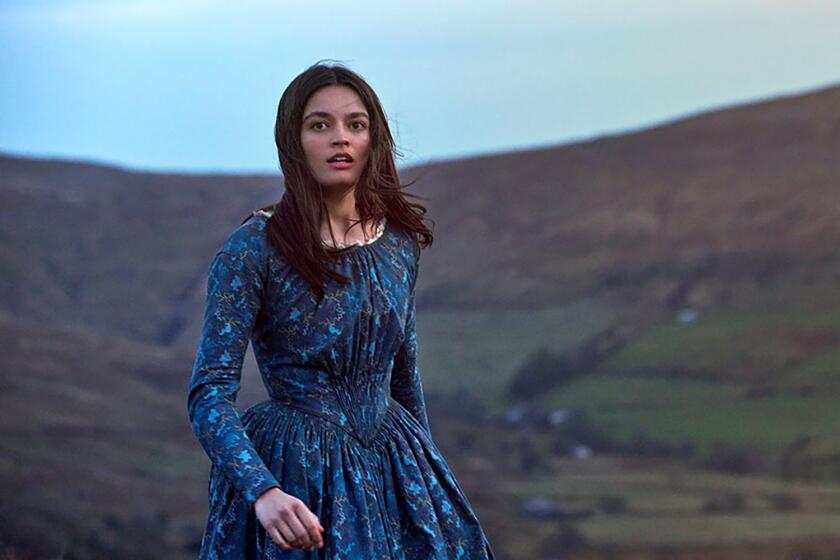
The film ‘Emily’ takes some creative liberties while still respecting the historical record, and it’s sparking renewed attention to the life and work of ‘Wuthering Heights’ author Emily Brontë, according to scholars.
Fennell’s Heathcliff is white
In Emily Brontë’s “Wuthering Heights,” Heathcliff’s ethnicity is never clearly defined. Characters describe him using terms like “gipsy,” “lascar,” and “Spanish castaway,” but it’s consistently implied that he is not white.
According to LSU professor Elsie Michie, Heathcliff’s portrayal as an outsider in Wuthering Heights makes him both frightening and attractive to other characters. Essentially, his identity as a non-white character is central to his role in the story and fuels the complicated relationship he has with Cathy.
Instead of focusing on other issues, Fennell’s movie uses differences in social class – and the interference of a character named Nelly (who we’ll talk about shortly) – to create conflict between the two main characters who are in love.
Cathy’s brother dies young
I remember when Mr. Earnshaw first brought Heathcliff home to young Cathy. She immediately decided what to call him – she said she’d name him after her brother who had passed away.
Throughout the rest of the movie, the character of Hindley Earnshaw essentially disappears, and his father, Mr. Earnshaw, takes over. It’s Mr. Earnshaw, not Hindley, who becomes a gambling, alcoholic man, ultimately losing Wuthering Heights to Heathcliff. This portrayal of Mr. Earnshaw abusing young Heathcliff makes Heathcliff’s desire for revenge feel more directly aimed at him, rather than at Hindley as in the book.

Books
With the release of Emerald Fennell’s new film inspiring huge interest in “Wuthering Heights,” six authors explore why Emily Brontë’s classic gothic novel continues to resonate and challenge readers today.
Cathy meets Edgar Linton as an adult
I’ve always been fascinated by how Cathy and Heathcliff first meet the Linton family. It happens after one of their wild adventures goes wrong – Cathy actually gets bitten by a dog! She ends up having to stay with the Lintons for weeks while her ankle heals, and that’s when everything really starts to change between them all.
In the movie, Cathy experiences a comparable accident, but as an adult. She falls from a wall in the garden of Thrushcross Grange while trying to eavesdrop on Edgar and Isabella, who are presented as a guardian and ward rather than siblings as in the original book.
Beyond simply adding humor, Fennell’s adaptation quickly moves the story toward the marriage that ultimately separates Cathy and Heathcliff.
Nelly is a meddler, and a spiteful one
While Brontë portrays Nelly as a mostly uninvolved storyteller, Fennell does something different. She completely removes the storytelling frame and transforms the housekeeper into a fully developed character who greatly influences Cathy’s life.
Nelly deliberately arranges for Heathcliff to overhear Cathy express her distress about marrying him, explaining that it would lower her social standing. This causes Heathcliff to run away, and Cathy ends up marrying Edgar. Nelly’s actions stem from Cathy previously dismissing her, claiming Nelly couldn’t understand love because she hadn’t experienced it herself. While Nelly initially seems resentful, a fleeting moment of connection between them on Cathy’s deathbed adds complexity to their relationship.
Fennell adds a level of psychological complexity to Nelly and Cathy’s relationship that isn’t as apparent in Brontë’s original novel.
Cathy and Heathcliff have sex (and a lot of it)
Despite declaring their eternal love, Cathy and Heathcliff in Brontë’s novel never actually become intimate, sharing only a few kisses shortly before Cathy’s death.
In contrast, Fennell’s adaptation of “Wuthering Heights” features a very explicit sex scene, reminiscent of the style seen in “Bridgerton” – even including intimacy in a moving carriage. The characters profess their love for each other so frequently during their meetings that it’s hard to keep track.
These smutty sequences certainly validate the Valentine’s Eve release.
Isabella is a willing submissive
A still from the series featuring Alison Oliver as Isabella is gaining attention online, and understandably so. The image shows her participating in a playful, BDSM-inspired scene with elements of puppy play, which is a significant departure from the way Isabella is portrayed as a victim of abuse in the original story.
In Emily Brontë’s novel, Isabella marries Heathcliff hoping he’ll become a better person, but she leaves with their son when she realizes he won’t change. The film, however, portrays Heathcliff as openly admitting he doesn’t and will never love Isabella; he pursues her solely to hurt Cathy, yet Isabella still chooses to be with him.
There is no second generation
One of the most noticeable changes Fennell made from the original novel is that she left out the entire second half of the story. This section focuses on the children of the main characters – Catherine Linton (daughter of Cathy and Edgar), Linton Heathcliff (son of Heathcliff and Isabella), and Hareton Earnshaw (son of Hindley and Frances).
In the introduction to the Penguin Classics edition of “Wuthering Heights,” Brontë expert Pauline Nestor explains that critics have different views on the novel’s second half. Some see it as a return to peace and stability with the next generation, after the turmoil of the first. Others believe the cycle of passion and violence between Cathy and Heathcliff will simply repeat itself with their children. Regardless, Brontë wrote the novel in a way that encourages readers to consider each part of the story in light of the other.
Fennell’s movie doesn’t continue the story of Wuthering Heights; instead, it circles back to the very beginning, concentrating intensely on Cathy and Heathcliff. Like the characters themselves, the film presents them as the most important people in existence.
2026-02-13 14:32