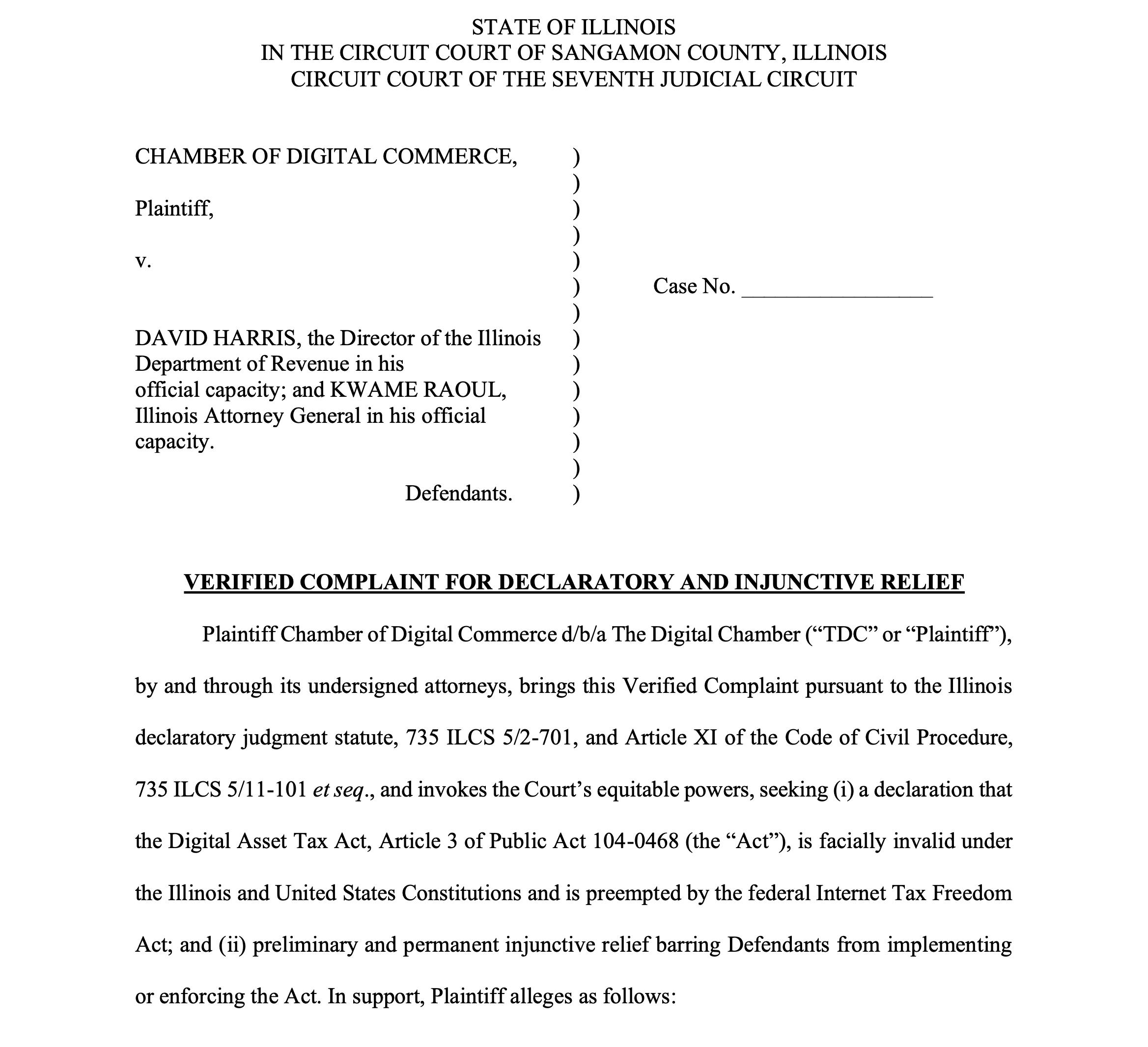
The Digital Chamber, a leading organization for the cryptocurrency industry under CEO Cody Carbone, has filed a lawsuit against Illinois. The suit challenges the state’s new law taxing digital asset businesses – making it the first legal challenge to a tax of its kind in the United States.
Key Takeaways
- The Digital Chamber filed suit in Sangamon County on July 21, against Illinois’ new crypto tax.
- The 0.2% tax on digital asset activity takes effect January 1, 2027, and could raise $60 million yearly.
- The Digital Chamber calls the law unconstitutional, a case that could shape crypto taxes in 50 states.
A 0.2% Tax on Every Transfer
The Digital Chamber filed its complaint in Sangamon County circuit court, arguing the state’s new Digital Asset Tax Act should be struck down before it takes effect on January 1, 2027. Illinois Governor JB Pritzker signed the measure into law on June 16 as part of the state’s roughly $56 billion fiscal year 2027 budget, making Illinois the first state to enact a tax specifically targeting crypto transactions.
Illinois now has a new tax of 0.2% on businesses that handle digital assets – things like exchanging, transferring, or storing cryptocurrency. This law affects companies located in Illinois, or those serving customers in the state who generate at least $100,000 in revenue each year. The state estimates this tax will bring in about $60 million annually when it’s fully implemented.
Critically, this tax applies to the total transaction amount, not just profits. As highlighted in a complaint by the Digital Chamber, the law doesn’t differentiate between winning and losing trades. This means a company could be taxed on transactions that didn’t generate any profit – or even resulted in a loss – simply because an exchange took place.
‘Unfair’ and Unconstitutional, TDC Argues
Carbone has framed the lawsuit as a battle for both consumers and the digital currency industry. He stated they are asking the courts to safeguard consumers, their members, and prevent what they consider an unfair tax in Illinois. The Digital Chamber also argues that this tax was added to the legislation unexpectedly, late at night before the final vote, leaving the industry no time to react.
As I see it, the core of this complaint hinges on three legal challenges. First, they argue the tax doesn’t comply with Illinois’s constitutional requirements for fair and just taxation. Second, they believe it violates the U.S. Constitution by unfairly hindering business between states. Finally, they contend that the tax clashes with federal law – specifically, the Internet Tax Freedom Act which generally prevents states from imposing discriminatory taxes on online transactions.
The lawsuit argues that the Illinois law simply creates a difference between traditional financial systems and those using blockchain technology. It taxes transactions involving digital assets, but doesn’t tax similar transactions in traditional finance.
Not Illinois’ First Warning Sign
After Illinois Governor Pritzker signed the bill into law in June, Miles Jennings from a16z Crypto labeled it as one of the most restrictive crypto laws in the country. Before the law took effect, both the Crypto Council for Innovation and the Illinois Blockchain Association had asked legislators to overturn the problematic section.
The initial warnings about this tax weren’t taken seriously, and Illinois is now being closely watched by other states. If several state legislatures decide that taxes on a company’s gross receipts from cryptocurrency are a good way to raise money, the lawsuit filed by the Digital Chamber of Commerce could set a precedent for how industry groups challenge similar laws in other states before they are signed into law.
A case number hasn’t been released, and Illinois officials haven’t publicly commented on the complaint yet. With only about five months until the new law goes into effect, the Sangamon County court has limited time to make a decision. Otherwise, the tax will apply to all eligible cryptocurrency transactions in the state.
2026-07-22 14:58