U.S. stocks continued to decline on Monday, marking a third consecutive day of losses. This happened as the conflict between the U.S. and Iran continued for a tenth night, pushing oil prices back towards $90 a barrel. Meanwhile, Bitcoin remained near $65,000, but overall stock markets struggled to recover.
Key Takeaways
- The Dow fell 307 points and the S&P 500 dropped 0.2% as the Iran war reached its 10th night of strikes.
- Trump vowed Iran will “pay many times over” for American deaths after the toll reached 17 U.S. troops killed.
- Bitcoin held near $65,000 and a $1.306 trillion market cap even as Wall Street posted its third losing day.
Wall Street Slips as Earnings Week Begins
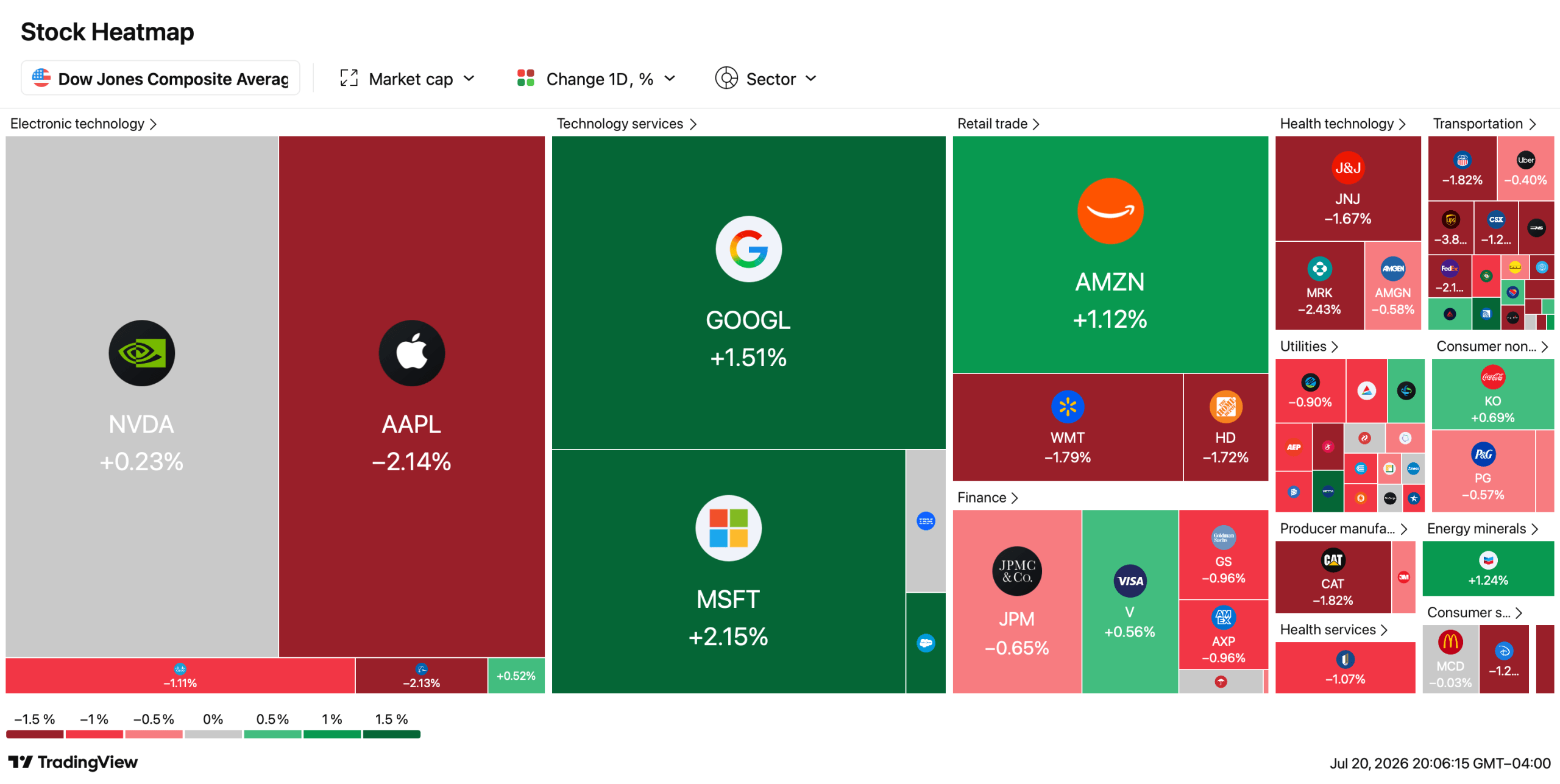
Wall Street was a bit rattled on Monday, to say the least. The S&P 500 closed at 7,443.28, down 14.41 points, or 0.2%. The Dow Jones Industrial Average dropped 307.16 points, or 0.59%, to 51,839.26. The Nasdaq Composite slipped just 12.17 points, or 0.05%, to 25,508.07, holding up better than the broader market as tech shares absorbed less of the damage.
The stock market started strong this morning, with the Nasdaq initially rising as much as 1.2%. However, those gains didn’t last as news from the Middle East shifted investor focus. Additionally, traders are preparing for a busy week of company earnings reports, including updates from Tesla, Alphabet, Intel, and several large banks.
Strikes Continue Into a 10th Night
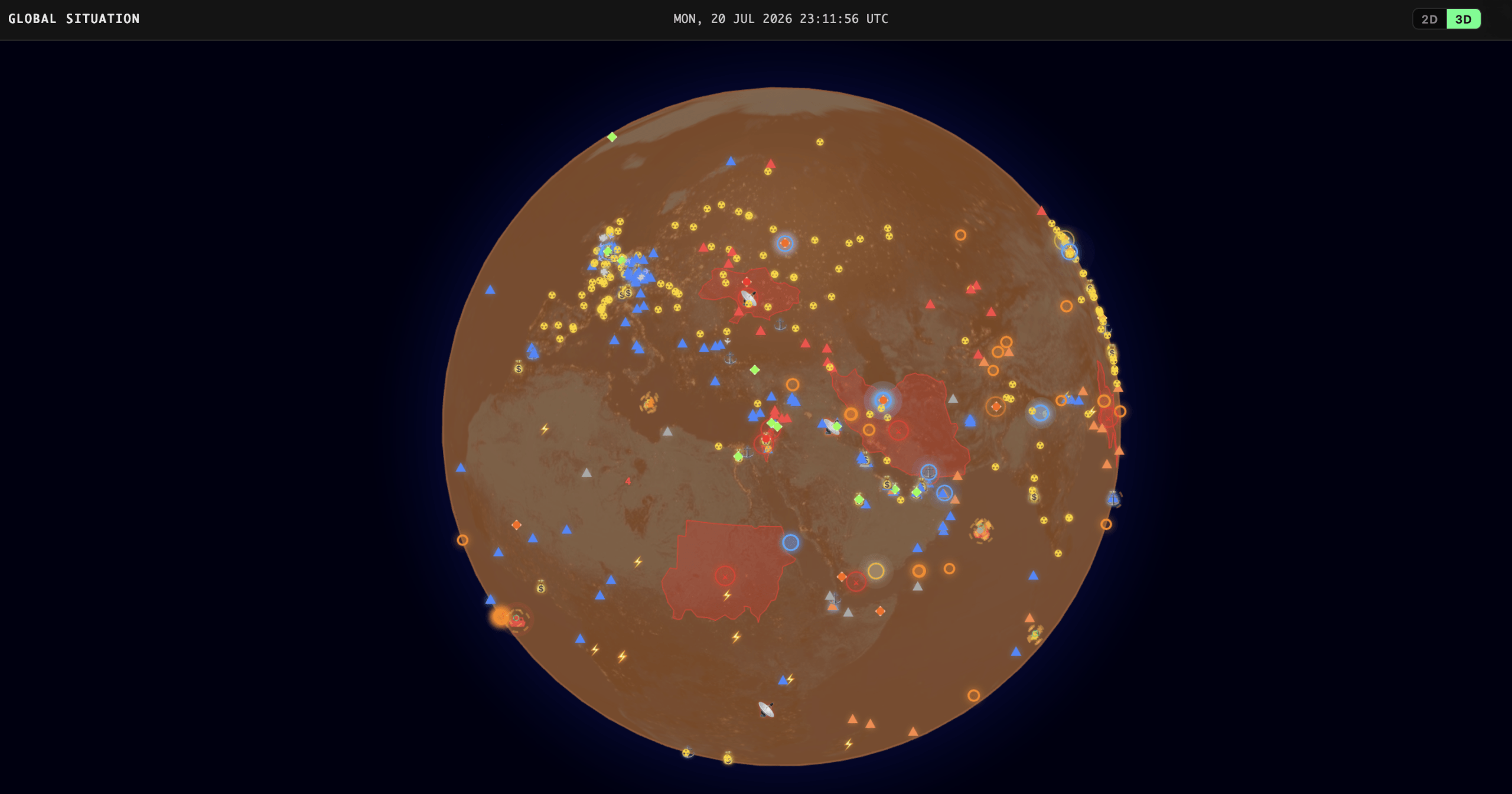
U.S. Central Command reported that American forces conducted their tenth consecutive night of airstrikes against targets in Iran early Monday. These attacks are part of an ongoing effort to secure the Strait of Hormuz following multiple attacks on commercial ships. The current conflict began with U.S. and Israeli strikes on Iran in late February, and a recent attempt at a ceasefire failed after fighting resumed.
The Pentagon has recently reported the deaths of several American service members in Jordan and Iraq. While the exact numbers are hard to confirm due to ongoing conflict, reports indicate around 17 U.S. troops have been killed and approximately 430 wounded since the start of the war.
President Donald Trump has pushed for continued retaliation. On Truth Social, he wrote:
If Iran harms any American service member, there will be significant consequences. This instruction has been given to Secretary of Defense Pete Hegseth, Chairman of the Joint Chiefs of Staff Daniel Caine, and all military leaders.
Trump also addressed the toll directly in an interview with the New York Post, calling recent troop deaths a “shame” while standing behind the mission. “They did it because they don’t want to see Iran have a nuclear weapon,” he said.
Oil and Gas Prices Stay Elevated
At $88 a barrel, Brent crude has climbed back toward $90 a barrel as fighting around the Strait of Hormuz continues, up from levels near $80 earlier this month. The strait normally carries about 20% of the world’s seaborne oil and liquefied natural gas, and transits have dropped sharply as vessels reroute or hold position amid the naval blockade the U.S. reimposed in mid-July.
Yemen’s Houthi movement has added a second front by blockading Saudi Arabia, a step that has kept energy markets tense even when ceasefire proposals surface. U.S. gas prices have climbed back to a national average of $4 a gallon. Kuwait, home to the U.S. Navy’s 5th Fleet, reported Iranian strikes on a power and desalination plant, a sign that the fighting is reaching well beyond Iran’s own borders.
Higher energy costs create a direct problem for the Federal Reserve. Officials have been watching for inflation to cool, and a sustained run of $90 oil makes that job harder. Airlines, shippers, and manufacturers that depend on fuel are the most exposed, while energy producers have room to benefit from the higher prices.
How Stocks Broke Down by Sector
On Monday, energy and materials stocks performed better than the overall market, offering investors a relatively safe haven during a period of decline. Stocks in industrial and financial sectors, which make up a large portion of the Dow Jones Industrial Average, experienced the biggest losses as investors considered the potential economic impact of a prolonged conflict. Small company stocks, as measured by the Russell 2000 index, fell more sharply than larger stocks, reflecting concerns about rising borrowing costs and a weakening economy.
Trading in Asia and Europe showed a similar split. South Korea’s KOSPI fell sharply while Hong Kong’s Hang Seng gained, and European indexes edged lower. The CBOE Volatility Index, a common gauge of investor fear, stayed elevated but well short of levels seen during past market panics, a sign that traders see the conflict as serious but not yet a reason to abandon stocks altogether.
Bitcoin Holds Steady Around $65,000
Bitcoin traded around $65,083 to $65,320, up about 0.65%, or $423, over 24 hours, with a market capitalization near $1.306 trillion and a daily volume of around $31 billion. The token touched three-week highs earlier in July on softer inflation data before giving back some gains as investors turned cautious.
The contrast between bitcoin’s small gain and the stock market’s decline reflects a pattern that has shown up before in this conflict, with bitcoin acting more like a hedge than a risk asset during bouts of geopolitical stress. Spot bitcoin ETFs have continued to see inflows, and institutional buyers have kept adding exposure even as broader markets pull back.
A breakout above $66,000 to $68,000 would likely need either a de-escalation in the Middle East or a clearer signal from the Fed on rate cuts. Bitcoin appears to be holding its ground for now as markets weigh the prospect of lower rates against the backdrop of the Middle East conflict. Although persistent inflation has kept the Fed on the sidelines, the war could ultimately compel the central bank to reconsider its stance.
A Familiar Pattern, on a Larger Scale
The current situation can be compared the current standoff to earlier Gulf conflicts, including the Tanker War of the 1980s and shipping incidents in 2019 and 2020, when threats to the Strait of Hormuz briefly pushed oil prices higher before markets adjusted. What is different this time is bitcoin’s maturity. In earlier Gulf crises, there was no comparable asset for investors looking to sidestep both stocks and the dollar. Now there is, and its performance this week is being read by some traders as an early test of that role.
What Comes Next
Traders should expect volatility to persist as long as the Strait of Hormuz remains contested and the Houthis’ blockade continues. A congressional hearing on the cost of the war is expected soon, and diplomatic channels through Qatar remain open even as fighting continues. For now, investors are watching two things at once: this week’s corporate earnings and any sign that the conflict in the Middle East is easing.
2026-07-21 03:59