Before the premiere of her film, “Traces of Home,” at Hollywood’s TCL Chinese Theatre during the Los Angeles Latino International Film Festival, director Colette Ghunim helped the audience relax with a guided breathing exercise.
Because her film deals with sensitive themes, the 34-year-old director—currently training to become a somatic coach—needs to be emotionally prepared before viewing it.
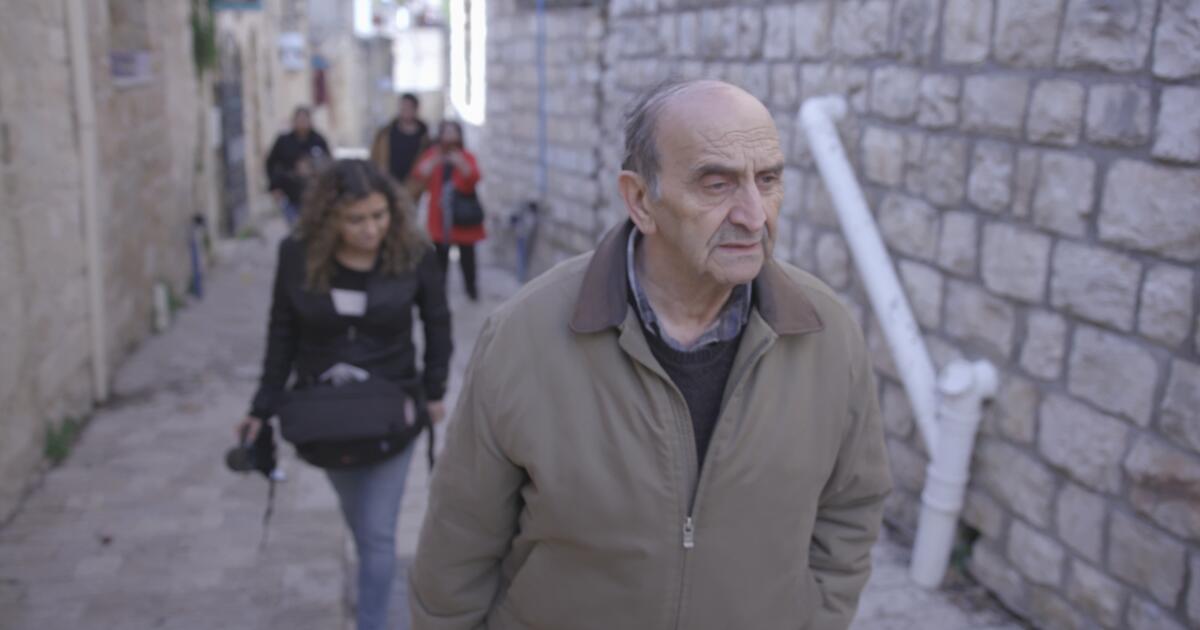
“Traces of Home” documents Ghunim’s journey with her family to Palestine and Mexico, the homelands her parents were forced to leave many years ago. Her father’s family was driven from their home city of Safed in Palestine in 1948, part of an event called the Nakba where around 750,000 Palestinians were displaced when Israel was founded. Ghunim’s mother’s family left Mexico to escape an abusive grandfather.
Ghunim’s exploration goes beyond simply looking at her parents’ lives and experiences; she also examines how those events affected her relationships with them, particularly her complicated bond with her mother. She directly addresses her mother at one point, trying to understand the source of the tension and resentment between them.

Melissa Barrera, a Mexican actor and activist, discusses her work in Hollywood and her role alongside Simu Liu in the new Peacock spy series, “The Copenhagen Test.”
Melissa Barrera, a Mexican actor and strong supporter of Palestinian rights, became an executive producer on the film because of its relevant political themes and emotionally honest storytelling.
Barrera shared with The Times that this project is deeply meaningful to them, both because of their connection to Palestine and their own identity as a Mexican American – the story centers on a family with that same background.
Stories about immigrant families and the lasting pain of being forced to leave their homes are especially powerful right now. It’s easy to overlook the deep trauma that refugees experience and how it affects not just them, but also their future generations.
Barrera explained that even though she joined the project as an executive producer fairly late, she wanted to be credited to help increase the film’s profile.
Barrera explained that he wants to share the work with as many people as possible, and he’s happy to use his name to help it reach the right audience.
And she successfully elevated its status.

William D. Caballero, the director of the upcoming film ‘TheyDream’, doesn’t see himself fitting into traditional filmmaking molds. His first feature will conclude the Los Angeles Latino International Film Festival on May 31st.
Because of Barrera’s involvement with the film, “Traces of Home” was one of the very few screenings at the Los Angeles Latino International Film Festival that completely sold out.
The 35-year-old star of “In the Heights” also praised filmmaker Ghunim’s courage, noting her willingness to openly and honestly discuss difficult personal experiences in her films.
The woman has always struggled with her relationship with her mother and is now working to improve it. She understands it will be challenging, but she’s willing to have difficult conversations, even on camera, and be completely open about her feelings. She hopes this will inspire other families to have similar conversations and heal their own relationships. It was a very generous and moving thing for her to do.
Barrera envisions “Traces of Home” as a model for the kinds of stories she wants to produce with her new production company, hoping to open doors for similar projects in Hollywood.
We’re aiming to create a wide range of content, including thought-provoking and impactful films that tackle difficult subjects other studios might avoid. It’s also really important to me that we work with genuinely good people. There are problems in the industry where people with questionable character continue to get opportunities without accountability, and that contributes to a negative work environment. I believe we need to change that and create a healthier industry.

The 2026 Los Angeles Latino International Film Festival kicked off with ‘Valentina,’ a funny and heartfelt mockumentary that shares the real stories of people from El Paso and offers a human perspective on immigration.
After my film premiered at LALIFF, I had a chance to chat with The Times. We talked about how deeply personal the project was for me, and it was really moving to hear how people at the festival reacted to it – the emotional response was incredible.
This interview has been edited for length and clarity.
How did you decide that you wanted to put your family’s story out there?
I began making films in 2017, and it’s been a nine-year process. Initially, I was driven by political issues—specifically, the separation of families at the border and restrictions on refugees in the Arab world. I felt a strong need to share my parents’ experiences as migrants from Mexico and Palestine. That first project focused on social justice, aiming to show the true stories of immigrants and refugees.
As I began making the film, several mentors encouraged me to explore my underlying motivations, suggesting I needed a more profound reason for telling this story. I honestly didn’t know what that ‘deeper layer’ could be. They even suggested therapy, which led me to racial identity therapy. I was feeling disconnected from my roots and wanted to understand how that impacted me. Through therapy, I learned about intergenerational trauma and repeatedly found myself thinking about my relationship with my mother – her controlling nature and strictness. I realized her behavior stemmed from trauma, and that’s when the film’s focus shifted to exploring that dynamic. Even as I delved into this, I still didn’t know how the film would end. Our travels to Mexico and Palestine were incredible, but ultimately, the film became much larger and more complex than I initially imagined.
Both Palestine and Mexico have experienced significant changes recently, impacting global perceptions of each place. These changes have also led to increased political awareness, particularly in the United States. I’m curious about how you approached portraying these evolving identities, and how world events ultimately shaped the film’s story and reception.
We were editing the film in 2023 when the events in Gaza began, and it was incredibly difficult. We were already working on a story about deep trauma and the historical roots of the situation – how things reached this point of injustice and displacement. Many people asked if we would incorporate those current events into the film or change the story. We considered it, but ultimately decided against it. We wanted to keep the focus personal and intimate, not create another news report – there’s already so much of that available. Earlier versions of the film included references to figures like Trump and other news items, but it felt unnecessary and diluted the core message. What’s truly needed is for people to understand the Palestinian experience and who Palestinians are as individuals.
Recent events have made sharing this story feel more urgent. It was particularly striking because I had footage of my dad watching the news – he’s a constant news viewer – and at the time, in 2021, there was a surge of violence in Palestine. I filmed him watching the coverage, and we intentionally didn’t date the scene because its relevance extends beyond that specific moment – it could just as easily be happening now.
In the end, we decided not to make any changes to the movie. With everything that happened, getting the film released quickly became our top priority.

It was amazing to see so many people connect with the film after the LALIFF screening. They told me it felt very relatable and that they felt truly understood by the story. Seeing such a strong reaction has been incredibly moving.
It’s incredibly moving to see how deeply this resonates with people, especially those who recognize their own family struggles and internal battles within it. As a person of color, it’s truly special to finally feel seen and understood for what we’ve experienced, particularly as a child of immigrants or refugees. It’s a complicated feeling because you’re often told you shouldn’t complain – you have everything, your parents sacrificed so much to give you a better life. But despite all that privilege, there are still these hidden emotional barriers carried down from previous generations, things many of us didn’t even realize were there.
I was really moved by the feedback I received after the screening. Many people had never considered the idea of intergenerational trauma before, and they shared that the film helped them understand their parents and motivated them to have difficult conversations with their families. That’s such an important first step toward healing – it takes time, but it’s a necessary process. I’m incredibly thankful for that response.
After this experience of making the film, do you feel more Palestinian? Do you feel more Mexican?
It’s a real loss for those of us who haven’t returned to our parents’ countries of origin. This creates a unique kind of sadness – a sense of loss for something we didn’t even realize we were missing. When I finally visited Palestine and Mexico, and connected with the land and its people, it suddenly made sense why I always felt out of place in the U.S. It’s like society tries to force us into a mold that doesn’t fit who we truly are. Returning to my heritage felt like my ancestors were supporting me, which was a completely new feeling. Learning the languages of my ancestors was also key to reconnecting with my roots, and I believe knowing where we come from is incredibly important.

‘Palestine ’36’ presents a complex, underseen history with the sweep of an old-school epic
Annemarie Jacir’s historical drama about the 1936 Arab Revolt against British occupation is powerfully brought to life by a talented cast, including a compelling performance from Jeremy Irons as the villain.
Could you discuss the significance of having Melissa Barrera and John Leguizamo on board as executive producers? And how did their involvement with the project begin?
Honestly, it’s been incredible watching this project come together – it’s surpassed all my expectations. A producer friend of mine, who I worked with back in Chicago, was making a film about John Leguizamo, so they’re really close. He’s the one who suggested we reach out to John, and thankfully he said yes! When we had a rough cut ready, we showed it to Dena Takruri, a journalist with Al Jazeera, and she was immediately on board – she really connected with it. She then passed it along to Melissa, a friend of hers, saying she thought Melissa, as a Latina with Mexican roots, would especially appreciate it. And she loved it too – she joined the project right away!
I’m incredibly impressed by Melissa. Her bravery in speaking out about the terrible situation in Palestine and advocating for an end to the occupation is remarkable. She consistently lives by her beliefs, which is rare in this industry. It’s no surprise she understands the heart of the film, as it reflects her own genuine character. It’s a privilege to have someone so authentic involved in the project.
In the film, there’s a scene where your family is traveling by bus in Palestine. The local guide points out a fence separating Israelis and Palestinians, and mentions the same company also bid on building the wall between Mexico and the United States. How did you react when you realized this connection – how the struggles of people in different places were linked, considering your own background?
Honestly, hearing that didn’t totally shock me, but it did hit me hard. It suddenly became so clear how everything’s connected – the same powerful corporations are behind the displacement of people, whether it’s happening here with settler colonialism or across borders in places like Palestine. That’s why it was so important to me to include that connection in the film. As a Latino, it made me realize that what’s happening in Palestine isn’t so far removed from our own experiences – it’s a pattern of injustice repeating itself all over the world.
2026-06-02 02:02