
Filmmaker William D. Caballero received the NEXT Special Jury Award for Creative Expression at this year’s Sundance Film Festival for his debut film, “TheyDream,” a deeply personal and innovative multimedia project. He delivered a moving speech when accepting the award.
He remembers saying in a recent interview that if Immigration and Customs Enforcement (ICE) were to hurt or kill him, this film would be a record of who he and his family truly are, before news outlets like Fox News or the current government portrayed them negatively.
Using a mix of real footage and animation, along with the detailed miniature sets Caballero has created for over ten years, “TheyDream” is a tribute to the filmmaker’s Puerto Rican family, especially his mother, Milly.
I was deeply moved by this film, a truly unique portrayal of grief, strength, and the power of coming together. What really struck me was the genuine connection between the filmmaker and her subject – we get a glimpse into their incredibly honest conversations, and it adds so much depth to the story.
Witnessing her enthusiasm and growth was incredibly energizing. It opened up a space for us to discuss difficult topics and connect while collaboratively building a story that meant something to both of us,” Caballero explains. “It felt like a partnership—not me simply turning her experiences into something special, but creating that special something together.”
This unique and personal film will be the final movie shown at the Los Angeles Latino International Film Festival (LALIFF) on Sunday. John Leguizamo and Ben DeJesus recently signed on as executive producers.
 ×
× Beginning with his 2013 short film, “How You Doin,’ Boy? Voicemails From Gran’pa,” Caballero began creating miniature scenes to honor his family. What started as a short, charming look at his Puerto Rican grandfather’s funny advice turned into the HBO Latino series, “Gran’pa Knows Best.”
When I began working on ‘Gran’pa Knows Best,’ I was aware that 3-D printing was a new technology. However, I hadn’t seen anyone recreate a person – their appearance and voice – in that way before. I quickly understood it could be a powerful and imaginative way to keep my grandfather’s voice and life story alive.
Caballero has created several short films inspired by his family. He made “Victor & Isolina” in 2017 about his grandparents, and more recently, “Chilly and Milly” (2022) which portrayed his parents. He cleverly reused some of the miniature sets and characters from these earlier shorts in his latest work, “TheyDream.”
You know, as a film fan, I’ve always been fascinated by world-building, and talking to artists like Caballero, it strikes me how much of it comes down to recapturing that childhood sense of play. He explained it perfectly – when we’re kids, we’re constantly making up stories. But as artists, we can use that same imaginative spark to explore really complex things – painful memories, big hopes, and dreams – all while holding onto that feeling of innocence we had as children. It’s like building a tiny world where you can work through big emotions.

“TheyDream” represents the peak of Caballero’s artistic style, which he’s been refining since his days studying digital art at the Pratt Institute in Brooklyn. It’s a showcase of his diverse and adaptable creative approach.
I’ve always been drawn to finding fresh and unique ways to tell stories. I’m proud of that, but it also means I probably won’t ever be a traditional filmmaker,” he says with a laugh.
Still, working outside the margins of traditional moviemaking requires great adaptability.
When Caballero received funding for his project, “TheyDream,” in 2021, it wasn’t enough to realize his original vision of creating the entire film with 3-D-printed figures and physical sets. Due to limited resources, he changed his plans and hired two Puerto Rican animators, Julisse Tinoco and Frank Martinez, who each have unique animation styles, to help create certain scenes.
Caballero credits her upbringing with teaching her to be resourceful. Growing up Latino and from a low-income background, she explains, you quickly learn you have to prove yourself and not accept being underestimated – otherwise, it’s easy to feel defeated before you’ve even had a chance to start.
Caballero had a challenging childhood, moving between housing projects in New York City and a trailer in his grandmother’s yard in Fayetteville, North Carolina. His parents both lived with disabilities.

Caballero explains that art has been a vital outlet, helping him cope with the pressures of American consumer culture, poverty, and a sense of being stuck. He consistently turns to creative expression as a way to process difficult emotions and overcome grief.
He created “TheyDream” as a way for his mother to explore her own thoughts and feelings. The film explores the complexities of family relationships and her life dedicated to caring for others.
He explains that over the years, they’ve lost several family members they were both close to, particularly his mother. She feels those losses more deeply than he does. He lives in Los Angeles, while his mother still lives alone in a mobile home in North Carolina, and he worried about her being alone during these difficult times.
He explains that his mother struggles with self-worth because she’s spent so much of her life caring for older family members, and she feels lost when they pass away, as if she hasn’t accomplished anything. However, he points out that their extended lives were actually due to her dedicated care.
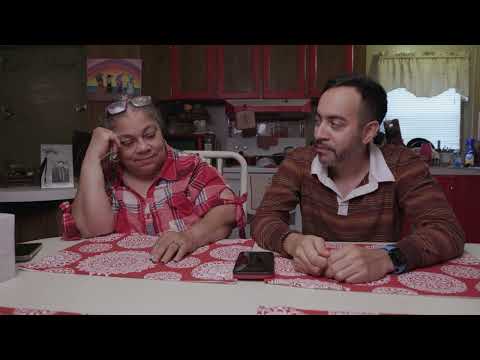
At the Sundance Film Festival premiere of “TheyDream,” Caballero’s mother saw how the film portrayed her – a film she had collaborated on with her son.
Honestly, when I was thinking about how to portray her, I really wanted to capture this moment where she realizes the impact she’s had. I envisioned her looking out at the applause and just feeling seen, like, ‘Wow, these people are celebrating me because I’m strong and my story matters.’ It wasn’t just about her personally, though. I wanted to show that her experience reflected the struggles and resilience of so many low-income Americans, no matter their background. It was incredibly moving to even think about, and I really hoped that feeling came across on screen.
Award-winning artist Caballero (a 2018 Guggenheim Fellow) is currently developing several new projects. One is a series called “Second Fiddle,” which tells the story of a 15-year-old Latino boy who earns a spot in a highly competitive summer orchestra program. His overprotective mother unexpectedly decides to accompany him to camp.

He grew up never seeing anyone who looked like him – a Latino violin player – represented in movies or on television. He didn’t see characters who were creative, a little different, and passionate about the arts, like himself. This realization deeply bothered him, and he felt driven to change that lack of representation.
Caballero’s project, “Raúl Playing Game,” is described as a mature take on the Pixar film ‘Inside Out,’ exploring the inner world of a man who is secretly bisexual – a reflection of Caballero’s own identity. In 2022, the project received support through the LALIFF Inclusion Fellowship, allowing him to create a short film as a pilot for a possible television series.
He explains that he’s always prioritized telling genuine stories, even if they weren’t always uplifting. He’s glad he stayed true to that goal, believing it’s important for people to share their own experiences in their own way, before others define them.
2026-05-29 23:31