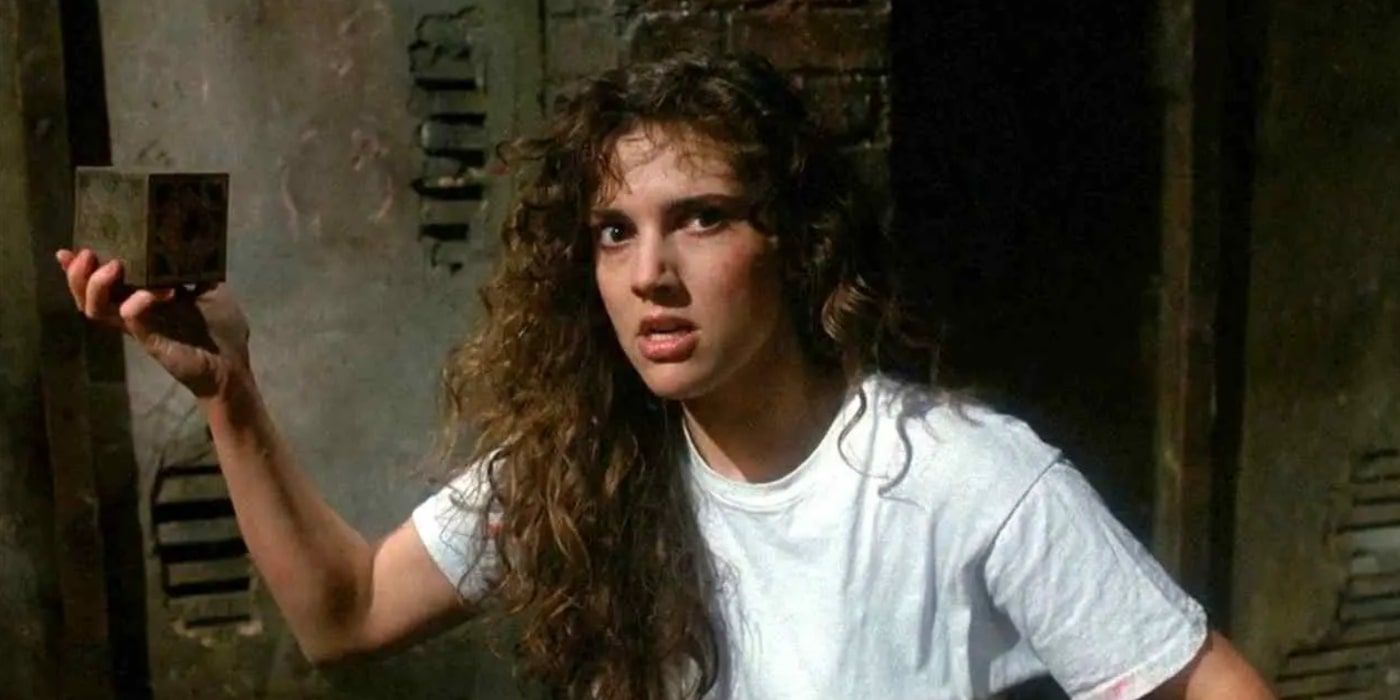
As a huge horror fan, I always thought Clive Barker’s film seemed like a classic 80s slasher – you know, with a final girl, lots of deaths, and plenty of gore. But honestly, I think it gets unfairly grouped in with those simple ‘hack-and-slash’ movies. When you really look at it, it’s actually quite different, and it’s a bit of a stretch to even call it a slasher film!
Clive Barker didn’t intend for Hellraiser to be a typical slasher film. He envisioned a dark, suspenseful thriller focusing on a troubled home life, using gore to drive the plot. The movie blends the intense passion of Fatal Attraction with the disturbing body horror of The Thing. Unlike many horror films, Hellraiser isn’t about a mysterious killer or creative ways to die; it explores themes of obsession, sexuality, and the disintegration of a family. While Pinhead is the most iconic character, the true horror comes from seeing how unchecked desire and infidelity transform an everyday house into a terrifying place.
Hellraiser Shouldn’t Be Considered a Slasher Movie
What defines a slasher movie? It’s become common for any film with a lot of deaths, a surviving female character, a killer in a mask, or similar elements to be called a slasher. However, just having those features doesn’t automatically make a movie part of the genre.
Slasher movies follow a pretty predictable pattern. A killer stalks and murders victims for enjoyment or a specific reason. The story usually involves a group of people cut off from help, like in a secluded area with no phone access. Then, the killer systematically hunts them down until only one, or maybe three, people are left. Films like Scream, Halloween, and Friday the 13th are classic examples of this formula.
Look, when I think of classic slasher films, Hellraiser just doesn’t quite fit, and it’s not about the blood, despite what you might expect. Clive Barker wasn’t interested in racking up a high body count for its own sake. The gore serves a purpose – it pushes the story forward and helps us understand the characters. And Pinhead? He’s iconic, sure, but he’s not your typical slasher villain. He doesn’t actively enjoy killing, and he doesn’t do much of the actual killing himself. It’s less about sadistic fun and more about… something else entirely.
Despite often being compared to slasher films, Hellraiser stands apart because of its thoughtful script. It delves deeper into complex relationships – the love triangle between Julia, Frank, and Larry, and Kirsty’s difficult family life – rather than simply focusing on violence. It’s a more intellectually stimulating horror film, exploring ideas that go beyond the typical masked killer trope.
Hellraiser Is a Domestic Drama Disguised as a Horror
Similar to films like Fatal Attraction and other stories about relationships, Hellraiser explores themes of sexuality, intense desire, and unusual attractions. This is most clearly shown through the character of Julia, who feels unfulfilled in her marriage and repeatedly fantasizes about a passionate encounter with Frank, which happened just before her wedding.
Julia’s attraction to Frank isn’t just about him as a person; it’s about everything her marriage to Larry lacks. She expected a certain quality of life, but her marriage has become a hollow and unsatisfying routine. Though Larry is kind and supportive, Julia sees him as ordinary and predictable, and she longs for the excitement and passion he doesn’t provide.
Barker’s story shifts from straightforward horror to a more symbolic exploration of relationships. After dying, Frank transforms into a terrifying creature, desperate to regain his form through human sacrifices demanded of Julia. He embodies the destructive nature of obsession and intense passion, and how those things can strip away our humanity. Frank’s skinless state symbolizes the raw, animalistic lust that defined his affair with Julia – a connection built on dark desires and a shared desire to escape the ordinary.
Julia’s murders, committed to restore Frank’s body, aren’t motivated by love. Instead, she’s driven by a desperate need to recapture the powerful, passionate experiences they shared. Their relationship is a destructive cycle – she provides the victims, and he remains alive. Essentially, the film uses this gruesome imagery to represent a toxic relationship where one person sacrifices their own well-being and harms others to feed their partner’s endless selfishness. Simply put, Hellraiser explores how a woman’s intense sexual desire outside of her marriage manifests as a terrifying, physical monster.
Hellraiser’s Gore Is What Makes Its Domestic Horror So Effective
Though it only runs 94 minutes, Clive Barker’s film definitely doesn’t hold back on violence – which probably explains why some people mistakenly label it as simply a gore-fest. While it certainly has plenty of shocking and disturbing moments, the gore in Hellraiser actually has a deeper purpose than just trying to scare the audience.
Barker contrasts the horror of violence with the idea of a perfect home life. Later in the film, Frank murders Larry, and the scene cuts away before we see it. He then wears Larry’s skin. What follows is a disturbing bedroom encounter between Frank, disguised as Larry, and Julia, interrupted by Kirsty, who realizes her father is in danger. Julia then brings Kirsty to the attic, where they discover Larry’s decaying skeleton.
This scene highlights two key ideas. First, it shows Frank’s jealousy of his brother’s life. Driven by a desire to control the Cotton family, he possesses Larry’s body to become the one in charge, claiming Julia and Kirsty as his own. Second, it’s a symbolic representation of the end of their marriage. The decaying body signifies the breakdown of their relationship, powerfully emphasized by the fact that she had just been intimate with Frank while he was inhabiting her husband’s body.
The following scene echoes the previous one. When Kirsty discovers Frank is her father, she tries to run, but Julia stops her and prepares her as the next victim. Frank then shockingly attacks and devours his lover, coldly saying, “nothing personal, baby.” This act symbolizes how damaging and draining a toxic, codependent relationship can be, fueled by intense obsession and desire.
Ultimately, Frank’s death marks the complete and final outcome. The Cenobites are the physical embodiment of obsession – as they put it, “Angels to some, demons to others.” They represent the absolute limit of Frank and Julia’s intense connection. Once human, they succumbed to forbidden passions, losing their humanity and becoming beings devoted to pain. Frank’s death is, in essence, the destructive force of his own desires and the relationship that consumed him.
It might seem far-fetched to tell a story about a man who comes back to life and needs his former lover to provide him with blood, especially while being pursued by monstrous beings. However, the original Hellraiser wasn’t meant to be the way it’s often understood today.
While it’s become known as a horror and even spawned a slasher series, the original story, much like the book it’s based on, was always a deeply tragic and disturbing tale of obsession. At its heart, it’s a family drama, but one presented in a shockingly graphic and intense way, and it laid the groundwork for many of the themes Clive Barker would revisit throughout his filmmaking career.
Found an error? Send it so it can be corrected.
Read More
- Clash of Clans “Clash vs Skeleton” Event for May 2026: Details, How to Progress, Rewards and more
- Clash of Clans May 2026: List of Weekly Events, Challenges, and Rewards
- Farming Simulator 26 arrives May 19, 2026 with immersive farming and new challenges on mobile and Switch
- The Division Resurgence Best Weapon Guide: Tier List, Gear Breakdown, and Farming Guide
- Last Furry: Survival redeem codes and how to use them (April 2026)
- Gear Defenders redeem codes and how to use them (April 2026)
- Honor of Kings x Attack on Titan Collab Skins: All Skins, Price, and Availability
- Neverness to Everness Hotori Build Guide: Kit, Best Arcs, Console, Teams and more
- Top 5 Best New Mobile Games to play in May 2026
- Brawl Stars x My Hero Academia Skins: All Cosmetics And How to Unlock Them
2026-05-08 20:38