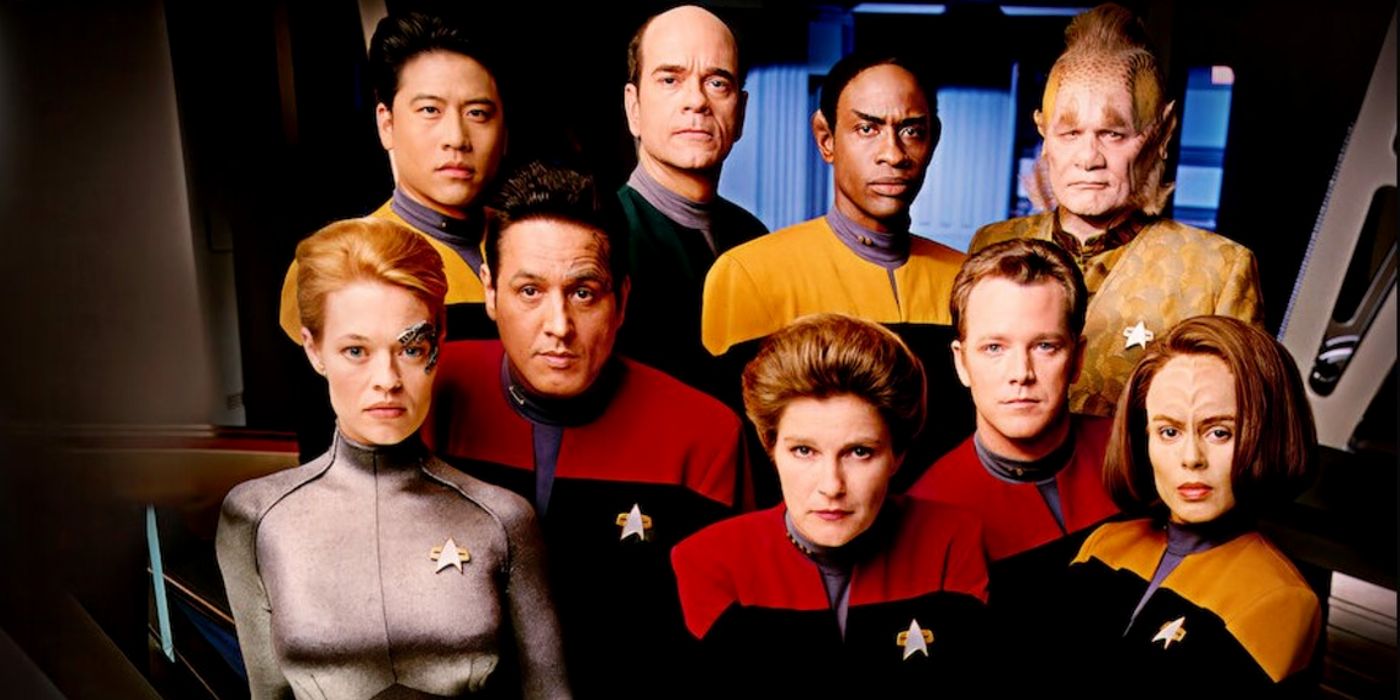
Science fiction and time travel are a classic combination. Many sci-fi shows feature time travel, but it’s also a popular idea in other genres like horror and fantasy, often used to explore interesting and sometimes frightening possibilities.
Of course, Star Trek frequently used time travel as a plot device in both its episodes and movies. A particularly memorable example is the Season 5 episode “Timeless,” which was also the show’s 100th. It’s considered one of the best time travel stories ever written, largely because of its strong emotional core, which made it feel surprisingly realistic.
“Timeless” Focuses on the Emotional Damage and Repercussions of Time Travel
In Season 5, Episode 6, titled “Timeless,” the crew of Voyager attempts to use a new type of engine, called a slipstream drive, to finally return home after being lost in the Delta Quadrant. Throughout most of the series, the main goal is getting back to Earth. Captain Janeway frequently refers to her Captain’s Log, and the way she phrases entries implies she isn’t confident they will ever succeed.
For the first time in over four years, the team on “Timeless” genuinely believes they might be able to return home. Their new slipstream engine should make it possible. However, considering this is just a mid-season episode, it seems unlikely they’ll actually succeed – major plot points like returning home are usually saved for season finales or series endings. Still, the technology behind the slipstream engine is exciting and offers real hope.
During their journey through the slipstream, something went wrong and it became unstable, causing severe damage to the Voyager. Captain Janeway had to make an emergency landing on the closest planet, a frozen world that quickly encased the entire ship in ice. Luckily, Chakotay and Harry Kim were piloting the Delta Flyer at the time and managed to avoid the same fate, as the smaller ship was meant to scout ahead and guide Voyager through the slipstream.
Fifteen years after the Voyager disappeared, Starfleet had officially stopped looking for the ship, even though Chakotay and Harry Kim continued the search on their own. Starfleet’s decision, particularly when Harry Kim felt he was on the verge of a breakthrough, led both men to resign from Starfleet. They couldn’t abandon the hope of finding Voyager and struggled with the guilt of the lost crew, as well as the knowledge that Harry Kim’s calculations might have inadvertently led to the deaths of over 150 people aboard the ship.
Chakotay and Harry Kim go on the run from Starfleet after devising a plan to contact Seven of Nine fifteen years in the past, before the Voyager crashed. They hope warning the ship will prevent the crash and save everyone on board, but altering the past would have unpredictable consequences in the present. Starfleet can’t allow them to change history, as it could fundamentally alter the timeline, and therefore, they try to stop them. Maintaining the integrity of time is simply non-negotiable.
This episode takes an unusual approach to time travel: Chakotay and Harry Kim don’t attempt to go back themselves. Instead, they work with a temporal transmitter, hoping to send a message to Seven of Nine as she was fifteen years earlier. Their goal is to warn the Voyager and potentially alter the ship’s future.
“Timeless” Is a 47-Minute-Long Time Traveling Masterpiece
The episode isn’t really about the complicated science of time travel, even though it does a good job of explaining how the technology could work. Instead, it’s a story about the emotional consequences of choices, particularly focusing on Chakotay and Harry Kim. It’s a thoughtful exploration of difficult feelings like guilt, loss, trauma, and the pain of surviving when others don’t.
Some fans focus on Chakotay and Harry Kim’s unwavering dedication to finding the Voyager and rescuing its crew after 15 years. They consistently hold onto hope and are willing to do anything to bring the crew home. Both are also troubled by the Temporal Prime Directive and Starfleet’s willingness to potentially sacrifice 150 lives.
Many fans sympathize with the reluctance to alter the past. Changing past events could have unforeseen and potentially devastating consequences for the future, impacting countless lives. The question arises: is saving the 150 people on Voyager worth the risk of disrupting the timeline and creating a potentially worse future? This presents a difficult moral problem with no easy answer, as both sides have valid points.
It’s understandable why Chakotay and Harry Kim would risk everything to rescue their friends on the Voyager, especially if they believed they could succeed. Similarly, Starfleet’s desire to protect the timeline by preserving the past is also a valid concern. The episode clearly wants us to root for Chakotay and Harry, as anyone would want to save their crewmates – leaving them to die just wouldn’t feel right.
What I really love about this story is how it makes you think. It doesn’t just present a situation, it asks tough questions. Like, are these characters, Chakotay and Harry Kim, genuinely doing the right thing, or are they still haunted by their past and acting out of guilt? It really gets me pondering whether it’s healthier to learn from your mistakes and move on, or if trying to change what’s already happened is even possible – or a good idea.
If Chakotay and Harry Kim were facing this situation in real life, they’d have to acknowledge they are the sole survivors of the Voyager and deal with the fact that the ship was destroyed. Accepting this and finding a way to move on would be the healthiest way to cope, and the only path towards continuing their lives after such a tragedy.
The episode concludes with a heartwarming scene set 15 years in the past, after the Voyager crew overcomes a dangerous engine malfunction. Captain Janeway tells Harry Kim that his future self was the one who rescued them, calling him a “guardian angel.” Reflecting her renewed optimism, she changes her log entries to reflect certainty about their return home, shifting from “if we get home” to “when we get home,” and demonstrating her increased faith in her crew.
While the ending is happy, the show doesn’t explore what happens after the past is altered, making the episode’s themes even more thought-provoking and emotionally resonant.
Read More
- Gear Defenders redeem codes and how to use them (April 2026)
- Last Furry: Survival redeem codes and how to use them (April 2026)
- Brawl Stars April 2026 Brawl Talk: Three New Brawlers, Adidas Collab, Game Modes, Bling Rework, Skins, Buffies, and more
- All 6 Viltrumite Villains In Invincible Season 4
- Clash of Clans: All the Ranked Mode changes coming this April 2026 explained
- Annulus redeem codes and how to use them (April 2026)
- The Mummy 2026 Ending Explained: What Really Happened To Katie
- Total Football free codes and how to redeem them (March 2026)
- The Real Housewives of Rhode Island star Alicia Carmody reveals she once ‘ran over a woman’ with her car
- Beauty queen busted for drug trafficking and money laundering in ‘Operation Luxury’ sting
2026-04-22 18:39