
A federal judge has stopped Nexstar Media Group from completing its $6.2 billion purchase of a competitor, effectively reversing the merger of the country’s two biggest television station owners.
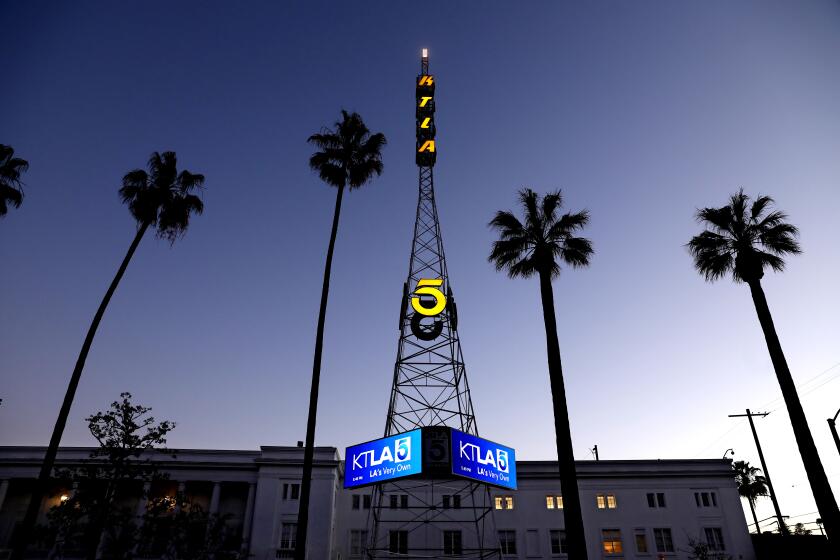
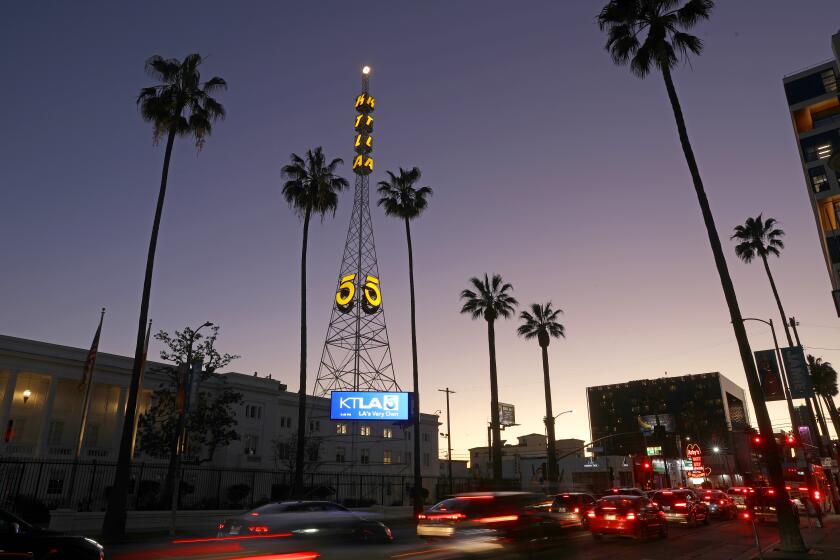
On Friday, a federal judge temporarily blocked Nexstar, the owner of KTLA 5 in Los Angeles, and Tegna Inc. from merging. This decision comes as California Attorney General Rob Bonta and seven other state attorneys general challenge the combination in court.
The order takes effect on Tuesday.
The judge ordered Nexstar to allow Tegna to keep running as its own, separate business, managed independently. Nexstar also needs to ensure Tegna remains a strong and competitive company that continues to operate successfully.
The injunction is Nexstar’s latest setback in the controversial deal championed by President Trump.
Bonta and others are fighting the merger, claiming it breaks a long-standing U.S. law designed to prevent monopolies by eliminating a significant competitor. If approved, the deal would allow Nexstar, a company based in Irving, Texas, to control 265 TV stations nationwide, an increase from its current 164. This would also mean Nexstar would own multiple local TV channels in many cities, including San Diego and Sacramento.
That duplication has raised concerns about staff consolidations and widespread newsroom layoffs.
Attorney General Bonta called the court’s decision a major victory, stating that the merger is clearly unlawful. While the federal government has stopped challenging it, Bonta pledged to continue the fight to protect consumers, workers, and local news access, as well as to ensure affordability.
Hollywood Inc.
As a big fan of local news, I’ve been following the Nexstar-Tegna merger closely. Nexstar, who owns KTLA, has been telling regulators that combining with Tegna won’t actually reduce the number of options we have for getting our news. Basically, their lawyers are arguing it won’t hurt competition.
On March 18th, Attorney General Bonta and several other state attorneys general filed a lawsuit to stop the merger. The attorneys general, all Democrats, argued that the combined company would become too powerful, leading to higher prices for viewers and a reduction in local news and sports coverage, according to the lawsuit.
DirecTV also filed its own lawsuit, arguing that the merger would give Nexstar and Tegna an unfair advantage in the pay-TV market. They claimed this would force DirecTV to pay much higher fees to broadcast Nexstar and Tegna stations, including local news and NFL games. DirecTV stated these increased costs would then be passed on to their 10 million subscribers.
Trump had been pushing for the agreement, even posting on social media in February, saying, “Get that deal done!”
Just one day after several lawsuits were filed, the Trump administration gave the green light to the deal on March 19th. The Justice Department finished its competition review, and the FCC authorized Nexstar to take over Tegna’s station licenses.
Nexstar quickly announced it had completed the acquisition of its competitor in McLean, Virginia.
Tegna, the company, has been dissolved, and its shareholders have been paid. This leaves uncertainty about the future of Tegna’s TV stations and how they will operate while a legal battle continues.
According to Judge Nunley’s order, Nexstar is prohibited from interfering with how TEGNA operates. TEGNA’s own team must remain in charge of all decisions, including things like negotiating with cable and satellite providers, managing the newsroom, handling day-to-day operations and programming, deciding what products and services to offer, developing new products, selling advertising, and managing its employees.
Nexstar argues it’s strange to block a deal after it’s already been agreed upon. However, the plaintiffs pointed out that Nexstar knew about the state attorneys general’s concerns as early as March 10th – over a week before DirecTV and the states filed their lawsuit.
I’m really impressed to see so many states stepping up! Colorado, Connecticut, Illinois, New York, North Carolina, Oregon, and Virginia have all joined California in this important lawsuit. It’s great to see them working together.

Hollywood Inc.
The end of CBS News Radio sends local outlets scrambling for a new national news source.
The Federal Communications Commission (FCC) didn’t fully approve the merger, leading Senators Ted Cruz and Maria Cantwell to ask questions about how the FCC dealt with it.
In a letter to the FCC on March 30th, two lawmakers expressed strong concerns about how the Commission is using its power when making decisions with major legal, policy, and economic impacts. They specifically pointed to a recent deal that would create the largest local broadcast television group ever in the United States, calling it an unprecedented transaction.

Hollywood Inc.
Inside the crisis facing local TV news: Layoffs, consolidation and shrinking ratings
As TV stations like KTLA try to cut costs and attract viewers away from streaming services, experienced journalists could lose their jobs.
Nexstar has become a major media company by buying up other businesses. A key purchase was Tribune Broadcasting, which included the well-known station KTLA, for $6.2 billion in 2019, during Donald Trump’s first term as president.
Critics have raised concerns about Nexstar’s plan to buy Tegna, arguing it would give Nexstar control of stations in most U.S. states—reaching 80% of the population. This would break a legal limit of 39% ownership set by Congress.
DirecTV is concerned that merging the two biggest television station groups could lead to higher prices and more service interruptions for viewers, ultimately hurting its pay-TV service.
The judge late last month combined the two lawsuits.
In a hearing earlier this month, lawyers for Nexstar stated that the company had received all required federal permissions to acquire Tegna’s stations, and therefore opposed the injunction.
I was really struck by Judge Nunley’s decision – he essentially dismissed the defendants’ reasoning, and even put aside the strange way the FCC approval happened to do so. It was clear he wasn’t buying their arguments at all.
Nexstar argues the agreement would improve the financial health of TV stations, enabling them to invest more in news coverage and offer more newscasts. However, DirecTV points out that in some markets where Nexstar owns two stations, they only operate a single newsroom to provide programming for both, effectively reducing news resources.
Nexstar’s lawyer, Alexander Okuliar, argued that those suing didn’t prove the merger would immediately harm the public.

Hollywood Inc.
Nexstar Media Group has finalized its purchase of Tegna, even though some state attorneys general objected to the deal.
Judge Nunley, appointed by President Obama, ruled that the plaintiffs presented a strong case and likely would have succeeded if the case had gone to trial.
Nexstar is expected to appeal Nunley’s injunction.
Hollywood Inc.
The move comes after Nexstar wins FCC approval and finalizes its $6.2-billion takeover
Nexstar requested the court to require the people suing them to provide a $150 million guarantee, covering any financial losses Nexstar might experience if the deal was delayed.
However, the judge rejected Nexstar’s request, stating they didn’t provide any financial data or proof to justify such a large bond, nor did they demonstrate they would suffer financially if the injunction was lifted.
Read More
- Annulus redeem codes and how to use them (April 2026)
- Gear Defenders redeem codes and how to use them (April 2026)
- Silver Rate Forecast
- Gold Rate Forecast
- All Mobile Games (Android and iOS) releasing in April 2026
- The Division Resurgence Best Weapon Guide: Tier List, Gear Breakdown, and Farming Guide
- Last Furry: Survival redeem codes and how to use them (April 2026)
- Kagurabachi Chapter 118 Release Date, Time & Where to Read Manga
- Genshin Impact Nicole Pre-Farm Guide: Details about Ascension and Talent Materials
- Total Football free codes and how to redeem them (March 2026)
2026-04-18 04:32