So, you want to buy a cup of coffee with Bitcoin? Sounds simple, right? Wrong. According to the utterly sensible folks in Washington, every time you trade a fraction of a Bitcoin for a latte, you’re not just buying caffeine-you’re triggering a taxable event. Yes, you read that correctly. The IRS, in all its infinite wisdom, demands you calculate capital gains on your morning pick-me-up. Because nothing says “financial freedom” like filling out tax forms for a $3 transaction.
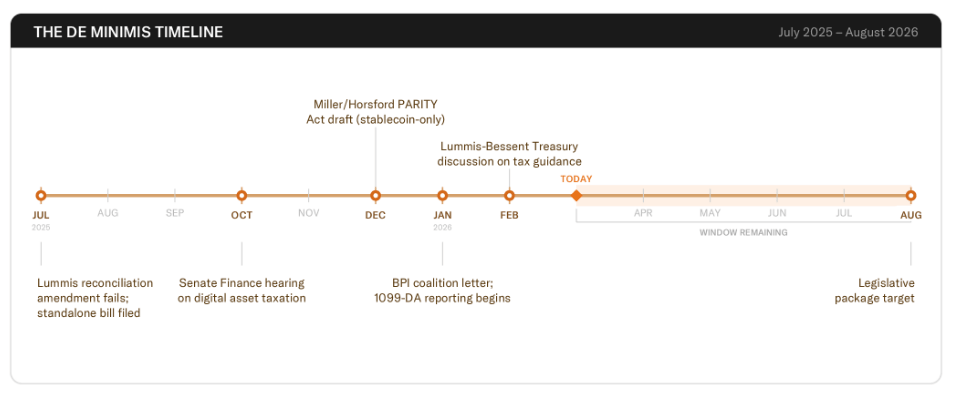
This bureaucratic brilliance has ensured that Bitcoin remains the domain of investors, not the average Joe who just wants to pay for a sandwich without fishing for change. And now, a plucky advocacy group, the Bitcoin Policy Institute (BPI), is sprinting through Capitol Hill like a herd of confused lobsters, trying to convince Congress to fix this before it’s too late. Spoiler alert: they’ve got until August 2026. After that, midterm elections will suck up all the legislative oxygen, leaving Bitcoin users to drown in a sea of tax forms.
The Clock Is Ticking, and So Is Your Sanity
The BPI has been busy, meeting with 19 congressional offices in the past three months. Their mission? To push for a “de minimis tax exemption,” which is just a fancy way of saying, “Let people buy a burrito without becoming an accountant.” The idea is to allow small Bitcoin transactions under a certain dollar amount to slip past the IRS’s eagle eyes, untouched by capital gains reporting.
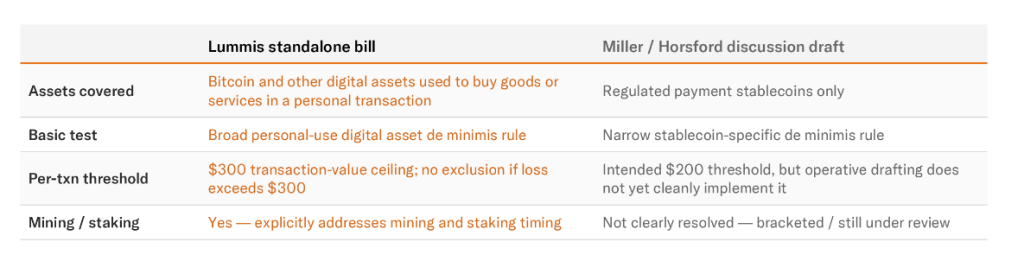
Senator Cynthia Lummis of Wyoming, the legislative equivalent of a Bitcoin superhero, introduced a bill in July 2025 that would exempt crypto transactions of $300 or less, with a $5,000 annual cap. But, as is tradition in Congress, the bill stalled faster than a Windows 95 computer. And with Lummis set to exit the Senate in January 2027, the BPI fears her departure will leave the issue as orphaned as a forgotten password.
Two Bills, One Goal, and a Whole Lot of Confusion
To complicate matters, there are now two competing bills. Senator Lummis’s bill covers Bitcoin and other cryptocurrencies, while a House bill from Representatives Max Miller and Steven Horsford focuses solely on stablecoins. Because, you know, nothing clears up legislative gridlock like a good old-fashioned turf war.

Pierre Rochard, a board member at Bitcoin treasury firm Strive, summed it up perfectly:
“The number one impediment to Bitcoin payments adoption is tax policy, not scaling technology.”
In other words, the real enemy isn’t blockchain congestion-it’s the IRS.
The Burden of Buying with Bitcoin
The current system effectively punishes anyone who dares to spend Bitcoin instead of hoarding it like a digital dragon. Every purchase requires tracking the asset’s value at the time of acquisition and again at the point of sale. It’s like trying to buy a loaf of bread while solving a Rubik’s cube blindfolded.
Ironically, a de minimis exemption already exists for foreign currency transactions. So, you can swap dollars for euros without a second thought, but buying a pizza with Bitcoin? That’s a tax nightmare. Go figure.
Whether Congress will act before the political calendar slams the door shut remains anyone’s guess. But one thing’s for sure: if they don’t, the only thing you’ll be spending Bitcoin on is therapy to cope with the tax stress.
2026-03-14 16:11