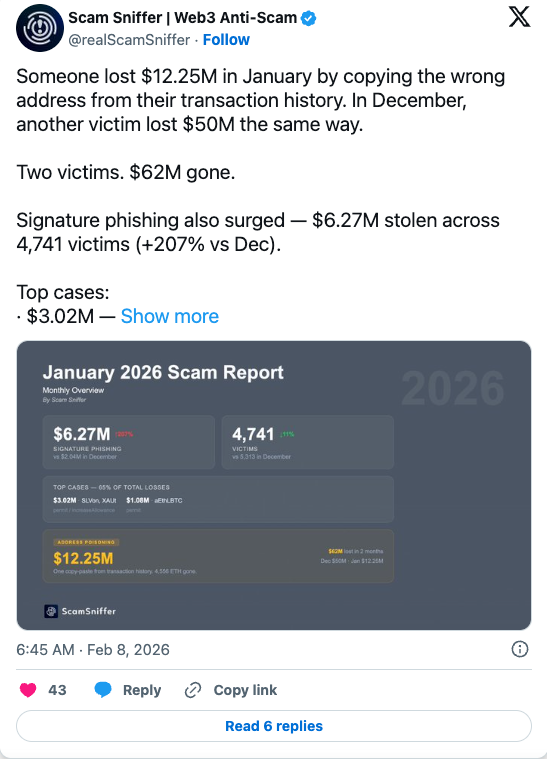
In the ceaseless war between man and his own gullibility, a singular incident in January laid bare the tragicomedy of modern finance: $12.2 million spirited away by a mere typo in a blockchain address. One might chuckle at the absurdity-if the sum were not so staggering.
But let us not dwell on this alone. For in December, a similar charade saw $50 million vanish like smoke, a testament to the audacity of those who peddle digital sleight-of-hand. Truly, the era of the “honest thief” has arrived.
What say you, dear reader? Shall we surrender to chaos, or shall we rise, wallet in hand, and reclaim our dignity?
Enter Trust Wallet, that noblest of digital sentinels, now armed with a new stratagem: Address Poisoning Protection. A feat of ingenuity, or perhaps desperation, to thwart the simplest of deceptions.
Let us dissect this marvel.
The Scam That Doesn’t Steal Your Keys
Address poisoning, that most cunning of arts, is neither sorcery nor science-it is the art of deception. The villain, with a grin as sly as a fox, sends a paltry transaction to a wallet, forging an address so near to truth that even the sharpest eye might falter. And lo, when the user, in their routine, copies the address from history, they unwittingly send gold to the villain’s coffers.
No keys are stolen, no walls breached-only the mind’s trust is exploited. A masterstroke, if one admires the work of fools.
Detecting Lookalike Addresses Before Funds Are Sent
Behold, the new armor of Trust Wallet! When a user enters an address, the wallet, like a vigilant steward, compares it to the user’s past dealings. Should a suspicious twin appear, a warning rises-a gentle nudge against the folly of haste.
And here, in a stroke of brilliance, the wallet lays the addresses side by side, highlighting the discrepancies as a schoolmaster might a student’s errors. A moment’s pause, and the user might yet save themselves from ruin.
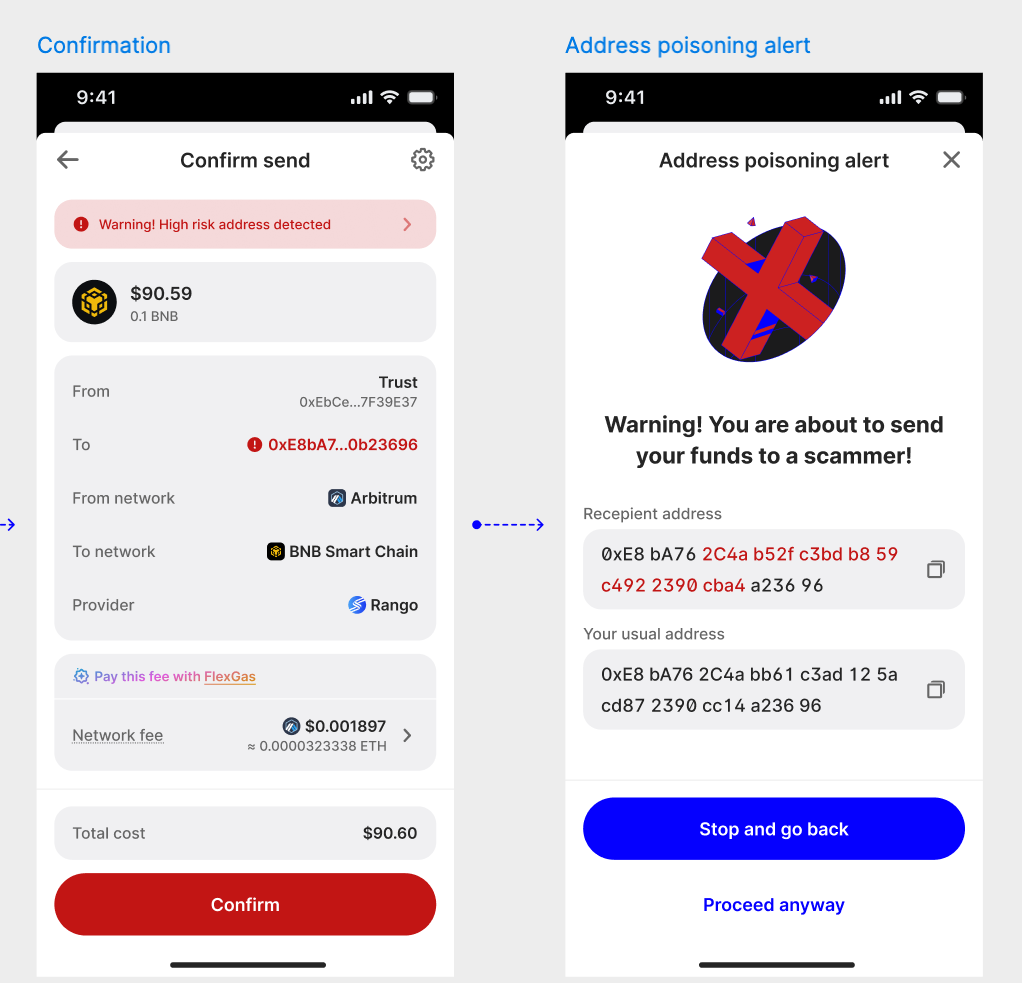
This vigilance, automatic and unyielding, spares the user the burden of vigilance. A noble compromise, one might say, between convenience and caution.
Moving Beyond Static Scam Lists
Many wallets, in their wisdom, rely on lists of known villains. Yet what of the new rogues, freshly minted and unseen? Trust Wallet, ever the innovator, employs real-time intelligence-a living, breathing defense against the ever-changing face of deceit.
By weaving data from HashDit, Binance Security, and its own watchful eyes, the wallet discerns patterns, not merely names. A clever ploy, to outthink the thinkers.
And thus, the attack is thwarted before the ink dries on the blockchain’s ledger. A mercy, perhaps, for the irreversible nature of such transactions.
Another String to Trust Wallet’s Bow
This Address Poisoning Protection joins a tapestry of defenses Trust Wallet has woven over years. Recall the Security Scanner of 2023, a tool so effective it turned back $458 million in villainy. A feat worthy of song-or at least a well-placed press release.
Together, these systems form a layered defense, like the walls of a fortress and the moat beyond. One guards the gate, the other the path. A harmony of logic and vigilance.
Protecting Users From the Simplest Attacks
Modern villainy, it seems, favors simplicity. No need for cracked codes or stolen keys-merely a nudge to the human habit of trust. To copy an address from history is to dance with fate; to assume familiarity is truth is to play the villain’s game.
Yet tools like Trust Wallet’s latest offering offer a counterpoint. By detecting these patterns early, they transform the user from pawn to player. A small but vital shift, in a world where the line between hero and fool is perilously thin.
Read More
- ‘Project Hail Mary’s Unexpected Post-Credits Scene Is Worth Sticking Around
- Beyond Accuracy: Gauging Trust in Human-AI Teams
- Gold Rate Forecast
- Clash Royale Balance Changes March 2026 — All Buffs, Nerfs & Reworks
- The most surprising Hannah Montana cameos: From John Cena to Dwayne Johnson and even a Coronation Street soap star as show celebrates its 20th anniversary
- Genshin Impact Version 6.5 Leaks: List of Upcoming banners, Maps, Endgame updates and more
- eFootball 2026 is bringing the v5.3.1 update: What to expect and what’s coming
- Total Football free codes and how to redeem them (March 2026)
- Brawl Stars Brawl Cup Pro Pass arrives with the Dragon Crow skin and Chroma, unique cosmetics, and more rewards
- We talked to ‘Bachelorette’ Taylor Frankie Paul. Then reality hit pause on her TV career
2026-03-11 13:12