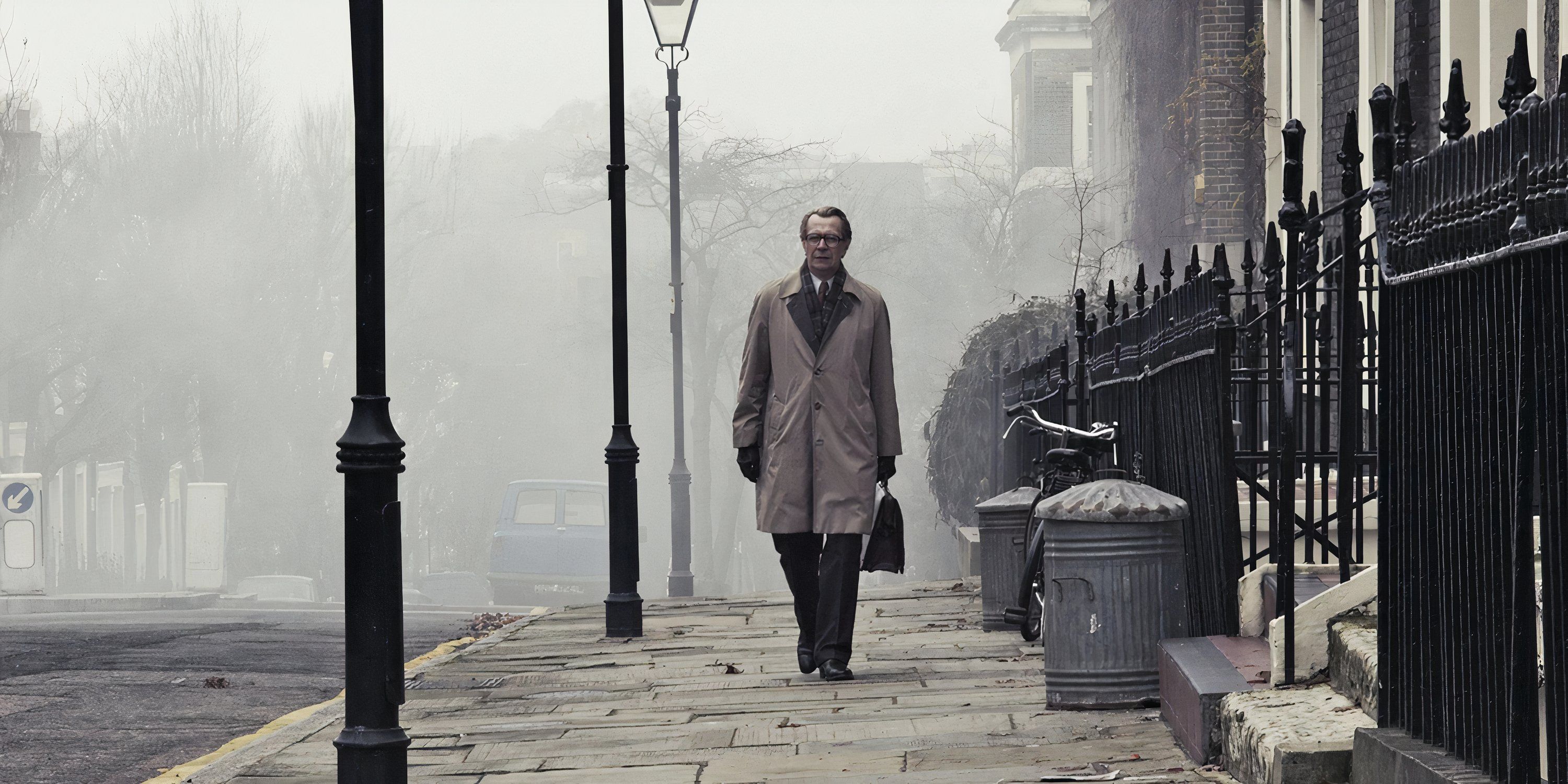
Released in 2011, this film presented a fresh take on the spy genre, featuring a compelling lead character who stands alongside iconic spies. Though it’s not as focused on action as some other thrillers, and Gary Oldman’s portrayal of George Smiley is more subtle than characters like James Bond or Jason Bourne, it remains one of the greatest spy movies ever made.
Set primarily in 1970s London, Tinker Tailor Soldier Spy delves into the complex world of British intelligence during the Cold War. The story centers on George Smiley, a retired intelligence officer from the fictional MI6, known as “The Circus.” After a failed operation forces his retirement, Smiley is secretly called back into service to uncover a Soviet spy within the organization. The narrative exposes the shadowy and suspicious atmosphere of Cold War espionage.
Tinker Tailor Soldier Spy Prioritizes Realism Over Action
While Tinker Tailor Soldier Spy didn’t feature as much action as other spy films, it offered something more valuable for those who appreciate realism. This Cold War drama is unusual in its portrayal of espionage, showing viewers what intelligence work is actually like – the gathering of information and how it’s analyzed. As a result, the story is thoughtful and unfolds at a deliberate pace, requiring close attention from the audience.
This British thriller differs from many action movies by focusing on a more realistic protagonist – a middle-aged government worker who analyzes intelligence. Instead of dramatic fight scenes, the film builds to a climax through the uncovering of secrets, careful document review, and subtle deception.
The world of espionage isn’t shown as thrilling or glamorous; instead, it’s portrayed as bleak, risky, and disheartening. Characters like Smiley constantly deal with doubt and treachery, and those involved in the more aggressive aspects of the job are often seen as flawed and untrustworthy.
Tinker Tailor Soldier Spy presents a realistic view of espionage, far removed from the glamorous depictions often seen in movies. The film opens with a failed operation and the capture of a British agent, who endures torture. Though he’s eventually rescued, the experience deeply affects him, leaving him traumatized and disillusioned – a sentiment shared by other former spies. Even the few instances of classic spy activities, like stealing documents, aren’t portrayed as exciting or glamorous, but rather as stressful and fraught with tension.
Despite appearing calm on the surface, this film actually builds incredible suspense. Its realistic approach and the serious consequences faced by the characters make for a truly captivating story. By the finale, Smiley and his colleagues reveal a plot that strikes at the very core of British intelligence, with potentially devastating consequences.
Tinker Tailor Soldier Spy Offers a Rare Look at the UK During the Cold War
I’ve always been struck by how Tinker Tailor Soldier Spy really captures what Britain felt like during the Cold War and the 1970s. Unlike many other spy writers of the time who often focused on over-the-top adventures against the Soviets, this story felt much more grounded and offered a real glimpse into everyday life in Britain during that tense period.
Older spy movies often showed the conflict through American or Soviet eyes. However, Tinker Tailor Soldier Spy is different; it focuses on how the conflict played out from the British perspective.
The film portrays a tension between British and American spies, with the British feeling undervalued and excluded from important information. As a result, the British intelligence agency, known as the Circus, actively tries to convince the U.S. government to start sharing intelligence with them again. The movie also shows how the personalities and work environment of these intelligence officers influence their actions.
For most Americans, World War II felt distant until the attack on Pearl Harbor. In contrast, the war deeply impacted the United Kingdom. The characters in Tinker Tailor Soldier Spy are all veterans of this war, and they still bear the pride and trauma—both physical and emotional—from their experiences.
Certain characters feel disappointed that the Cold War isn’t as clear-cut or heroic as World War II. The story also hints that the spy who betrayed British Intelligence was partly driven by his disillusionment with how Britain and the West had evolved after the war.
The film Tinker Tailor Soldier Spy also subtly explores the biases of the era. It reveals how Britain’s strict class system favored the wealthy and well-born, even within the government and intelligence agencies. A character who is gay is forced to end his relationship, fearing exposure and the consequences it would bring. These details combine to offer a unique and often-ignored viewpoint on the period.
Tinker Tailor Soldier Spy Features Amazing Performances
Beyond its compelling story and strong writing, Tinker Tailor Soldier Spy featured outstanding acting. Gary Oldman delivered a nuanced performance as George Smiley, a loyal but heartbroken man dealing with betrayal from those closest to him. The supporting cast, including Colin Firth, Ciarán Hinds, David Dencik, and Toby Jones, convincingly played his colleagues and the main suspects.
Tom Hardy and Benedict Cumberbatch joined the cast at the start of their successful film careers. Hardy, who played a British intelligence operative, was already known for supporting roles and would later become famous in films like Mad Max: Fury Road and Venom. Cumberbatch, playing a spy who worked with Smiley, had recently begun his role as Sherlock Holmes on BBC television and was on the verge of becoming a major movie star.
Even after almost twenty-five years, Tinker Tailor Soldier Spy remains a standout spy thriller. While it lacks the over-the-top action of some other films in the genre, its gritty realism, distinctive approach, and strong acting set it apart. If you enjoy James Bond and similar action-packed movies, but also appreciate a more realistic and intelligent take on espionage, this adaptation of John le Carré’s novel is a must-see.
Found an error? Send it so it can be corrected.
Read More
- The Division Resurgence Best Weapon Guide: Tier List, Gear Breakdown, and Farming Guide
- Kagurabachi Chapter 118 Release Date, Time & Where to Read Manga
- Last Furry: Survival redeem codes and how to use them (April 2026)
- Clash of Clans Sound of Clash Event for April 2026: Details, How to Progress, Rewards and more
- Gold Rate Forecast
- ‘Project Hail Mary’s Soundtrack: Every Song & When It Plays
- Top 5 Best New Mobile Games to play in April 2026
- Guild of Monster Girls redeem codes and how to use them (April 2026)
- All Mobile Games (Android and iOS) releasing in April 2026
- eFootball 2026 Master League leaks: A detailed look at the new mode, and why it feels disappointing
2026-02-09 00:11