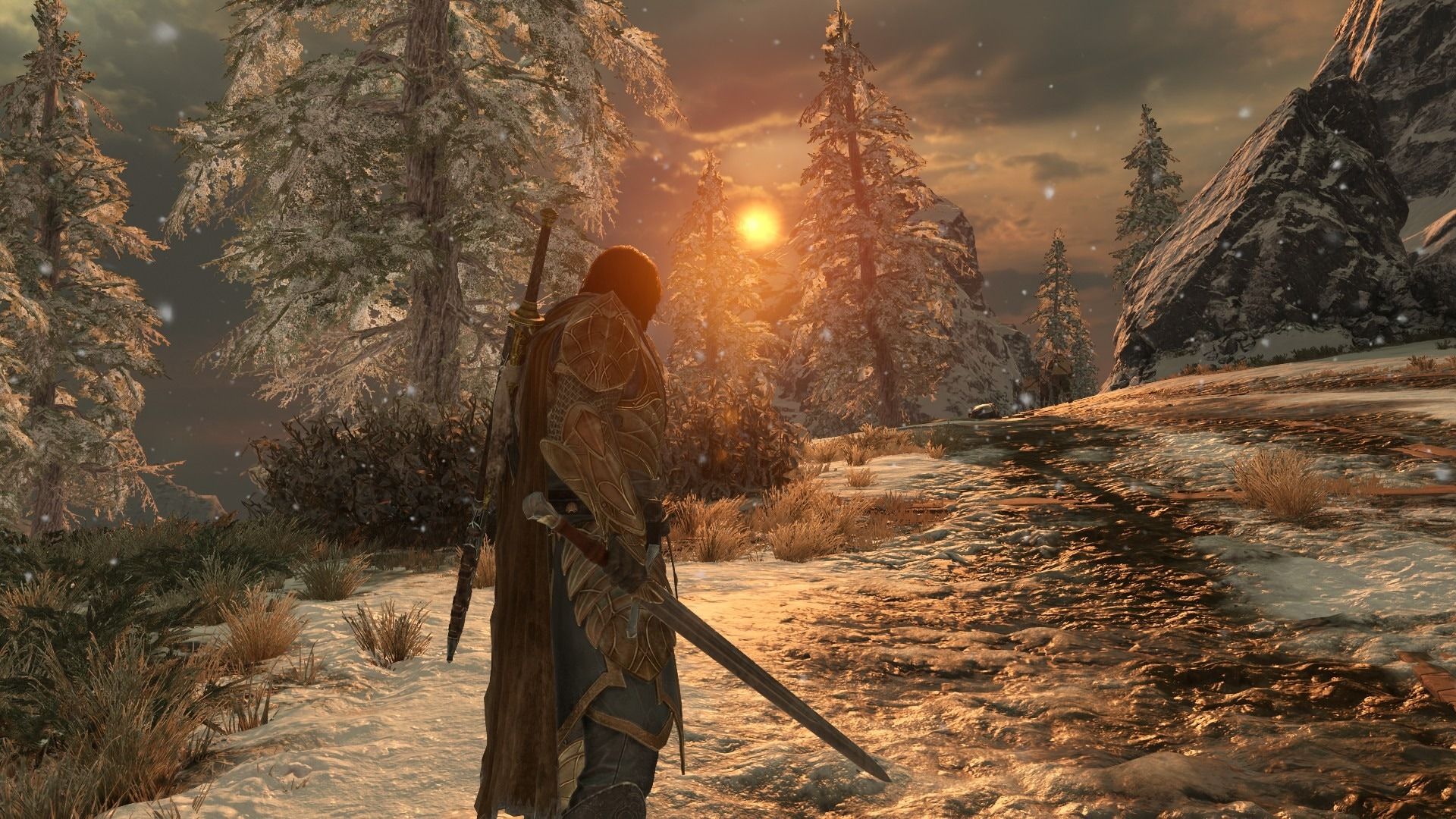
Open-world games have been the most popular type of game in the 2020s. While huge hits like Red Dead Redemption 2 and Elden Ring have achieved massive sales, some excellent open-world titles, such as those from Monolith Productions’ Middle-earth series, haven’t received as much lasting attention.
Both Middle-earth: Shadow of Mordor (released in 2014) and its sequel, Middle-earth: Shadow of War (2017), were big hits with players and critics. However, they don’t often get credit for their innovative gameplay and how much they pushed the boundaries of open-world game design.
Middle-earth: Shadow of Mordor Is a Modern Classic
As a huge Lord of the Rings fan, I have to say Middle-earth: Shadow of Mordor really blew me away! It perfectly captured the feel of Tolkien’s world. Everyone was talking about it when it came out because not only did it tell an amazing new story, but it also brought back all those wonderful memories from the books and movies.
What truly set Middle-earth: Shadow of Mordor apart was how well it brought its concepts to life. The game featured a main character players could really empathize with. Talion is a broken and sorrowful hero, grieving his family’s death while also being tormented by the one who forged the Rings of Power.
The elf-smith Celebrimbor was linked to the hero Talion’s spirit, which meant he couldn’t truly die. This explained how Talion could return to life after being defeated by players, and it also granted him an additional power.
Talion had the unique ability to dominate the minds of Orcs and command them as his own soldiers. This allowed him to create an army drawn from Mordor’s ranks, turning enemies against each other. It was a powerful feature that dramatically altered battles – Talion could now call upon these forces for support whenever he needed help.
Players could really lose themselves in the game’s detailed world, searching for enemies to take over, bases to demolish, and hidden story details. It was amazing to experience Middle-earth like this, particularly because the game takes place during a rarely seen era.
Beyond all of that, the game truly shined with its Nemesis System. This system built dynamic rivalries: Orcs who beat you in battle would climb the ranks, becoming more powerful. What made it special was getting to know these enemies – each one had a distinct personality and set of traits.
In Shadow of Mordor, enemies reacted differently based on past encounters with the player. This created a dynamic and immersive open world where characters felt like individuals with ongoing relationships to the main character – relationships players could influence through their actions.
Middle-earth: Shadow of War Built On the Original Game
While Middle-earth: Shadow of Mordor was a fantastic and memorable game, its sequel, Middle-earth: Shadow of War, truly excelled. It built upon the original’s strong foundations, expanding the gameplay in a natural and impactful manner.
Furthermore, Shadow of War expanded on almost everything from the previous game. The new siege system is a great example – players could now lead large-scale battles, attacking and defending fortresses as the war intensified across Middle-earth.
We significantly improved how players control enemies. Now, you can take command of large groups of opposing forces, and your Orcs can actually change how the enemy army is organized and operates. Plus, we’ve also made a lot of enhancements to the Nemesis System.
The Nemesis System was great in Shadow of Mordor, but Shadow of War made it even better. There were more enemies, and each one felt more unique with distinct strengths, weaknesses, and personalities. For a time, Shadow of War felt like a glimpse of what gaming could become.
Even beyond all of that, Middle-earth: Shadow of War featured a vast and intricate open world for players to explore. The land offered diverse environments, was teeming with dangerous enemies, and constantly presented opportunities to attack and conquer enemy fortresses.
Similar to the first game, Middle-earth: Shadow of War beautifully captured the world of Tolkien’s books and movies, but it also offered a unique experience. Though perfect for Lord of the Rings enthusiasts, the gameplay and story are compelling enough to appeal to a wide range of gamers.
Middle-Earth: Shadow of War Has Been Forgotten Despite Its Potential
Despite being a truly excellent game, Middle-earth: Shadow of War hasn’t received the recognition it deserves. It was overshadowed by its own sequel and other strong contenders for Game of the Year, such as God of War.
Middle-earth: Shadow of War suffered because its publisher prioritized protecting a unique feature—the Nemesis System—over evolving the game further. This focus ultimately led to the game being forgotten by many players.
Furthermore, Warner Bros. restricted how the Lord of the Rings franchise could be used, which resulted in lower-quality games like Gollum receiving most of the attention. There are no plans to continue the story of Middle-earth: Shadow of War, and as a result, it hasn’t become as popular or influential as the Arkham games.
Several things likely contributed to why Shadow of War, despite being a great game, didn’t receive as much praise as it should have. Some players preferred the original game, while others weren’t happy with how it differed from established Lord of the Rings lore. The complex siege battles in Shadow of War might also have discouraged some gamers.
Even though Middle-earth: Shadow of War might not always get the recognition it deserves, it’s a game everyone should try, especially if you enjoy open-world adventures. It’s truly immersive, and a standout title for fans of The Lord of the Rings. It really showcases what open-world gaming can be.
2026-07-28 00:38