In the vast, unblinking eye of the digital gulag, the on-chain economy has birthed a duality as stark as a Siberian winter. On one side, the institutional leviathans, with their chains of compliance and permissioned gates, march forward like a column of zombified bureaucrats. On the other, the unruly DeFi masses, with their liquidity and programmable anarchy, dance like fireflies in a field of landmines. By 2026, these two worlds, once as compatible as a gulag guard and a dissident poet, begin to connect-not through love, but through necessity.
This is not a marriage of equals, mind you, but a shotgun wedding orchestrated by the invisible hand of capital. Permissioned networks, with their governance and oversight, offer institutions the illusion of control, while public chains dangle the carrot of liquidity and applications. It is a dance of the desperate, where the regulated and the unruly must find common ground, lest they both freeze to death in the digital tundra.
Tokenized treasuries, those low-risk darlings of compliant capital, are gaining ground. Cross-border settlement, however, remains a bureaucratic quagmire, where tokens move at the speed of light but legal systems crawl like a snail with a hangover. Retail users, meanwhile, are herded into fintech apps, their eyes fixed on accumulation, while the crypto OGs, battle-scarred and wary, focus on preservation. It is a world where the young build kingdoms of grind, and the old fortify their walls against the inevitable siege.
To unravel this Gordian knot, BeInCrypto sat down with Federico Variola, CEO of Phemex, Fernando Lillo Aranda, Marketing Director at Zoomex, and Pauline Shangett, CSO at ChangeNOW. Their insights, like a flickering candle in a dark cell, shed light on the contradictions of this emerging system.
Permissioned Chains: The Iron Curtain of Finance
The connection between TradFi and public DeFi is not a bridge, but a series of controlled gateways. Institutions, ever the control freaks, demand identity checks, permissions, and compliance controls. The result? A market where regulated participants can dip their toes into public liquidity without fully committing to the chaos. Shangett, with a wry smile, observes:
“For years, they acted like permissioned chains and public DeFi were oil and water. Now, they’re building tubing-not just mixing, but carefully siphoning what they need without getting their hands dirty.”
Avalanche, with its Evergreen and Warp Messaging, and ZKsync, with its enterprise-focused systems, are the plumbers of this new order. They allow institutions to connect to public crypto while maintaining their grip on access, counterparties, and governance. It is a masterclass in having your cake and eating it too-or at least, nibbling at it cautiously.
Tokenized Treasuries: The New Opium of the Compliant Masses
Tokenized T-bills and government bonds have become the benchmark asset for compliant on-chain capital. By March 2026, the market stood at a staggering $12.31 billion, a testament to the growing appetite for risk-averse strategies. Variola, with the gravitas of a man who has seen too many cycles, remarks:
“The tokenization of T-bills is the clearest sign that DeFi is growing up-or at least, putting on a suit and tie. It’s not about moonshots anymore; it’s about preserving what you have, even if it means becoming the very thing you once rebelled against.”
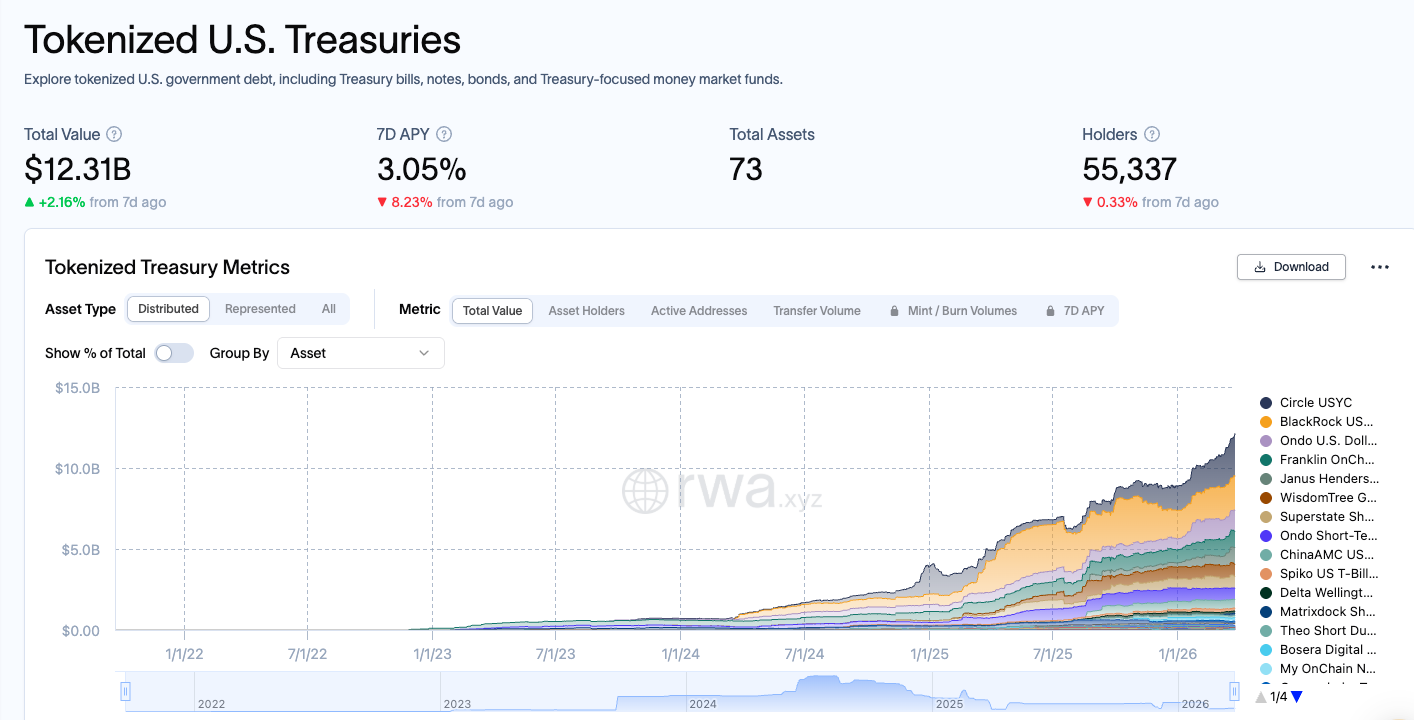
Shangett, ever the pragmatist, adds:
“Tokenized treasuries are the new black for the KYC’d, accredited crowd. BlackRock’s BUIDL, Ondo’s OUSG-these are the tools of the compliant, the risk-free benchmarks for those who play by the rules. But let’s not kid ourselves: this is not a revolution; it’s a co-optation.”
For retail DeFi users, however, stablecoin lending rates and permissionless money markets remain the lifeblood. It is a market of two speeds, where the regulated and the unruly coexist in uneasy détente.
The Hard Problem: Legal Certainty, or the Lack Thereof
Cross-border settlement, the holy grail of on-chain finance, remains a pipe dream. Tokens move instantly, but legal and operational systems do not. Lillo Aranda, with the frustration of a man banging his head against a regulatory wall, laments:
“The real bottleneck is not blockchain speed-it’s the fragmentation of regulatory logic across borders. We’ve built a global financial system, but the rulebooks are still local. It’s like trying to build a spaceship with parts from different planets.”
Shangett echoes this sentiment, noting that the hardest part is getting countries to agree on compatible rules. It is a Herculean task, made even more absurd by the fact that the technology is already there. The operating environment, however, remains stuck in the 20th century.
Retail: The Grind vs. The Guard
Retail crypto users are a study in contrasts. The new wave, entering through fintech apps, is focused on steady accumulation. They DCA into assets, chase staking yields, and play it safe. The OGs, on the other hand, are in preservation mode, rotating out of speculative bags into productive assets like staking and tokenized T-bills. Shangett, with a touch of humor, sums it up:
“One group is building a kingdom brick by brick, while the other is just trying to keep the walls from crumbling. It’s the grind vs. the guard, the accumulator vs. the preserver. And in this game, there are no winners, only survivors.”
It is a market divided, where the young dream of wealth, and the old fear its loss. In 2026, retail crypto is a tale of two mindsets, each navigating the digital wilderness in their own way.
Final Thoughts: A System of Contradictions
What emerges in 2026 is an on-chain financial system that serves different kinds of capital in different ways. Public crypto provides liquidity and composability; regulated finance brings governance, compliance, and low-risk assets. The point of convergence lies in the connections between them-fragile, imperfect, but necessary.
- Variola sees tokenized government debt as a sign of DeFi’s maturity, a shift from speculation to preservation.
- Lillo Aranda highlights the legal and operational interoperability challenge, the true bottleneck in cross-border finance.
- Shangett describes a market where permissioned networks and public DeFi connect through controlled access, while institutions and retail users follow divergent paths.
It is a system of contradictions, where innovation and regulation, risk and preservation, coexist in uneasy balance. And in this balance, perhaps, lies the future of on-chain finance-a future as complex and unpredictable as the human condition itself.
Read More
- ‘Project Hail Mary’s Unexpected Post-Credits Scene Is Worth Sticking Around
- Beyond Accuracy: Gauging Trust in Human-AI Teams
- How Martin Clunes has been supported by TV power player wife Philippa Braithwaite and their anti-nepo baby daughter after escaping a ‘rotten marriage’
- Clash Royale Balance Changes March 2026 — All Buffs, Nerfs & Reworks
- Gold Rate Forecast
- CookieRun: OvenSmash coupon codes and how to use them (March 2026)
- eFootball 2026 is bringing the v5.3.1 update: What to expect and what’s coming
- The most surprising Hannah Montana cameos: From John Cena to Dwayne Johnson and even a Coronation Street soap star as show celebrates its 20th anniversary
- Genshin Impact Version 6.5 Leaks: List of Upcoming banners, Maps, Endgame updates and more
- Total Football free codes and how to redeem them (March 2026)
2026-04-01 13:07