
Chloé Zhao’s film, “Hamnet,” which has received several Oscar nominations, explores how the profound grief of losing a child may have inspired William Shakespeare to write “Hamlet” as a tribute to his loss. Now, that famous play—which has sparked many adaptations, including “The Lion King”—is reimagined as a fantastical animated epic called “Scarlet,” directed by acclaimed Japanese animator Mamoru Hosoda.
As someone who’s seen a lot of animated films that really mean something, I can honestly say Hosoda’s latest, “Scarlet,” is his most powerful and frankly, toughest watch yet. It’s not just the intensity of what happens on screen, but the film asks a really hard question: can you actually forgive someone who doesn’t even seem sorry? It feels like the characters are fighting for their very souls. But even with all the heavy stuff, Hosoda still focuses on what he does best: the beautiful, complicated bond between parents and children. He always handles those relationships with so much understanding, showing the struggles of both sides – the kids needing direction and the parents trying to guide them.
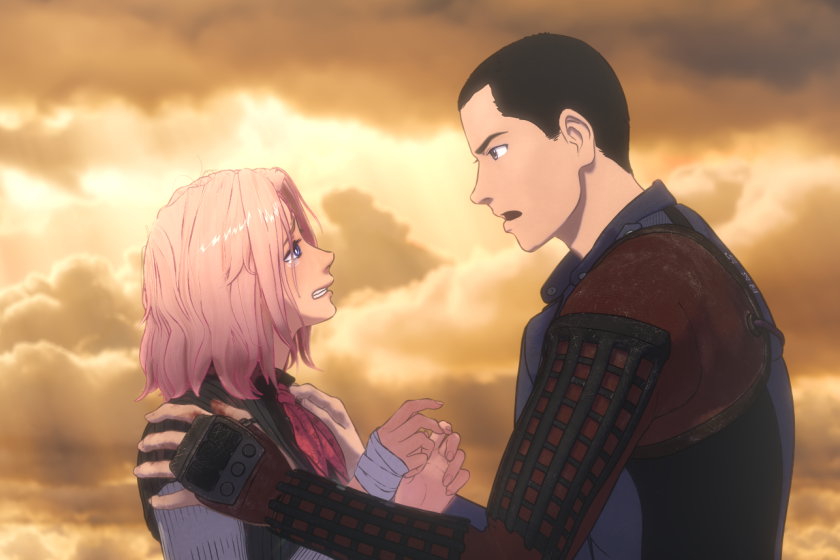
I was really intrigued by Hosoda’s take on Hamlet – he clearly loves a strong female lead! This version focuses on Princess Scarlet, and it’s heartbreaking watching her lose her father, the King, to her uncle Claudius in this incredibly brutal power grab. The scene of the King’s death is just… intense. He tries to tell Scarlet something as he’s dying, but she can’t quite make it out. From that moment on, she’s completely driven by revenge – both for her father and to uncover what his last words were. Honestly, her fury is palpable, and it really carries the whole story.

Contributor: As today’s Oscar nominations show, Hollywood animation is in creative crisis
Although animated films like “How to Train Your Dragon” and “Zootopia 2” were among the top five highest-grossing movies of 2025, American animation is being held back by a lack of original ideas and an overreliance on remakes.
Mamoru Hosoda’s films often explore two separate worlds, like the real world and a digital one (as seen in “Summer Wars” and “Belle”) or reality versus a fantastical realm (“Mirai” and “The Boy and the Beast”). His latest film, “Scarlet,” continues this pattern.
This time, the story takes place in a unique afterlife governed by its own laws. When Claudius senses Scarlet is determined to destroy him, he poisons her. Scarlet then awakens in the Otherworld – a vast, dry land with an ocean-like sky, where a dragon flies. This is where people from all eras of history gather after death. This explains how Scarlet and Hijiri, a paramedic who died recently and doesn’t accept his fate, can exist at the same time. This afterlife is a reflection of life itself, filled with struggle and pain. If you die again in the Otherworld, you’re lost forever. The ultimate goal is to reach the Infinite Land, a sort of heaven, but Scarlet isn’t interested in peace. She discovers Claudius is also there and sets out on a dangerous journey to finally kill him.
Hosoda doesn’t focus on the contrast between Scarlet and Hijiri’s worlds when they were alive. Instead, the film highlights their conflicting beliefs. Scarlet is quick to eliminate anyone who opposes her, while Hijiri is dedicated to protecting all life, which understandably frustrates Scarlet. Even after a fierce battle, Hijiri will carefully bandage the wounds of his enemies just as he does for his allies.
Scarlet and Hijiri face several fights along the way as they travel, and they also meet a unique group: the United Nations, a community of nomads from all over the world who’ve banded together for friendship. Director Hosoda implies that even after dying, what people really want is someone to support them and share their problems.
Awards
Director Mamoru Hosoda talks about his animated movie ‘Scarlet,’ which reimagines the famous question from Hamlet’s ‘To be or not to be’ speech for both a new type of storytelling and a modern audience.
With “Scarlet,” director Hosoda is trying a new visual style. When the story moves to the Otherworld, the animation looks different from his past films – he’s using incredibly realistic, computer-generated imagery. The scenes set in the past, however, are created with a more classic, hand-drawn approach.
The CGI characters in the Otherworld are designed to look like they were traditionally hand-drawn, which makes you very conscious of how they move within their surroundings. This unusual combination of visual styles is initially surprising, but it eventually feels right at home.
Hosoda’s imaginative take on the afterlife might leave you with more questions than answers—like what happens to truly evil people—but the film ultimately succeeds because of its heartfelt message of compassion. The final scene between Scarlet and Claudius is particularly moving, offering a complex and satisfying emotional resolution.
Okay, so the ending felt a little idealistic to me. Scarlet’s belief that she can just will peace into existence through sheer goodness… it might not actually work in the real world. Honestly, watching “Scarlet” felt like watching a director really, really wanting to believe that kindness – even towards people who don’t deserve it – is the key to fixing things. It’s a big ask, especially now, and here, but I can’t really criticize Hosoda for offering such a hopeful reminder of what could be.
Read More
- The Division Resurgence Best Weapon Guide: Tier List, Gear Breakdown, and Farming Guide
- Last Furry: Survival redeem codes and how to use them (April 2026)
- Clash of Clans Sound of Clash Event for April 2026: Details, How to Progress, Rewards and more
- Guild of Monster Girls redeem codes and how to use them (April 2026)
- GearPaw Defenders redeem codes and how to use them (April 2026)
- After THAT A Woman of Substance cliffhanger, here’s what will happen in a second season
- Gold Rate Forecast
- Wuthering Waves Hiyuki Build Guide: Why should you pull, pre-farm, best build, and more
- eFootball 2026 “Countdown to 1 Billion Downloads” Campaign arrives with new Epics and player packs
- Genshin Impact Version 6.5 Leaks: List of Upcoming banners, Maps, Endgame updates and more
2026-02-06 22:31