The Western genre, when done well, offers a raw and honest portrayal of life on the frontier. From the iconic standoffs in Sergio Leone’s films to more recent movies like Unforgiven, Westerns have consistently explored themes of violence, finding forgiveness, and the struggles people face just to stay alive. However, for every great Western, many others simply repeat familiar ideas without offering anything new. Over time, particularly in the 2000s, the genre nearly disappeared, surviving only thanks to a few dedicated filmmakers who kept it going.
The 2005 Australian Western, The Proposition, written by musician Nick Cave and directed by John Hillcoat, is a standout film. Instead of the typical American West, it’s set in the harsh Australian outback. The movie is both brutal and beautifully written, essentially distilling the Western genre down to its core elements. It’s a relentlessly gripping story – so much so that Roger Ebert described it as impossible to look away from. Even twenty years later, The Proposition remains a nearly flawless example of how innovative and intelligent filmmaking can revitalize the Western genre.
The Proposition is a Savage Outback Western
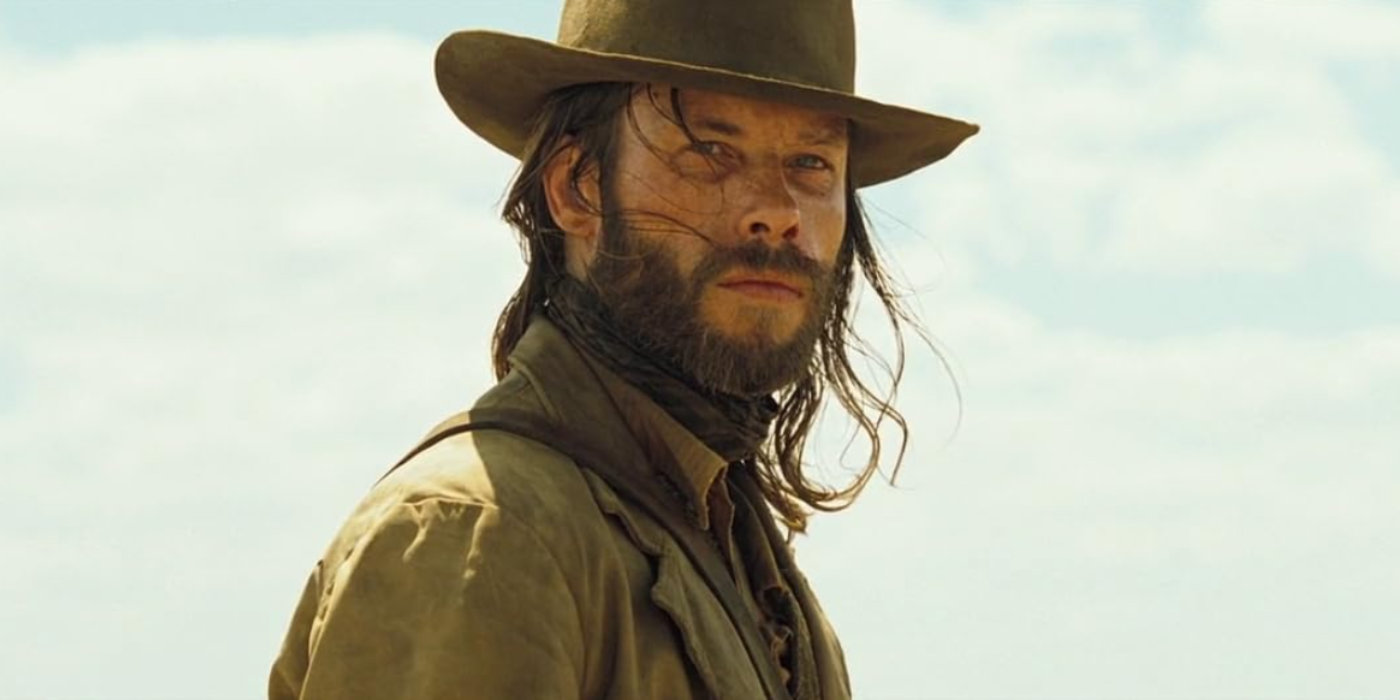
The film The Proposition shifts the setting from typical frontier life to the world of bushrangers, revealing the harsh realities of colonial rule and violence in the Australian outback. Following a brutal shootout, outlaw Charlie Burns (Guy Pearce) and his brother Mike (Richard Wilson) are captured by Captain Stanley (Ray Winstone). Stanley isn’t interested in them, however; he’s after their older brother, Arthur (Danny Huston), a notorious outlaw wanted for a horrific family massacre.
Unable to locate Arthur through normal methods, Stanley gives Charlie a terrible choice: Charlie can go free if he finds and kills Arthur, but if he doesn’t, Mike will be executed in nine days. Knowing Mike is fragile and wouldn’t understand the situation, Charlie sadly agrees to try and save his brother. The story that follows isn’t so much about finding a person as it is about exploring the nature of violence and how it affects people.
The film The Proposition examines the conflict between different cultures through the contrasting approaches of Stanley, who tries to force British rules onto the land, and Arthur, who embodies its untamed spirit. Stanley sees Australia as something to be controlled, and uses harsh methods to establish power. Indigenous Australians are treated as either servants or suffer as victims, and any violence is answered with more, all justified by the law. Despite Stanley’s desire to create a civilized society, he’s as brutal as those he pursues. Rather than offering hope or forgiveness, The Proposition presents a sense of acceptance, removing the romanticism often associated with the frontier and replacing it with a stark, almost beautiful realism. Even twenty years after its release, the film remains powerfully affecting.
The Proposition Explores Themes of Colonialism and Civilization
Despite appearing as a traditional Western set on the frontier, The Proposition powerfully portrays Australia’s history of colonialism. The film, set in the 1880s outback, directly addresses the violence and dishonesty inherent in Britain’s imperial goals. Captain Stanley is assigned the job of controlling the land, but his attempts to establish order often resemble the brutality he’s trying to suppress. The film shows how the pursuit of civilization is constantly compromised by the harshness needed to maintain it.
In the film The Proposition, Australia isn’t presented as a country needing to be civilized, but as one already scarred by its history of colonization. The Aboriginal characters serve as constant reminders of the human cost of empire, and their experiences reflect a painful past that Australia continues to confront. The film doesn’t shy away from this difficult history; instead, it puts the problematic aspects of colonialism front and center, prompting viewers to question what true progress looks like when it’s founded on the suffering of others.
A particularly unsettling moment in the film shows the youngest Burns brother being publicly beaten, which forces viewers to consider issues of justice and what it means to be human. What begins as an attempt at legal punishment rapidly turns into a vengeful mob scene, with the townspeople prioritizing revenge over fairness. Even Martha Stanley, who represents kindness and sophistication, gives in to the desire for violence, implying that societal norms can easily break down when people are consumed by sorrow and fear.
Like many great films, The Proposition uses its Western genre to examine ideas about national identity and power. The film’s violence is disturbing, and the Australian outback is portrayed as a brutal and uncaring environment. The characters aren’t simple heroes or villains; they’re complex individuals burdened by guilt, past trauma, and lost hope. However, it’s through the character of Arthur Burns that the film presents its most troubling paradox. While labeled a monster by the settlers and undeniably responsible for terrible acts, Arthur is also educated and deeply loyal to his brothers.
I find myself utterly captivated by this character – one moment he’s capable of brutal acts, the next he’s reciting poetry. It’s a stark contradiction, especially considering the British colonizers claim intelligence and empathy define civilization, yet they label him a savage. It really highlights how flimsy their authority truly is. You have figures like Eden Fletcher, all dressed up and riding around, talking about order while turning a blind eye to terrible violence. And it makes you think: if Arthur’s violence makes him less than human, what does that say about those who commit even worse acts while claiming to be civilized? The film doesn’t offer simple solutions, and that’s what’s so powerful. It leaves you with this unsettling idea that civilization isn’t about escaping violence, but simply disguising it as order.
The Proposition was a Box Office Failure and a Critical Success
When The Proposition came out in 2005, it seemed destined to be a classic. However, despite positive reviews, the film didn’t do well in theaters. This was partly due to bad timing. Released when interest in Westerns was low—after a brief comeback in the 1990s and before the recent surge in popularity on streaming services—the film simply didn’t capture audiences’ attention.
As a huge film fan, I remember the early 2000s being a really tough time for Westerns. Even big, expensive movies like The Missing and Open Range didn’t exactly set the box office on fire. And honestly, even the more interesting, artistic attempts – like The Assassination of Jesse James by the Coward Robert Ford, which a lot of people now consider a masterpiece – struggled to find an audience. It was a bit of a sad period for the genre.
It was always going to be a challenge to get The Proposition, a gritty and violent Australian Western, noticed by audiences. The film emerged during a difficult period for Australian cinema. The excitement surrounding the Australian New Wave – a period that brought international attention to films like Mad Max – had faded. Many of the key filmmakers from that era had moved to Hollywood, and by the mid-2000s, Australia was making fewer films that resonated with international audiences. Despite receiving critical praise and awards at film festivals, The Proposition didn’t have the same level of marketing support as big-budget Hollywood releases.
Though it didn’t initially succeed at the box office, The Proposition has become increasingly recognized as a standout revisionist Western of the 21st century. Winning numerous awards, including six from the FCCA, the film gained popularity through positive word-of-mouth, critical re-evaluation, and a growing understanding of its themes surrounding colonialism. It marked a return to ambitious, politically charged filmmaking for Australian cinema with international appeal. More broadly, The Proposition shows that the Western genre can still be powerful and thought-provoking when made with skill and vision, reaching audiences worldwide.
Read More
- The Division Resurgence Best Weapon Guide: Tier List, Gear Breakdown, and Farming Guide
- Kagurabachi Chapter 118 Release Date, Time & Where to Read Manga
- Last Furry: Survival redeem codes and how to use them (April 2026)
- Clash of Clans Sound of Clash Event for April 2026: Details, How to Progress, Rewards and more
- Annulus redeem codes and how to use them (April 2026)
- Gold Rate Forecast
- Silver Rate Forecast
- Gear Defenders redeem codes and how to use them (April 2026)
- All Mobile Games (Android and iOS) releasing in April 2026
- Top 5 Best New Mobile Games to play in April 2026
2026-04-13 18:08