Author: Denis Avetisyan
Researchers have developed Rememo, a new tool leveraging artificial intelligence to help therapists unlock the power of personal memories for individuals living with dementia.
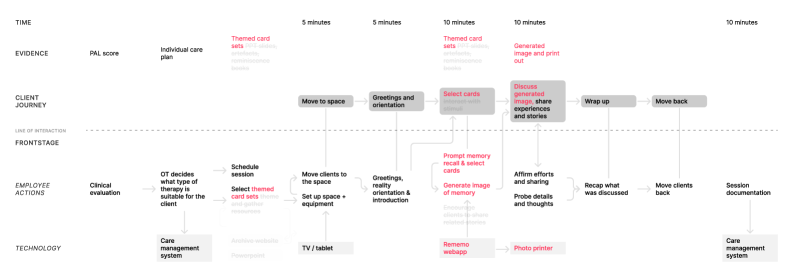
This paper details the research-through-design process behind Rememo, an AI-in-the-loop system aimed at augmenting therapist-led reminiscence therapy and promoting person-centered dementia care.
While technology-mediated dementia care often prioritizes replacing human interaction, effective reminiscence therapy hinges on nuanced relational facilitation. This paper details the development and in-situ study of ‘Rememo: A Research-through-Design Inquiry Towards an AI-in-the-loop Therapist’s Tool for Dementia Reminiscence’, a system designed to augment-rather than substitute-the expertise of therapists supporting individuals with dementia. Our research demonstrates that Generative AI, when thoughtfully integrated, can foster more personalized and effective reminiscence experiences through collaborative human-AI workflows. How might we further refine AI’s role in care contexts to prioritize relational dynamics and reimagine synthetic imagery as a therapeutic aid, rather than a simple record of the past?
The Imperative of Personalized Recall: Addressing Limitations in Traditional Reminiscence Therapy
While long considered a beneficial intervention for cognitive decline, traditional reminiscence therapy faces inherent limitations in its widespread application. The process typically demands curated collections of personally relevant materials – photographs, music, historical objects – which are time-consuming to assemble for each individual and require ongoing maintenance. Furthermore, successful delivery relies heavily on the skill of a trained therapist to skillfully guide the recollection process and interpret nuanced responses. This dependence on both specialized resources and human expertise presents significant scalability challenges, hindering the ability to provide consistent, personalized care to the growing number of individuals affected by dementia and other cognitive impairments. Consequently, researchers are exploring alternative approaches that minimize reliance on these factors without sacrificing the therapeutic benefits of engaging with personal history.
The rising global incidence of dementia and other cognitive impairments presents a substantial challenge to healthcare systems, necessitating a shift towards scalable and adaptable personalized care solutions. Current models often struggle to meet the demands of an aging population, highlighting the need for interventions that can be delivered efficiently and effectively across diverse settings. Research is increasingly focused on technologies and methodologies-such as digital therapeutics and AI-driven platforms-that can personalize therapeutic experiences, monitor cognitive function remotely, and provide continuous support to individuals and their caregivers. This proactive approach aims to not only manage symptoms but also potentially delay disease progression and improve overall quality of life, all while addressing the logistical hurdles of widespread implementation and accessibility.
The potency of therapeutic interventions for cognitive decline hinges on eliciting deeply personal and emotionally resonant experiences, yet consistently providing such stimuli presents a significant hurdle. Memories are rarely triggered by generic prompts; instead, they flourish when connected to specific, meaningful details – a childhood song, a familiar photograph, the scent of a loved one’s kitchen. Replicating this individualized connection requires access to a rich tapestry of personal history, which is often fragmented or inaccessible as cognitive function diminishes. Consequently, standardized therapeutic materials frequently fall short, failing to ignite the neurological pathways crucial for reminiscence and emotional wellbeing. Researchers are therefore exploring methods to dynamically curate personalized stimuli, leveraging digital archives and adaptive algorithms to deliver precisely tailored experiences that maximize therapeutic engagement and, ultimately, improve cognitive outcomes.
Rememo: An AI-Augmented System for Therapeutic Recall
Rememo is conceived as a support tool for therapists practicing reminiscence therapy, intentionally designed to enhance-not supplant-the therapeutic relationship. The system operates on an ‘AI-in-the-loop’ principle, meaning that all AI-generated content – specifically, personalized visual stimuli – is presented to and reviewed by the therapist before being shared with the resident. This human oversight ensures clinical appropriateness and allows the therapist to tailor the experience to the individual’s needs and emotional state, maintaining the core tenets of person-centered care. The AI functions as a content generation and suggestion engine, freeing the therapist to focus on facilitating the recollection process and providing emotional support.
Rememo’s core functionality centers on the application of generative artificial intelligence to produce individualized visual prompts for reminiscence therapy. The system accepts biographical data – including details of a patient’s life such as birth year, location, hobbies, and significant life events – as input. This data then drives the AI model to generate images specifically reflecting those experiences; for example, a user born in 1940s London might receive images depicting scenes from that era and location. The generated images are not pre-existing stock photos, but novel creations designed to stimulate memory recall and facilitate personalized therapeutic interactions.
A two-year research-through-design collaboration culminated in the development of Rememo, an AI-powered tool for reminiscence therapy. Validation of Rememo’s usability was established through a deployment study involving five care staff members and twenty-one residents. This study assessed the tool’s integration into existing care workflows and its ability to facilitate meaningful engagement with personalized visual stimuli. Data collected from both staff and residents informed iterative design improvements and provided evidence supporting Rememo’s potential as a therapeutic aid.

Constructing the Stimulus: A Deep Dive into the Image Generation Process
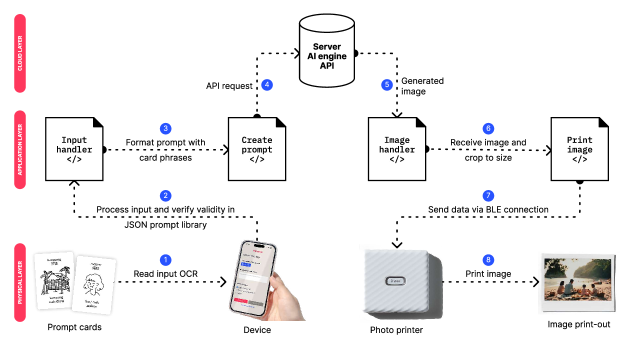
Rememo’s image generation process is fundamentally dependent on the quality of text prompts provided to the underlying artificial intelligence models – specifically Imagen AI, SDXL AI, and Flux AI. These prompts are not simple keyword requests; they require careful construction to guide the AI towards generating images relevant to a user’s personal history and intended for reminiscence therapy. The system leverages detailed textual descriptions, specifying subjects, scenes, time periods, and even emotional tones to maximize the likelihood of producing a visually appropriate and meaningful image. Effective prompt engineering involves iterative refinement, testing different phrasings and parameters to optimize the output for both visual fidelity and therapeutic relevance.
Initial Rememo designs investigated utilizing Near Field Communication (NFC) and Radio-Frequency Identification (RFID) technologies as triggers for image generation; however, these approaches proved limiting in terms of adaptability and user experience. Subsequent development prioritized direct integration with AI models, enabling image creation through textual prompts rather than physical tags. This shift streamlines the process, allowing for greater control over image content and facilitating broader applicability within therapeutic settings by removing the dependency on specialized hardware and allowing for on-demand image generation tailored to individual reminiscence needs.
During a deployment across two long-term residential care facilities, the Rememo system generated a total of 151 images for use in reminiscence therapy. Evaluation of the generated content, specifically images produced by the Imagen AI model, resulted in a ‘Print Rate’ of 34.9%. This ‘Print Rate’ represents the percentage of images deemed suitable for therapeutic use by qualified therapists, indicating a measurable level of practical applicability and alignment with clinical needs within the care facility setting.
Augmenting Human Connection: Qualitative Insights from Therapist and Patient Experiences
A rigorous evaluation of Rememo’s integration into therapeutic settings heavily relied on qualitative research methods, prioritizing direct insights from those involved in the care process. Researchers conducted in-depth interviews with therapists and observed their interactions with patients during Rememo-assisted reminiscence sessions. This approach allowed for a nuanced understanding of not only how Rememo was used, but also how it affected the dynamic between therapist and patient, and the perceived benefits for individuals experiencing cognitive impairment. By prioritizing experiential data, the study moved beyond simple usability metrics to assess the tool’s broader impact on the therapeutic relationship and the quality of care delivered, revealing valuable feedback for iterative design improvements and future implementation strategies.
Rememo’s design intentionally prioritizes person-centered care, a therapeutic approach emphasizing individual uniqueness and collaborative goal-setting. Qualitative research revealed that the platform’s adaptable framework allows therapists to move beyond standardized reminiscence protocols, crafting sessions specifically attuned to each resident’s life story, cognitive abilities, and emotional state. Therapists consistently reported using Rememo’s features – such as customizable content and flexible presentation options – to elicit deeply personal narratives and facilitate meaningful engagement, fostering a sense of autonomy and dignity for individuals experiencing cognitive impairment. This ability to personalize interactions, rather than dictate them, is central to Rememo’s potential to enhance therapeutic outcomes and improve quality of life.
A deployment of Rememo involving five care staff and twenty-one residents with varying degrees of cognitive impairment demonstrated encouraging results regarding its potential to improve well-being. The technology served as an augmentation to existing therapeutic practices, enabling more dynamic and personalized reminiscence sessions. Observations suggest that Rememo not only stimulated memory recall amongst residents, but also contributed to a noticeable uplift in mood and an overall enhancement in quality of life. This suggests that technology-assisted reminiscence therapy, when thoughtfully integrated into care routines, holds promise for individuals navigating the challenges of cognitive impairment, offering a pathway towards increased engagement and improved emotional states.

The exploration of Rememo, an AI-assisted tool for reminiscence therapy, aligns with a fundamental principle of reliable systems: deterministic outcomes. The article emphasizes the importance of AI augmenting, rather than replacing, human expertise in dementia care. This collaborative approach mirrors the need for provable algorithms, where the AI’s contributions are predictable and consistently beneficial. As Bertrand Russell observed, “The whole problem with the world is that fools and fanatics are so confident in their own opinions.” Rememo seeks to mitigate such risks within therapeutic contexts by ensuring AI suggestions are carefully vetted and integrated by trained therapists, creating a system where confidence is earned through demonstrable efficacy and person-centered care.
Future Directions
The presented work, while demonstrating a functional integration of generative AI into reminiscence therapy, merely skirts the edges of a far more fundamental challenge. The system functions, yes, but the very notion of ‘augmenting’ human expertise presupposes a clear delineation between what constitutes knowledge and what is merely stochastic mimicry. The current implementation relies on prompting – a fundamentally imprecise method of conveying intent to a system lacking genuine understanding. Future iterations must grapple with the necessity of formalizing the principles of person-centered care into provable algorithms, not simply approximating them through large language models.
A crucial, and largely unaddressed, limitation lies in the validation of generated content. The assessment of ‘relevance’ or ‘emotional resonance’ remains subjective, reliant on therapist evaluation. True progress demands the development of objective metrics – a quantifiable measure of how effectively the AI stimulates meaningful recall, divorced from human bias. This is not a matter of refining existing heuristics, but of discovering – or, failing that, defining – the underlying principles of autobiographical memory.
Ultimately, the value of such systems will not be measured in terms of efficiency or scalability, but in their ability to approach a logical completeness. Simplicity is not brevity; it is non-contradiction. Until the foundations of this technology are built on demonstrable truth, rather than empirical success, it remains a sophisticated tool, but not a solution.
Original article: https://arxiv.org/pdf/2602.17083.pdf
Contact the author: https://www.linkedin.com/in/avetisyan/
See also:
- ‘Project Hail Mary’s Unexpected Post-Credits Scene Is Worth Sticking Around
- Total Football free codes and how to redeem them (March 2026)
- Limbus Company 2026 Roadmap Revealed
- The Division Resurgence Specializations Guide: Best Specialization for Beginners
- After THAT A Woman of Substance cliffhanger, here’s what will happen in a second season
- Brawl Stars Sands of Time Brawl Pass brings Sandstalker Lily and Sultan Cordelius sets, along with chromas and more
- Brawl Stars Brawl Cup Pro Pass arrives with the Dragon Crow skin and Chroma, unique cosmetics, and more rewards
- Clash of Clans April 2026 Gold Pass Season introduces a Archer Queen skin
- XO, Kitty season 3 soundtrack: The songs you may recognise from the Netflix show
- Gold Rate Forecast
2026-02-21 00:13