In the grand theater of Polish politics, where the curtains of reason often part to reveal the absurd, the Law and Justice party (PiS) has delivered a performance worthy of a Chekhovian farce. As the Sejm, that venerable stage of legislative drama, prepares to debate the fate of digital assets, PiS has abruptly shifted its script, proposing a total ban on all crypto activities. One cannot help but wonder if they mistook their legislative quills for pitchforks, ready to chase the digital specter from the Polish countryside.
The Sejm’s Crypto Ballet: A Dance of Four Bills and a Ban
On a Tuesday that promised nothing but the usual bureaucratic murmur, the Sejm, the lower chamber of the Polish parliament, found itself thrust into a whirlwind of crypto legislation. Four bills, each with its own peculiarities, were laid before the lawmakers, like suitors vying for the hand of regulatory approval. Yet, just as the curtain was about to rise, PiS withdrew its own bill, only to reintroduce a proposal so draconian it could have been penned by a Luddite in a fit of nostalgia for the days of barter and cowrie shells.
Sejm Speaker Włodzimierz Czarzasty, a man not known for mincing words, labeled the party’s about-face “astonishing.” One can almost hear the exasperated sigh of a Chekhovian protagonist, bemoaning the whims of fate and the folly of men. Adding to the melodrama, one of the bills under review was filed by President Karol Nawrocki, a figure PiS ostensibly supports. The irony, as they say, is as thick as a Polish winter.
The other bills, submitted by the government and the opposition parties Poland 2050 and Confederation, offer a more nuanced approach. The government and presidential bills, in particular, differ primarily on the Financial Supervision Authority’s power to freeze crypto accounts and the scale of fines for fraud. While the Ministry of Finance proposes a maximum penalty of PLN 25 million ($6.9 million), the president’s text settles for a mere PLN 20 million ($4.5 million). One wonders if the difference is meant to fund a new wing of the presidential palace or merely to satisfy the bureaucratic appetite for round numbers.
Czarzasty, ever the maestro of legislative procedure, announced that the four bills would be reviewed and debated this week, with the PiS ban proposal relegated to a later date. “So the first decision is as follows,” he intoned, with the gravitas of a man accustomed to herding cats, “first, we will proceed with the four bills entering the Sejm today; once the legislative process for these bills is complete, we will proceed with the PiS parliamentary club’s bill, provided the club does not withdraw it.” One can almost hear the collective groan of the clerks, already burdened with the weight of paperwork.
Zondacrypto: A Tale of Russian Money and Political Intrigue
No Chekhovian drama would be complete without a subplot of intrigue, and the Zondacrypto controversy delivers in spades. Czarzasty, ever the inquisitor, renewed questions about the firm’s alleged links to Polish political parties and Russian organized crime. Prime Minister Donald Tusk, never one to shy away from a good conspiracy, accused Zondacrypto of being backed by Russian money and sponsoring lawmakers who opposed digital asset regulation. “They sponsor political and social events in Poland and promote very specific political forces,” Tusk declared, with the air of a man who has just uncovered the plot to a particularly convoluted novel.
Zbigniew Bogucki, head of the president’s office, was quick to rebut the accusations, asserting that Nawrocki was not opposing regulation but merely objecting to a “flawed” model. “The president is trying to prevent ‘overregulation’ and abuse of the ‘legal mess’ proposed by the Polish government,” Bogucki explained, with the patience of a man explaining algebra to a particularly dense student. Sławomir Mentzen, leader of the Confederation party, chimed in, declaring that the new legislation would have “destroyed the Polish cryptocurrency market.” One can almost hear the collective sigh of relief from the nation’s crypto enthusiasts, though whether it is genuine or merely performative remains to be seen.
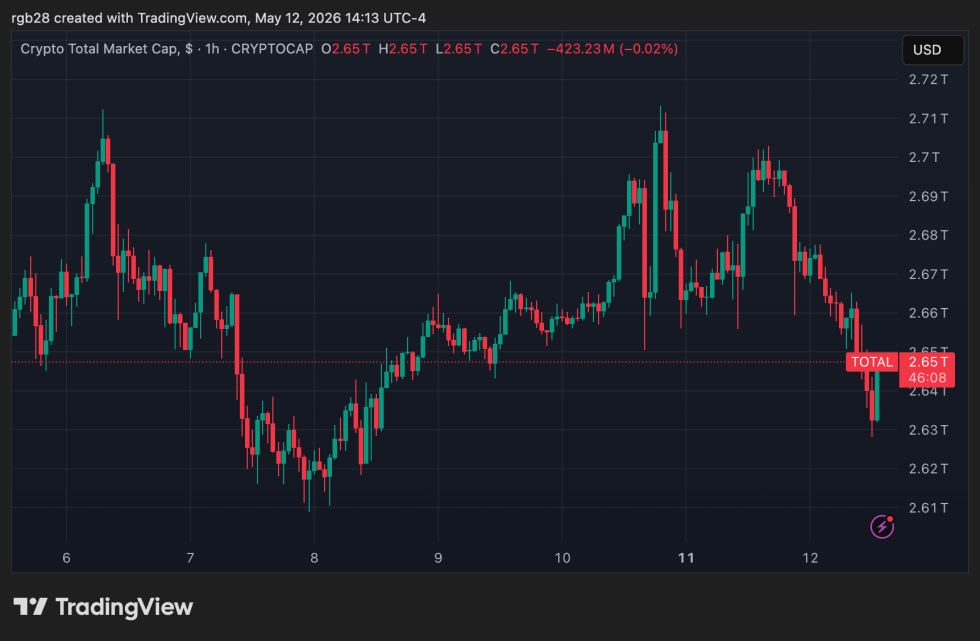
As the Sejm prepares for the second reading of the bills on Thursday, May 14, one cannot help but marvel at the absurdity of it all. In a country where the past and present are perpetually at odds, the debate over digital assets has become a microcosm of Poland’s larger struggle to define its place in the modern world. Will PiS succeed in its bid to banish crypto to the annals of history, or will reason prevail? Only time, and the fickle hand of legislative fate, will tell. Until then, we are left to ponder the wisdom of a nation that seems determined to shoot itself in the foot, all in the name of progress.
Read More
- Total Football free codes and how to redeem them (March 2026)
- Clash of Clans May 2026: List of Weekly Events, Challenges, and Rewards
- Farming Simulator 26 arrives May 19, 2026 with immersive farming and new challenges on mobile and Switch
- Pixel Brave: Idle RPG redeem codes and how to use them (May 2026)
- Last Furry: Survival redeem codes and how to use them (April 2026)
- Gold Rate Forecast
- Honor of Kings x Attack on Titan Collab Skins: All Skins, Price, and Availability
- Top 5 Best New Mobile Games to play in May 2026
- Nekopara Sekai Connect Neko Tier List
- Top 15 Mobile Games for April 2026
2026-05-13 11:59