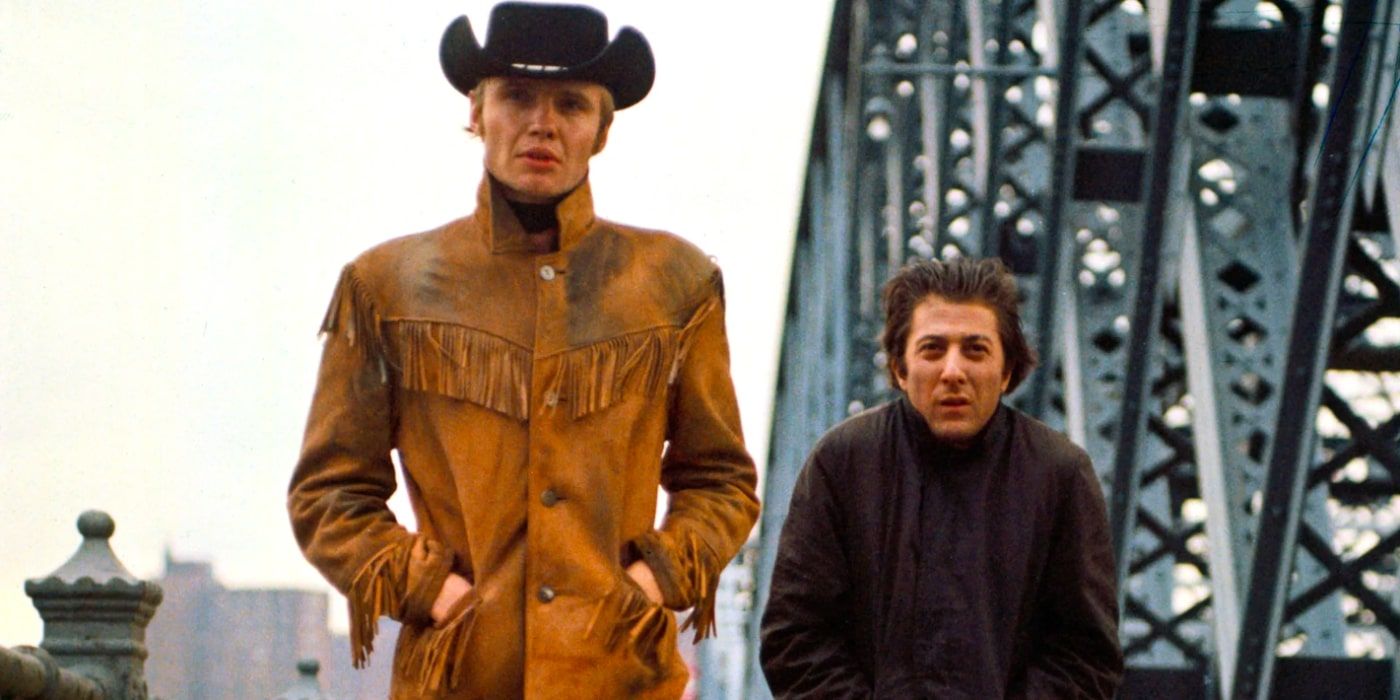
New York City has been the setting for many iconic films, from the dramatic conclusion of King Kong to stories about a changing America like Midnight Cowboy. Often seen as a symbol of American ambition, energy, and drive, the city frequently feels like a character itself. This was especially true in a famous 1969 movie, which perfectly captured the essence of New York in just three words.
As a film buff, I’m always drawn to movies from the 1960s – they really were a golden age for Hollywood. It was a time of huge social change, with the counterculture movement really taking hold, and you can see that reflected on screen. Directors and writers were so much bolder, pushing creative limits in ways we hadn’t seen before. These films just connected with a generation trying to figure things out during a really turbulent decade. And for me, one moment that perfectly captures the spirit of the time is a line delivered by Dustin Hoffman in 1969 – it felt so defiant and really embodied the energy of New York City at the time.
Midnight Cowboy is a Quintessential ’60s Drama
Okay, so this movie follows Joe Buck, a guy from Texas who’s just fed up with washing dishes. He heads to New York City thinking he can make a living as a male prostitute. He’s full of energy and thinks it’ll be easy, and honestly, he scores pretty quickly. But the dream doesn’t last. He quickly gets a harsh reality check, and things get tough when he starts running out of money. What’s really interesting is that throughout it all, we get glimpses into a really difficult past – a strict religious upbringing and some seriously troubling experiences with sexual violence that clearly haunt him.
During his time in the city, Joe encounters a streetwise con man named Rico, known as Ratso to those in the know. After being introduced to Buck, Rico reluctantly agrees to let the Texan stay with him, both hoping to earn enough money to travel to Miami and live comfortably. However, Rico’s health deteriorates throughout the winter, making their dream increasingly unrealistic. Meanwhile, Joe begins working with a variety of clients, but becomes disheartened by low pay, clients who refuse to pay, and his own growing confusion about his sexuality.
Although the film was a hit with audiences, especially young people, it also sparked some controversy. The old, strict movie censorship rules had just been lifted, and its depiction of sexuality was a new experience for many viewers. The film’s central idea was disillusionment, shown through the main character, Buck, as he’s gradually worn down and influenced by the darker side of city life. By the end of the tragic story, he completely abandons his cheerful cowboy image and embraces a more contemporary New York style.
Even though the film was initially controversial and received an X rating, it surprisingly won an Academy Award, demonstrating a growing willingness within the film industry to acknowledge and appreciate art that challenges the status quo. The role of the heartbreaking and pessimistic Ratso not only confirmed Dustin Hoffman’s already impressive talent but also launched Jon Voight into the spotlight.
How Ratso’s Traffic Walk Defined New York Perfectly
Soon after Buck meets Ratso, they’re walking in the city when Ratso steps into traffic, causing a taxi to brake and blast its horn. Instead of saying he’s sorry, Ratso famously shouts, “I’m walking here!” This moment really struck a chord with many New Yorkers, perfectly capturing the city’s bold and unapologetic spirit. People like Ratso don’t let anything slow them down, and that blunt exchange feels like a core part of the New York experience. Buck, on the other hand, seems out of place with his quiet demeanor—though his cowboy clothes already make him stand out.
This scene perfectly captures the energy of New York City – a place that’s always moving, filled with people who are determined and resilient. When Ratso speaks, he’s bluntly telling Joe that life won’t wait for anyone, and they need to push forward to reach their goals, both practically and in life generally. He believes that being considerate will only get him taken advantage of and prevent him from succeeding. Ratso is a product of the city’s fast-paced, competitive environment. He doesn’t see himself as the problem; he believes everyone else is, and he’s determined to get ahead just like everyone else.
Hollywood often portrays New Yorkers as incredibly resilient, unfazed by anything that happens around them. From calmly witnessing bizarre events, like a giant worm in the subway, to showing little reaction to violence in TV shows, this stoic attitude is famous globally. New York is a tough city, and it can be especially challenging for newcomers who arrive with hopeful, innocent expectations. For people like Joe Buck, simply avoiding a tragic outcome similar to Ratso’s is a best-case scenario.
As viewers get to know Ratso, they begin to understand his perspective on the city. His story of his father – a hardworking shoeshiner who still faced poverty, sickness, and an early death – powerfully explains why Ratso is so desperate to escape. Buck, who had a more comfortable life out West, doesn’t initially grasp this. The film doesn’t criticize the city itself, but it strips away the glamorous image many have of it, especially those who only see its wealth and energy. It reveals the harsh reality for people without money: a life filled with hardship, hopelessness, and distrust.
Ratso and Joe Became Counterculture Icons
The late 1960s saw two very different reactions to the era’s turmoil. Following years of civil rights struggles, the Vietnam War, and national tragedy, many young Americans rejected traditional values and sought new ways of life. Some embraced peace, love, and the hippie movement, while others grew deeply cynical about the American Dream, viewing it as a lie and calling for greater power for ordinary people. The film Midnight Cowboy reflects this more disillusioned perspective, and it’s easy to see why its gritty portrayal fits so well with the harsh realities of New York City’s underbelly. Even now, the movie feels relevant and impactful.
Buck and Ratso embody two different experiences of 1960s New York City. Buck is a lifelong New Yorker with a distinctly pessimistic outlook, while Ratso is an outsider hoping to find success and excitement in the city. Though a friendship with Joe briefly gives Ratso hope for a better life in Miami, Buck ultimately discovers the city wasn’t what he thought it would be. In the end, he becomes as jaded and cynical as any native New Yorker.
Ratso’s famous line, “I’m walking here!” perfectly captures the essence of being a New Yorker. In just three words, it embodies the city’s bold and unapologetic attitude. Many have tried to express this same spirit, but no one has done it as effectively. New Yorkers are known for both criticizing and fiercely defending their city, almost as a badge of honor for enduring its challenges. This complex attitude is consistently present in Ratso’s character, whether he realizes it or not.
Midnight Cowboy Has a Proud Hollywood Legacy
Considered a landmark film, Midnight Cowboy remains a significant achievement in Hollywood history. At its heart, it’s a classic story of friendship, exploring how two very different men impact each other’s lives. Released during a period of intense social division in America, the film offers a realistic, rather than idealized, portrayal of New York City – one that resonated with those who actually knew the city. A key moment, like Dustin Hoffman’s famous line, “I’m walking here!” perfectly captures this raw and authentic feel.
New York City remains a popular backdrop in movies, often representing American determination, drive, and toughness. The city’s iconic characters – from taxi drivers to street vendors, and its bustling subways – create a well-known image of what it means to be a New Yorker. Films like Midnight Cowboy, starring Dustin Hoffman and Jon Voight, redefined how New York was portrayed on screen, and the famous line “I’m walking here” perfectly captures the city’s energetic spirit.
Found an error? Send it so it can be corrected.
Read More
- The Division Resurgence Best Weapon Guide: Tier List, Gear Breakdown, and Farming Guide
- Kagurabachi Chapter 118 Release Date, Time & Where to Read Manga
- Last Furry: Survival redeem codes and how to use them (April 2026)
- Clash of Clans Sound of Clash Event for April 2026: Details, How to Progress, Rewards and more
- Guild of Monster Girls redeem codes and how to use them (April 2026)
- All Mobile Games (Android and iOS) releasing in April 2026
- Gold Rate Forecast
- GearPaw Defenders redeem codes and how to use them (April 2026)
- ‘Project Hail Mary’s Soundtrack: Every Song & When It Plays
- Wuthering Waves Hiyuki Build Guide: Why should you pull, pre-farm, best build, and more
2026-04-10 23:09