The stock market, ever the cautious gentleman, opened its doors with a bow and a sigh, as inflation continued its steady waltz at 2.4%-a figure so unremarkable it might as well have been a footnote in a novel of 19th-century manners.
February CPI Confirms Cooling Inflation While Energy Markets Spike on Middle East Conflict
The February Consumer Price Index (CPI) report, that most reliable of horoscopes, revealed inflation’s unyielding grip at 2.4% year over year, matching January’s reading and economist expectations, according to the Bureau of Labor Statistics (BLS). On a monthly basis, headline CPI increased 0.3% in February, slightly faster than January’s 0.2% gain, while core CPI – which excludes food and energy – rose 0.2% for the month and 2.5% from a year earlier.
The data landed just before U.S. equity markets opened at 9:30 a.m. ET, giving traders a fresh read on inflation trends as the morning session began. Futures suggested a modestly lower start, and early trading reflected that cautious tone. Dow Jones Industrial Average futures slipped about 146 points, or roughly 0.31%, while S&P 500 futures dipped 0.15% and Nasdaq futures edged down about 0.03% as investors digested the inflation print alongside rising geopolitical risks.
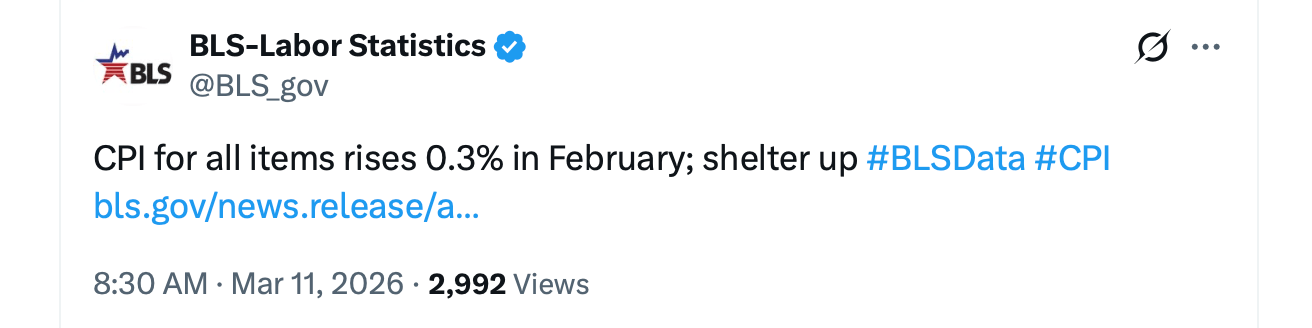
At the sector level, shelter remained the largest contributor to monthly price increases. Shelter costs rose 0.2% in February and are now up 3% over the past year. Rent of primary residence increased only 0.1% for the month – the smallest rise since January 2021 – suggesting the housing component of inflation continues to cool gradually, a trend policymakers have been waiting for with considerable patience.
Food prices climbed 0.4% in February, with grocery prices rising 0.5% and restaurant prices up 0.3%. Within groceries, fruits and vegetables jumped 1.4% while dairy prices fell 0.6%. Energy costs also rebounded modestly, increasing 0.6% month over month as gasoline prices rose 0.8%, though gasoline remains down more than 5% compared with a year earlier.
Several other categories offered a mixed inflation picture. Apparel prices rose 1.3% in February, medical care services climbed 0.5%, airline fares increased 1.4%, and used vehicle prices declined 0.4%. New vehicle prices were essentially unchanged. Taken together, the report reinforced the idea that inflation is easing overall but is still quite stubborn in parts of the services sector.
For Federal Reserve policymakers, the numbers offer a delicate balance. Inflation remains slightly above the central bank’s 2% target but continues trending downward from the roughly 9% peak reached in 2022. Markets widely expect the Fed to keep its benchmark federal funds rate in the current 3.50% to 3.75% range at its March 18-19 meeting next week as officials wait for more evidence that price pressures are firmly under control.
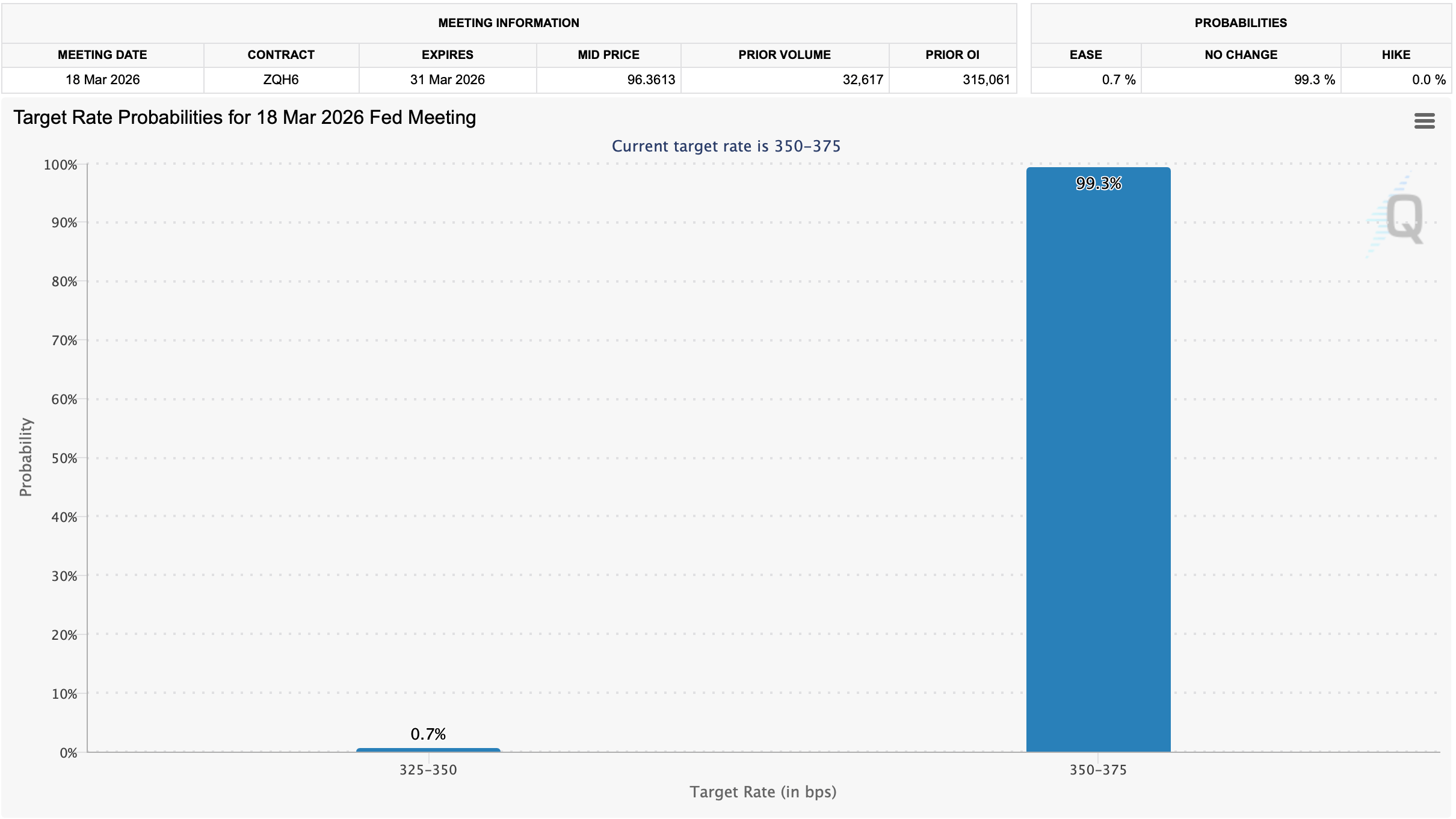
With seven days left until the Fed members meet, CME’s Fedwatch tool shows a 99.3% chance of no change. Treasury yields edged slightly lower after the report, reflecting the view that inflation is not reaccelerating – at least not yet. However, traders remain wary that rising energy prices tied to geopolitical tensions could complicate the picture in the months ahead.
Those tensions are centered around the Strait of Hormuz, where recent attacks on cargo vessels and heightened military activity involving Iran have pushed oil prices sharply higher. West Texas Intermediate crude traded around $84 to $87 per barrel in early trading Wednesday, while Brent crude hovered near $89 to $92 per barrel. The spike has lifted energy stocks and defense companies while injecting a fresh dose of uncertainty into global markets.
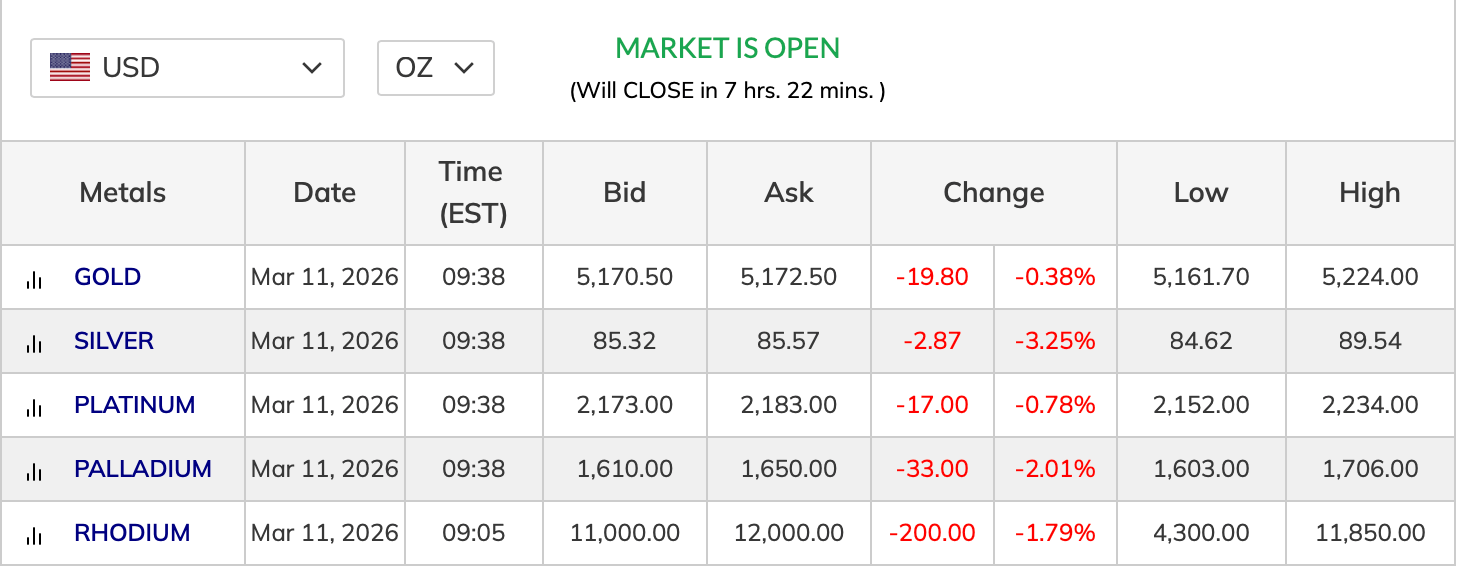
Precious metal prices logged by Kitco showed mixed reactions during the early session. Gold traded near $5,170 per ounce, slightly lower on the day after rallying earlier in the week amid geopolitical fears. Silver also pulled back as traders adjusted to the in-line CPI reading and shifting expectations for interest rates.
Cryptocurrency markets were relatively steady during the morning session. Bitcoin traded around $70,000, holding above that psychological level despite broader market caution. Ethereum hovered near $2,040. Digital assets have been tracking broader risk sentiment closely in recent weeks, often reacting to macroeconomic data and geopolitical developments alongside equities.
Overall, the February inflation report supports the narrative that the U.S. economy is gradually cooling without tipping into recession – a scenario often described as a soft landing. But with energy markets suddenly back in focus and geopolitical tensions simmering, investors appear reluctant to declare victory over inflation just yet.
FAQ 🔎
- What did the February 2026 CPI report show about U.S. inflation?
U.S. inflation held steady at 2.4% year over year in February 2026, matching January and economist forecasts. - How did the stock market react to the February CPI release?
U.S. equities opened slightly lower in early trading as investors weighed the inflation data alongside rising geopolitical tensions. - What role did energy prices play in the inflation report?
Energy prices rose 0.6% in February, though the data was recorded before the latest spike in oil prices tied to Middle East tensions. - What could the CPI data mean for Federal Reserve policy?
The report supports expectations that the Federal Reserve will hold interest rates steady at its March meeting while monitoring future inflation trends.
Read More
- Beyond Accuracy: Gauging Trust in Human-AI Teams
- ‘Project Hail Mary’s Unexpected Post-Credits Scene Is Worth Sticking Around
- How Martin Clunes has been supported by TV power player wife Philippa Braithwaite and their anti-nepo baby daughter after escaping a ‘rotten marriage’
- Gold Rate Forecast
- CookieRun: OvenSmash coupon codes and how to use them (March 2026)
- Clash Royale Balance Changes March 2026 — All Buffs, Nerfs & Reworks
- eFootball 2026 is bringing the v5.3.1 update: What to expect and what’s coming
- Total Football free codes and how to redeem them (March 2026)
- Only One Straw Hat Hasn’t Been Introduced In Netflix’s Live-Action One Piece
- Genshin Impact Version 6.5 Leaks: List of Upcoming banners, Maps, Endgame updates and more
2026-03-11 17:27