Interactive Brokers, ever a sober steward of commerce, enlarges its portfolio of crypto derivatives with nano-sized bitcoin and ether futures procured through Coinbase Derivatives. The brokerage proceeds with its accustomed measured pace from a pioneer in electronic trading unto a considerable octopus, its grasp now extended to multiple assets and regulated crypto as a steady beacon.
A New Layer of Futures-Smaller, More Steady, and Regulated
On a Tuesday, Interactive Brokers announced the introduction of nano bitcoin and nano ether futures contracts upon Coinbase Derivatives, bestowing their availability upon eligible clients directly via the IBKR platform. The contracts contemplate monthly expirations as well as perpetual‑style structures, and trade around the clock, furnishing market participants with another manner of securing crypto exposure within a properly regulated futures stage.
Nano contracts are, by deliberate design, modest in measure-0.01 bitcoin and 0.10 ether-thus reducing capital demands and permitting more exacting position sizing. Perpetual-style futures are contrived to hew closely to spot prices, diminishing the necessity for frequent contract rollovers while preserving the flexibility essential to active traders.
For Interactive Brokers, the venture is less a novelty than a refinement. The house already offers access to more than 170 markets worldwide, embracing equities, options, futures, foreign exchange, bonds, and digital assets. The addition of Coinbase Derivatives’ nano crypto futures tightens the bond between traditional derivatives trading and crypto exposure within a single, orderly interface.
Chief Executive Officer Milan Galik framed the rollout as a practical expansion rather than a leap into speculative fancy, extolling flexibility, lowered margin requirements, and regulated execution. Coinbase Institutional Co-CEO Greg Tusar echoed that sentiment, pointing to accessibility and regulatory architecture as guiding aims.
To grasp why Interactive Brokers’ crypto expedition unfolds with such measured grace, one must look to its origins. The firm was founded in 1977 by Thomas Peterffy, long before online commerce assumed its modern polish. What began as a market‑making enterprise evolved into one of the earliest fully automated electronic brokerages, built upon proprietary contrivances and a temperate zeal for cost discipline.
Interactive Brokers went public in 2007 and has since grown into a global platform serving active traders, institutions, hedge funds, and registered investment advisers. By late 2024, the firm counted more than 3.3 million client accounts and roughly $568 billion in client equity, with the majority of users stationed beyond the United States.
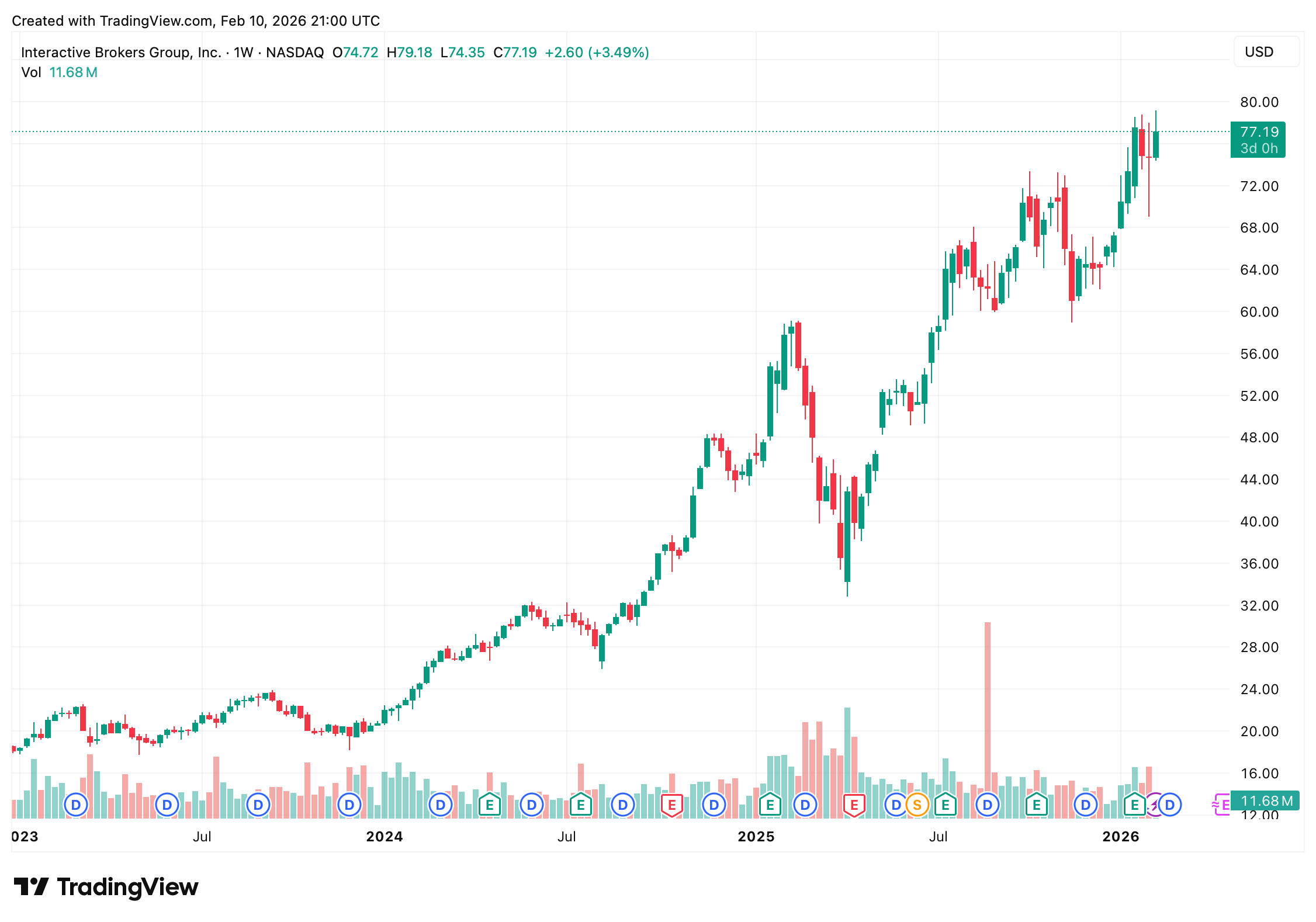
Interactive Brokers’ first indulgence with crypto occurred in December 2017, when it permitted clients to access bitcoin futures listed on regulated U.S. exchanges, one of the earliest traditional brokers to extend such exposure without custody risk at a moment when spot markets were comparatively unregulated. The derivatives‑first temper of the house was thus set, preferring regulatory guardrails and institutional‑grade partners before venturing into direct crypto trading.
In September 2021, IBKR broadened into spot crypto trading through Paxos Trust Company-initially for bitcoin (BTC), ethereum (ETH), litecoin (LTC), and bitcoin cash (BCH). A month hence, the firm extended crypto trading to U.S.-registered investment advisers, enabling advisers to steward digital asset exposure alongside stocks, bonds, and options.
Commissions were intentionally kept low, with execution and custody entrusted to regulated third parties-a structure that shielded IBKR from many of the missteps that later affected much of the crypto sector.
From that juncture, Interactive Brokers expanded crypto reach region by region. Hong Kong clients gained limited crypto trading in 2023 through OSL Digital Securities, followed by a 2024 expansion into the United Kingdom. Each rollout reflected the local regulatory landscape rather than any one‑size‑fits‑all design.
In 2025, the firm accelerated asset additions, embracing solana (SOL), cardano (ADA), XRP, dogecoin (DOGE), and later chainlink (LINK), avalanche (AVAX), and sui (SUI) through partnerships with Zero Hash and Paxos. That same year, Interactive Brokers began rolling out stablecoin funding-initially USDC deposits for U.S. accounts, later extending blockchain support in early 2026.
The aim was operational convenience-24/7 funding and reduced friction-rather than the issuance of a proprietary token.
The Coinbase Derivatives launch sits squarely within this measured trajectory. By offering nano futures on a regulated exchange, Interactive Brokers affords clients another risk-management instrument without disturbing its underlying philosophy. Smaller contract sizes widen participation, while perpetual‑style structures allure traders who desire continuity without constant upkeep.
It also serves as a reminder that IBKR’s crypto strategy is additive, not transformational. Crypto coexists with equities, futures, and forex-not above them.
A Brokerage Growing Without Reinventing Itself
Interactive Brokers’ strength has always resided in its infrastructure. Its crypto evolution mirrors that same DNA: regulated partners, low fees, deep liquidity, and seamless integration with existing trading tools. The firm has steered clear of splashy ventures into NFTs or decentralized finance, preferring provisions that appeal to professional users.
By enriching Coinbase Derivatives’ nano bitcoin and ether futures, Interactive Brokers is not chasing trends; it is refining access. The move reinforces the firm’s role as a bridge between traditional markets and digital assets, designed for traders who value precision, regulation, and scale over mere spectacle.
FAQ ❓
- What did Interactive Brokers announce?
Interactive Brokers added nano bitcoin and nano ether futures from Coinbase Derivatives to its trading platform. - What are nano crypto futures?
They are smaller futures contracts designed to lower entry costs and improve position sizing. - Are the contracts regulated?
Yes, the futures trade on a regulated U.S. exchange through Coinbase Derivatives. - Who can trade them?
Availability depends on jurisdiction, account type, and trading permissions.
Read More
- Invincible Season 4 Episode 4 Release Date, Time, Where to Watch
- Physics Proved by AI: A New Era for Automated Reasoning
- American Idol vet Caleb Flynn in solitary confinement after being charged for allegedly murdering wife
- Gold Rate Forecast
- Magicmon: World redeem codes and how to use them (March 2026)
- Total Football free codes and how to redeem them (March 2026)
- “Wild, brilliant, emotional”: 10 best dynasty drama series to watch on BBC, ITV, Netflix and more
- Goddess of Victory: NIKKE 2×2 LOVE Mini Game: How to Play, Rewards, and other details
- Seeing in the Dark: Event Cameras Guide Robots Through Low-Light Spaces
- Simulating Humans to Build Better Robots
2026-02-11 11:18