
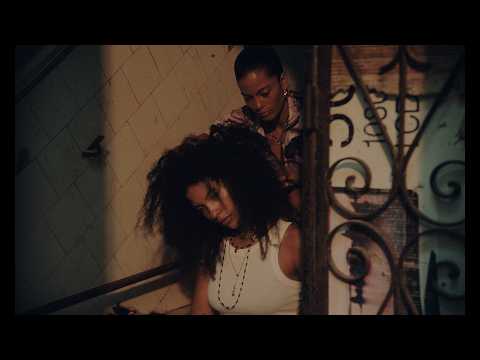
In Havana one warm day in October, while Ibeyi—the Cuban-French twin sisters—were filming a video for their song “Offerings,” Lisa-Kaindé Díaz suddenly asked Naomi to shave her head for the cameras. The song is an electronic and spiritual track from their album Offering, which came out in June.
Naomi had always gotten used to Lisa-Kaindé being unpredictable, even before they both became artists. But cutting her sister’s long, thick hair felt like crossing a line.
Naomi told The Times, during a Zoom interview from Paris, that she firmly refused, saying something along the lines of, ‘Absolutely not!’
Lisa-Kaindé explained that whenever she shares her more unconventional ideas, Naomi usually reacts with skepticism. However, this time Naomi surprisingly agreed, saying ‘Okay.’
The music video ended with Lisa-Kaindé releasing her locks into the sea.
Ibeyi, meaning “twins” in Yoruba, centers around the unique connection between sisters Lisa-Kaindé and Naomi. Lisa-Kaindé brings emotional depth and spiritual themes to their songs through her lyrics, while Naomi provides a strong rhythmic foundation with her percussion. Their voices blend beautifully, creating both delicate tension and harmonious unity – this powerful combination shines through in their atmospheric take on Afro-Cuban jazz.
 ×
× The Díaz sisters, now 31 years old, come from a highly musical background – their mother is French-Venezuelan singer Maya Dagnino and their father is the Grammy-winning Cuban percussionist Anga Díaz, known for his work with groups like Irakere and Buena Vista Social Club. They began their music careers at age 18 after being discovered by British producer Richard Russell, who also runs XL Recordings. Following their first self-titled album in 2015, they gained further recognition appearing in a short film accompanying Beyoncé’s “Lemonade.” They then released two more albums with XL: “Ash” in 2017 and “Spell31” in 2022, though Lisa-Kaindé Díaz has said the latter didn’t achieve the success they hoped for.
With their album “Offering,” the group moved forward without their previous label and recorded in a studio as independent artists. They expanded their sound by working with new collaborators, including producer Michael Brun (known for his work with J Balvin and Victoria Monét) and renowned Cuban percussionist Pedrito Martinez.
Lisa-Kaindé asked, ‘When things don’t work out as planned, what opportunities does that create?’ She explained that it opened up many possibilities, both in her personal life and her career.
Last autumn, the pair went back to Havana—their hometown—to film the music videos for “Offerings,” along with their other songs, “Aset” and “Hurry Hurry.” The videos were directed by Corry Van Rhijn and Roman Pichon Herrera. They filled the scenes with shots of loved ones dancing, playing dominoes, and inside homes decorated in soft colors like mint green, pale yellow, and blush pink. These spaces showed beautiful signs of age and the effects of the humid climate.
With ongoing debate about Cuba in the U.S., the Díaz sisters emphasize that it’s a country of over 10 million people—including their own family, whom they’ve been visiting since childhood.
Ibeyi will be touring North America in 2027, starting January 27th at the Fillmore in San Francisco and including a performance at Pacific Electric in Los Angeles on January 29th. Naomi Díaz shared, “I want everybody to cry, dance and twerk at our shows!” The sisters recently spoke with The Times about a challenging period in their lives and how overcoming it inspired their new, independently released album.
This interview has been edited and condensed for clarity.

What has changed for you the most since you released “Spell31?”
Things have shifted a lot for me, both in my life and the world around us. We really needed to pause, take stock of where we were in our career and everything we’d accomplished. It was a real emotional journey – we went through anger, then sadness, and eventually found acceptance. After ten years and three albums with XL Recordings – which truly felt like home – we decided to move on. It was also time to step away from working with Richard Russell, who we adore and who was one of the very first to hear our new record. Ultimately, we just needed a fresh start and a new experience.
We began our musical journey at 18, and now we’re fully independent and have more creative control than ever before. Finding new producers felt like a challenging search – almost like dating! We went through a lot of options, but we needed someone whose style could complement and stand up to our already powerful sound. It was important to find a strong match.
I hear a lot of heartbreak in this album, but also making peace with that. How do you personally heal from the pain of such endings?
Lisa-Kaindé believes we need to face life’s difficulties head-on because there’s no avoiding them. She encourages everyone to be brave enough to make changes, asking themselves honest questions about who they are and what truly matters to them, then simply live their lives fully—or even choose to leave behind what doesn’t serve them.
You have a T-shirt that says, “I used to make spells, now I make offerings.” What does that mean to you?
Lisa-Kaindé explains that her album, “Spell31,” came with a lot of pressure because she really wanted people to love it – she even felt like she needed to make them love it. When the album didn’t perform as well as she hoped, she was deeply hurt. Through meditation, she realized she’d been trying to gain something from the world instead of giving freely. This led her to a new perspective: what if she focused on offering her work without expecting anything in return?
 ×
× Some of your lyrics name orishas from the Yoruba religion, such as Elegua and Olokun. What does your spiritual practice look like?
As I get older, I find myself drawn to religion, but my sister Naomi expresses her spirituality very differently. For her, something like dancing energetically in a crowded club can be deeply meaningful – she’s really embracing a bolder, more carefree side of herself.
Naomi explained that her upbringing didn’t focus on traditional religious terms like “spiritual,” but she believes spirituality takes many forms. For her, there’s nothing more spiritually fulfilling than being at Magic City, a well-known Atlanta club. She emphasizes that everyone should find their own way to connect with what feels meaningful to them, whether it’s lighting a candle or something else entirely.
Lisa-Kaindé explains it’s about living authentically – doing things that energize and make you feel truly vibrant.
What was it like for Naomi to cut Lisa’s hair in the video for ‘Offerings?’
Naomi said she worried her sister wouldn’t be happy with how she looked after having her head shaved. Her sister asked Naomi to do it herself, and Naomi immediately refused. The sister explained it was very meaningful to her because they were twins.
We didn’t have mirrors available, which made things difficult. But as I worked on her, I kept thinking, ‘I hope she learns to love how she looks.’ There was a moment when I told her she was beautiful, and she replied that if I said so, then it must be true. It was a really moving experience.
In the closing track, ‘Lucky,’ you sing: ‘We can’t manifest for s—; God will always choose for us.’ Be honest, is this in response to those trending videos on social media about manifestation magic?
It’s funny we’ve never discussed this publicly, but I really went all-in with trying to manifest success while creating “Spell31.” I started writing affirmations three times a day – just repeating ‘It’s gonna do well.’ It was a first for me. When the album didn’t perform as hoped, I was shocked, thinking, ‘I did everything everyone said to do!’ That experience is why I now believe manifestation doesn’t really work. Looking back, I realize whatever happened was meant to happen.
My own outlook changed after a priestess told me to keep an altar to bring offerings to my ancestors. If you want something … you have to give the universe something to work with!
Lisa-Kaindé believes in giving back, not necessarily through religion, but simply by being kind. She sees life as an exchange where everything has a cost – and that’s okay! In fact, she thinks having something to offer makes the process more meaningful. It’s about reciprocity; you shouldn’t just expect things from the universe without contributing yourself.
I sense more thunder in the sounds of ‘Offering,’ especially in Naomi’s percussion. ‘Mosh Pit’ is a storm of trap and acoustic elements. Can you talk about making this song?
This song was the starting point for our album. We collaborated with Haitian artist Michael Brun, who’s based in New York, and really wanted to create something powerful and energetic – we called it ‘dragon energy.’ As a big fan of rap and trap music, I definitely brought my own influences to this track. Ibeyi is like a balance between my sister Lisa and me, and over the past decade, that balance has shifted – for a long time, it leaned towards Lisa, but now it’s moving more towards my side. That’s just how life goes.
 ×
× You shot multiple music videos in Cuba. What made you decide it was time to make these videos in Havana?
We filmed the videos during September and October as a way to honor our father and showcase Cuba, which holds special meaning for our family. We consider Paris, London, and Havana to be our homes.
Lisa-Kaindé explains that after creating visuals for “Spell31” in a studio setting, they felt a need for a more meaningful and personal project. They’d always been hesitant to film in Cuba because they wanted to control how the country was represented – moving beyond typical tourist images like elderly women smoking cigars or American-influenced stereotypes. Having spent their summers there throughout their lives, they aimed to capture the everyday realities of Cuban life and show the world what it’s truly like for the people who live there.
Naomi explained they aimed to showcase authentic Yoruba-Cuban culture and community, envisioning celebrations where people of all ages – from elders to youth – could come together and enjoy themselves, with lively dancing and music.
This big house party happens in the video for the song ‘Aset.’ Can you tell me about shooting the party scene?
It’s funny, but I think my family was actually quite involved in helping out with everything. Naomi’s close friend did all the styling because she has a great sense of fashion. We also worked with one of the directors – we’ve known him since we were teenagers and he feels like family. Plus, we collaborated with a conga player named Karín, just like our dad, and filmed the “Offerings” music video at his home. After that, we shot some scenes at La Playita 26, which is near where we used to live, overlooking the ocean.
Naomi said the best part was that everything genuinely happened, even though many of the people involved were strangers. She emphasized how authentic and unfiltered the experience was.
Watching Naomi dance during the filming of “Aset” was a revelation for me. It felt like we’d finally found the freedom we’d been searching for.
2026-07-28 21:03