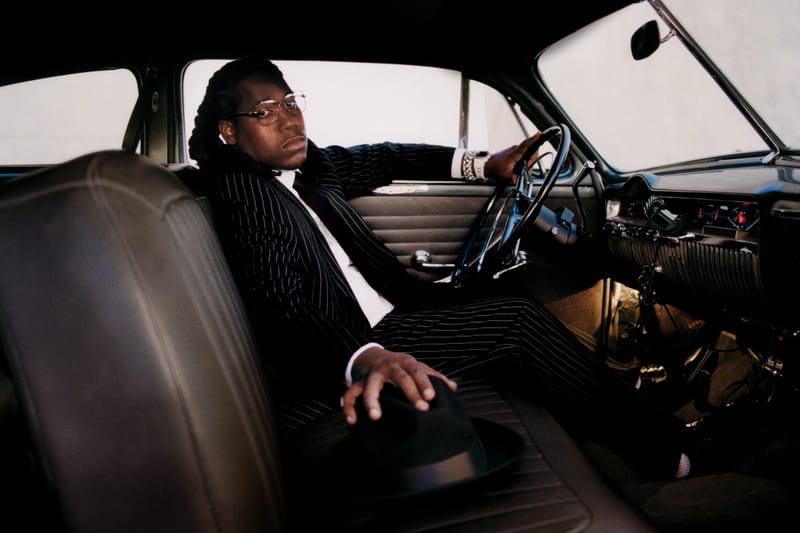
2026 looks like the year Don Toliver will move beyond being a popular artist on playlists and become a major force in music overall. He’s currently projected to have one of the year’s best-selling albums, putting him in the same league as artists like Bad Bunny, Morgan Wallen, BTS, and Olivia Dean – artists who span various genres and appeal to diverse audiences. Toliver has consistently delivered hits within hip-hop, but now he’s poised to reach the very top of the music industry.
Streaming numbers echo this success. Spotify reports that Yeat’s project, Octane, has surpassed 1 billion streams – a first for the artist. This isn’t a one-time event or a fleeting moment of popularity. As Yeat told TopMob Magazine, “Seeing it hit No. 1 felt good, but also expected.” He believes the timing was perfect for releasing a strong album, and that confidence comes from dedicated work in the studio.

He admitted he used to lack confidence early in his career, despite how good things might have seemed. With experience and overcoming challenges, he steadily grew more confident – both on stage, in the studio, and in general. His journey from songs like “No Idea” to “After Party” and “Too Many Nights” has all been leading to this moment. His new album, Octane, represents everything finally coming together perfectly.
We recently spoke with Don Toliver about the making of his album. It began as a quick project—a couple of weeks recording in Miami at the start of 2025—but evolved into a more focused effort as he worked in Monterey. Combining creative sessions, a fresh perspective, and the desire to create something great, he produced one of the most popular and successful albums of 2026. With his album Octane, it’s clear Don Toliver isn’t slowing down anytime soon.
Where did the idea for Octane start?
Don Toliver says the project was inspired by his passion for cars and motorsports, especially the exciting world of Group B rally racing. He was captivated by the images of drivers racing with fans incredibly close to the track. He realized that energy – the chaos, the excitement, and the fans losing themselves in the moment – felt a lot like being on stage during a high-energy performance. The roaring engines, the enthusiastic fans with cameras, and the overall intensity reminded him of performing for a wild and engaged crowd.
What inspired you to record part of the album at Mount Wilson Observatory?
I initially considered elaborate setups for the album, even something huge like a geodesic dome, but it would have been too expensive and time-consuming. That led me to Mount Wilson, which I researched extensively, learning about its history and the work of Edwin Hubble. While creating the music, I also became an amateur astronomer, spending time at Mount Wilson taking photos and videos. I combined all of these experiences – the music, the astronomy, and the visuals – to create the final album.
Were there any sessions that really shaped the sound of the album?
I found the framework for the album while I was in Monterey, California. We had some fantastic music come out of the Miami sessions, but it still lacked a certain energy and direction.
When I arrived in Monterey, I was ready to start. I had my equipment, a clear concept, and a good sense of the artistic direction. I just needed the right headspace to create. Being in Monterey gave me that final clarity, and the music flowed naturally from there.
Where in the process did a song like “Sweet Home” come together?
“Sweet Home, “Body,” “Gemstone,” and “E85” were made in Monterey.

What was it about the environment in Monterey that pulled that energy out of the music?
I really invested myself in this project. I spent a significant amount of money to rent Castle Creek, a beautiful house where we set up a recording studio and brought in several producers. When I commit like that, I become incredibly focused and efficient. I hate wasting time – my own, or anyone else’s – and I definitely don’t want to waste the money I’ve invested. So, when I organize a project like this, you can be sure I’m completely dedicated to making it worthwhile.
When you’re recording, do you usually plan things out carefully, or do you mostly follow your instincts and emotions?
I really need to hear a good beat before I start working on a song. If I connect with the music, I’ll record to it. Sometimes someone will play a beat for me directly, and I’ll immediately start rapping. Other times, I’ll come up with the tune and produce the beat myself, then record. But it always begins with the beat grabbing my attention.
You’ve collaborated with artists like Teezo Touchdown and 206Derek on several projects now. Could you describe the creative community you’ve developed and what you look for in the people you work with?
I really enjoy working with skilled people, and I’ve built strong relationships with many of my collaborators. Sometimes these projects come about because of those existing connections, and other times it’s simply because I’m inspired by someone’s talent. If I connect with an artist, I’ll reach out and see if we can create something together. Ideally, it would be for my next album, but there’s no obligation – we always find a way to make it work.
You had your first child shortly after leaving Hardstone. How did becoming a father change the way you worked on Octane?
I was under a lot of pressure. This album felt like a real turning point, not just for me, but for my son as well, if I could deliver. I was determined to succeed, driven by my desire to create a better future for him. There was a much larger, more meaningful story waiting to be told through this project.

You can find our complete feature on Don Toliver here. Plus, order your copy of TopMob Magazine #37, featuring Don Toliver on the cover – it’s called ‘The Architects Issue’ – from HBX.
Read More
- Total Football free codes and how to redeem them (March 2026)
- Farming Simulator 26 arrives May 19, 2026 with immersive farming and new challenges on mobile and Switch
- Last Furry: Survival redeem codes and how to use them (April 2026)
- PUBG Mobile x Harley-Davidson Partnership to introduce new Motor Cruise event with rewards and Skins
- ALLfiring redeem codes and how to use them (May 2026)
- First Look at Bad Bunny’s Exclusive Zara x Benito Antonio Collection
- Honor of Kings April 2026 Free Skins Event: How to Get Legend and Rare Skins for Free
- Clash of Clans May 2026: List of Weekly Events, Challenges, and Rewards
- Clash of Clans “Clash vs Skeleton” Event for May 2026: Details, How to Progress, Rewards and more
- Honor of Kings x Attack on Titan Collab Skins: All Skins, Price, and Availability
2026-04-29 18:57