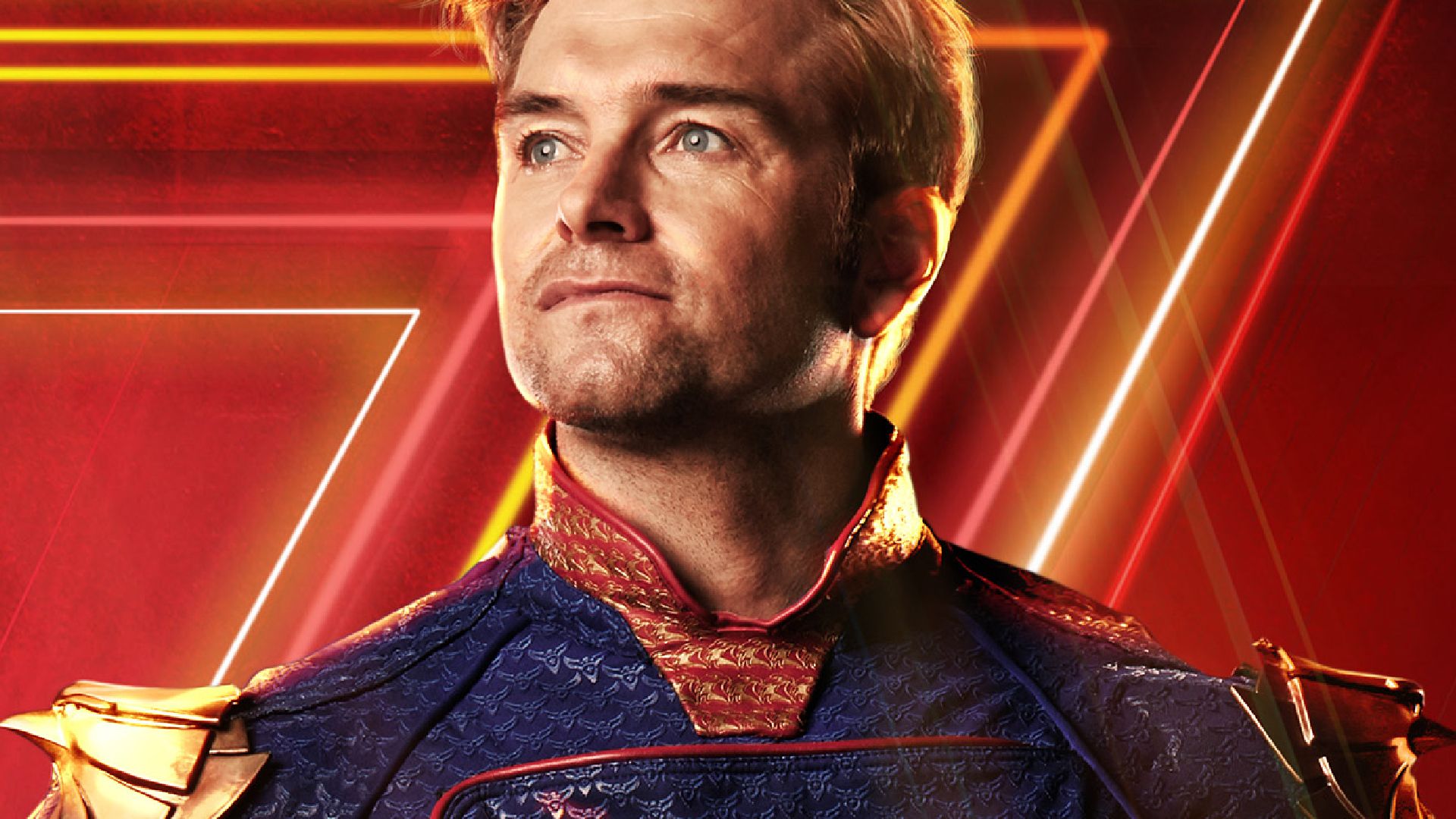
Known for its sharp and often crude humor, The Boys delivers some of the most memorable dialogue in the superhero genre. But one line delivered by Homelander stands out as particularly complex, open to two very different – and conflicting – interpretations.
As a huge fan of complex characters, I find Homelander in The Boys absolutely fascinating – and terrifying! He’s basically Superman if he was fueled by childish anger and a massive ego. For most of the show, this corporation called Vought controls him, but when he finally cuts ties, it’s not to be a hero. Instead, he decides he’s better than everyone else just because he has superpowers, and sets out to prove it.
Homelander’s famous line perfectly embodies his hateful beliefs, but it’s actually part of a much deeper exploration of themes like divinity, authority, and political maneuvering.
Homelander’s “No Man in the Sky” Line Explained

Homelander has two versions of his famous line, and the difference between them is significant. In Season 3, Episode 2 of the Amazon series, he confronts a woman attempting suicide – a nod to the comic All-Star Superman #10. After the death of Stormfront, he decides not to save her. When she cries out, “Oh god,” Homelander responds with, “No god. The only man in the sky is me,” and then cruelly forces her to jump.
This TV episode is based on issue #47 of The Boys comic book, created by Garth Ennis and Russ Braun (with overall creation by Ennis and Darick Robertson). In that issue, Homelander attends a Believe expo and gives a family a flight as a reward for their donation to the religious group sponsoring the event.

I watched in horror as Homelander just… lifted this person’s car way up into the sky. It went so high it was clearly freezing, and he didn’t even seem to care. Then, unbelievably, he started making fun of their beliefs right before letting go, sending them plummeting to their deaths. It was awful.
You may as well have burned your money. The only man in the sky is me.
What Homelander’s Iconic Line Means in the Show

In the Amazon series, when Homelander says he’s “no man in the sky,” it’s a clear sign he sees himself as a god. He later formalizes this by creating the Democratic Church of America, essentially transforming his followers into both a religious and political movement. The core message is simply that he believes he is divine.
This scene from The Boys explores how powerful, controlling leaders emerge. Homelander begins as a famous celebrity, but his increasing self-obsession and inflated ego lead him to become a leader in practice, and eventually, a figure of worship. He believes he’s better than everyone else, yet still desperately wants approval from those he sees as equals.

Each terrible thing Homelander does only makes his followers admire him more, which pushes him to become even more dangerous. The show eventually breaks this cycle by having Butcher kill Homelander on live television, stripping away his power and exposing him as the unstable person he is. His devoted fans finally see him for what he truly is: a broken and defeated man.
What Homelander’s Iconic Line Means in the Comics

In the comics, Homelander’s famous line, “no man in the sky,” isn’t about him believing he’s a god. It’s about his realization that there’s no higher power or moral authority in the world, meaning he feels free to do whatever he wants.
The TV series changes a key detail from the comics. Instead of killing a family after criticizing their religion – as he does in the original story where he argues against faith – Homelander’s actions are less pointedly anti-religious because his victims aren’t shown to be actively praying when it happens.
It’s all a fraud, plain and simple. It’s a scheme to trick gullible people out of their money – a tactic as old as time. It started with early forms of manipulation, like someone claiming to intercede with a higher power in exchange for possessions, and it’s continued ever since, becoming refined over the years.
The Homelander from the TV series is quite different from his comic book counterpart. In fact, the comic version isn’t portrayed as anything extraordinary. As Garth Ennis explained to Newsarama in 2008,
I see Homelander as overwhelmingly negative. He’s driven by selfish impulses, but smart enough to realize he can get away with almost anything if he doesn’t go too far. It’s like his self-control is on par with that of a typical teenager.
The TV series portrays Homelander as a complex supervillain, exploring his childhood experiments and unusual fixations – like his obsession with breast milk – to show how his experiences shaped him. However, the comic book version of Homelander is much simpler: just a powerful bully.
The Boys Is Always About Fascism, But in Surprisingly Different Ways

Garth Ennis frequently explores themes of fascism and authoritarianism in his comics, as seen in works like War Stories, Partisan, A Walk Through Hell, and The Crossed. His series The Boys continues this trend, and fans familiar with his work will recognize Homelander as a clear representation of fascist ideology.
Homelander represents Garth Ennis’s critical take on historical fascist leaders – a theme he’s explored before through depictions of figures like Hitler and Stalin in comics such as Johnny Red and Preacher. The storyline where Homelander attempts to seize power can be seen as an allegory for the dangers of racial supremacy, with some comic book covers intentionally referencing the Holocaust.

Homelander, in essence, shows how a bully can rise to become a dictator. His selfishness, childishness, and anger escalate from small acts of cruelty to terrible crimes. He isn’t driven by any beliefs or principles—he’s simply someone who enjoys having power over others and looks down on them. As Butcher points out in his backstory, once you realize you frighten someone, it’s easy to start seeing them as worthless.
Homelander from The Boys is a different kind of villain, making his role as social commentary more subtle. He embodies the dangerous ‘strongman’ archetype – a leader whose actions inspire a fanatical following. The show isn’t so much about Homelander himself, but rather the disturbing willingness of people to blindly worship someone so monstrous and the extremist movement that forms around him.
Butcher’s Relationship to Homelander Shows How Drastically He Changed in Adaptation

Both the Boys comic book and the Amazon TV series offer critiques of authority, but they approach it differently. The comic delves deeper into the minds of those in power who are fascistic, while the show concentrates more on how easily people can be captivated by charismatic figures and form a devoted following.
Homelander’s famous line, “the only man in the sky is me,” perfectly illustrates this contrast. In the TV series, he says it as a genuine claim of godhood. However, in the original comics, the line means something much darker: that there’s no inherent justice in the world and those with power can exploit others without facing repercussions.

Butcher consistently serves as a foil to Homelander, but their dynamic differs significantly between the TV series and the comics. In the show, Butcher actively challenges Homelander’s self-image of being a god, even demonstrating that he isn’t one. Conversely, in the comic books, Butcher shares Homelander’s cynical worldview – believing there’s no inherent fairness – and justifies his own actions as necessary to take down powerful figures like him, famously stating, “You need blokes like me, Hughie.”
Both versions of The Boys explore the rise of authoritarianism, but they approach this theme in distinct ways due to the thirteen-year gap between them. This is particularly evident in how Homelander presents himself – almost as a god – and how audiences interpret that portrayal.
2026-07-20 01:11