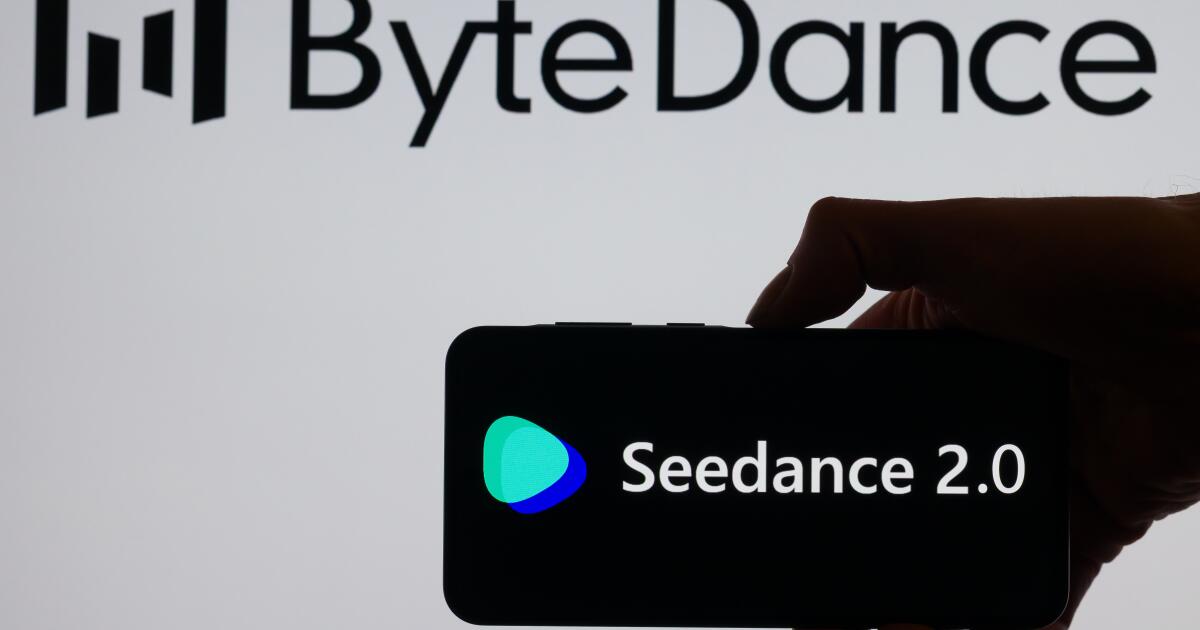
Joining other big Hollywood studios, the Motion Picture Association has demanded that ByteDance, the creator of the AI video tool Seedance 2.0, stop its operations. This demand came in the form of a cease-and-desist letter due to concerns surrounding the tool.
The Motion Picture Association (MPA), representing major film and TV studios, has formally notified a Chinese company, Seedance, about widespread copyright violations. The MPA claims Seedance’s use of copyrighted material isn’t accidental, but a deliberate part of its operations.
Sent last Friday, this letter is the first time the MPA has officially warned a large AI company to stop certain activities. It also shows that disagreements between the entertainment industry and AI companies are growing.
Last week, major entertainment companies like Disney, Paramount, Warner Bros., Netflix, and Sony Pictures all sent legal warnings after a new AI began creating unauthorized continuations of popular shows like “Game of Thrones” and imagined battles between characters like Thanos and Superman. Netflix described the AI company, Seedance, as prioritizing user privacy, while Warner Bros. accused Seedance of intentionally using their content to develop its AI. Disney characterized the AI’s actions as a blatant theft of their intellectual property.

Hollywood Inc.
A fake video showing Tom Cruise and Brad Pitt battling each other became incredibly popular online earlier this week, and it’s caused a lot of concern for both artists and movie studios.
The recent controversy began just over a week ago with a remarkably realistic AI-generated video depicting Brad Pitt and Tom Cruise in a fight. Because the video used the actors’ images without permission, both the actors’ union, SAG-AFTRA, and the Motion Picture Association (MPA) quickly spoke out against the platform that hosted it.
According to Charles Rivkin, head of the Motion Picture Association, the Chinese AI platform Seedance 2.0 has been widely using U.S. copyrighted material without permission. He stated that by launching a service lacking proper protections against copyright violations, ByteDance is ignoring existing laws designed to protect creators and the many American jobs that rely on them.
So, amidst all the legal drama, I got a statement from ByteDance – the folks behind TikTok. Basically, they’re saying they respect copyright and are working on better ways to stop users from illegally using other people’s work or images. It’s a standard response, but it does show they’re at least aware of the problem and are claiming to be taking steps to address it.

Hollywood Inc.
ByteDance recently released Seedance 2.0, its new AI video platform. Since then, videos created using the platform and featuring copyrighted content have quickly become popular online. Now, major studios like Disney, Paramount, Warner Bros., and Netflix are sending ByteDance legal notices demanding they stop this practice.
In a letter, the MPA stated they need specific details, not just broad explanations. They also disagree with ByteDance’s claim that any copyright violations were simply users misusing the platform – they believe ByteDance itself is responsible for the infringement.
The MPA claims ByteDance trained its AI model using copyrighted works from its member studios without permission, which was essential for the AI to then create infringing content. They also state that ByteDance launched the service without any safeguards and actively copied and shared content that clearly violated the studios’ copyrights.
Luke Arrigoni, the CEO of Loti AI – a company that protects people’s digital identities – believes the current issues in the industry were predictable. He says things have finally come to a head.
As a critic, I’ve been following the fallout from ByteDance’s Seedance 2.0 closely, and it really highlights a worrying trend: some AI companies are essentially treating creative work as just another resource to be mined, rather than respecting the rights of the artists who made it. The Motion Picture Association’s move against them is a strong signal that Hollywood isn’t going to quietly let AI companies build their businesses by taking advantage of copyrighted material. It seems pretty clear to me that the AI companies who will succeed aren’t going to see rights holders as roadblocks, but as collaborators – and that’s a good thing for everyone.
Read More
- ‘Project Hail Mary’s Unexpected Post-Credits Scene Is Worth Sticking Around
- Total Football free codes and how to redeem them (March 2026)
- Limbus Company 2026 Roadmap Revealed
- The Division Resurgence Specializations Guide: Best Specialization for Beginners
- After THAT A Woman of Substance cliffhanger, here’s what will happen in a second season
- Brawl Stars Sands of Time Brawl Pass brings Sandstalker Lily and Sultan Cordelius sets, along with chromas and more
- Brawl Stars Brawl Cup Pro Pass arrives with the Dragon Crow skin and Chroma, unique cosmetics, and more rewards
- Clash of Clans April 2026 Gold Pass Season introduces a Archer Queen skin
- Wuthering Waves Hiyuki Build Guide: Why should you pull, pre-farm, best build, and more
- XO, Kitty season 3 soundtrack: The songs you may recognise from the Netflix show
2026-02-23 23:02