Behold, dear reader, the golden and silver specters of 2025! With a flourish of monetary whims and the quiet whispers of central banks, these metals ascended to heights unseen since the days of tsars and emperors.
Gold and Silver: A Dance of Destiny 🕺
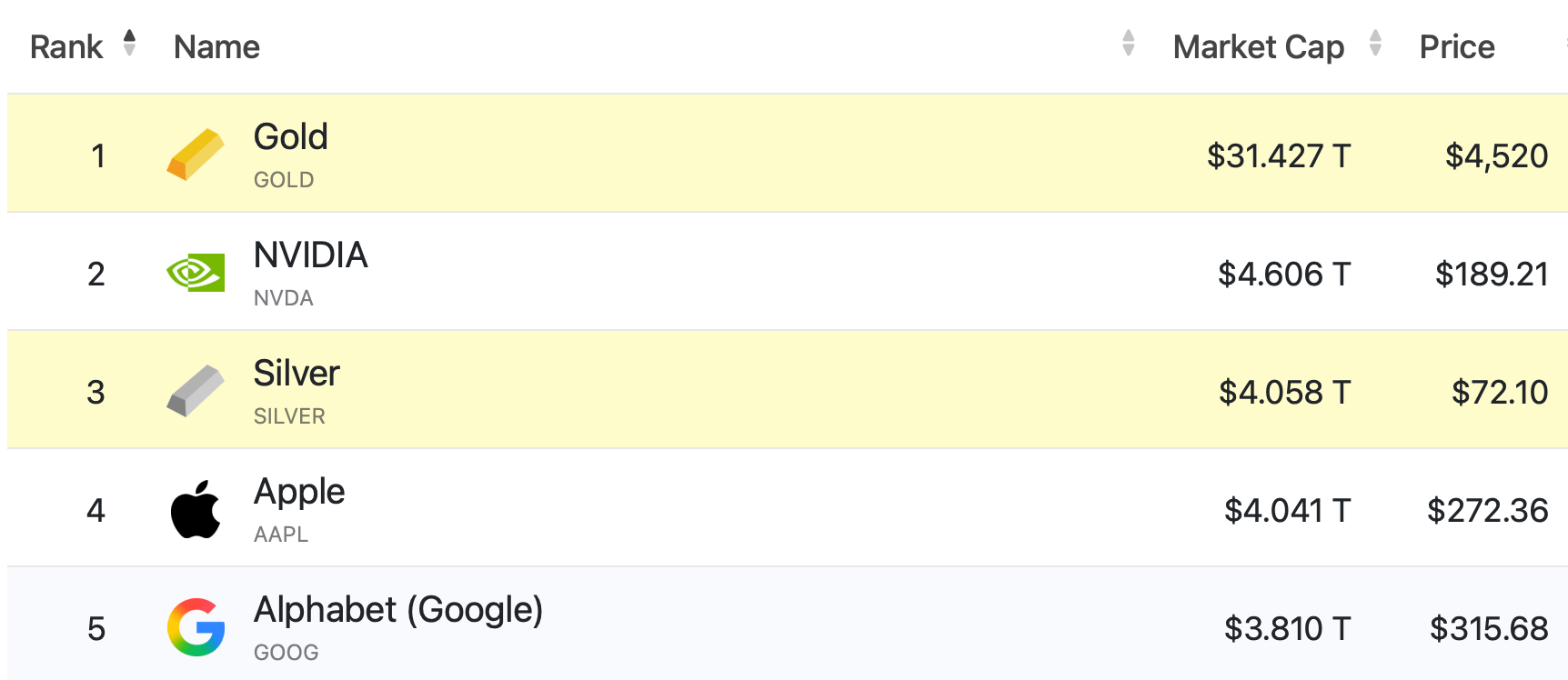
Gold soared from $2,585 to $4,524, a 75% leap that would make even the most stoic investor weep tears of joy (or perhaps just greed). Silver, the underdog, leaped from $28.51 to $72.66-a 155% surge that rivals the ambitions of a young revolutionary. 🚀
What drove this meteoric rise? Ah, the age-old tale of uncertainty, central bank diversification, and supply constraints. It’s as if the universe itself conspired to make investors rich… or at least temporarily delusional. 🤯
“The market divergence is hard to ignore. While indices show exhaustion, metals are soaring,” one X user wrote in mid-December. “With structural deficits & central banks buying, the flight to safety is on. The next leg higher is soon.” Cue ominous music. 🎶
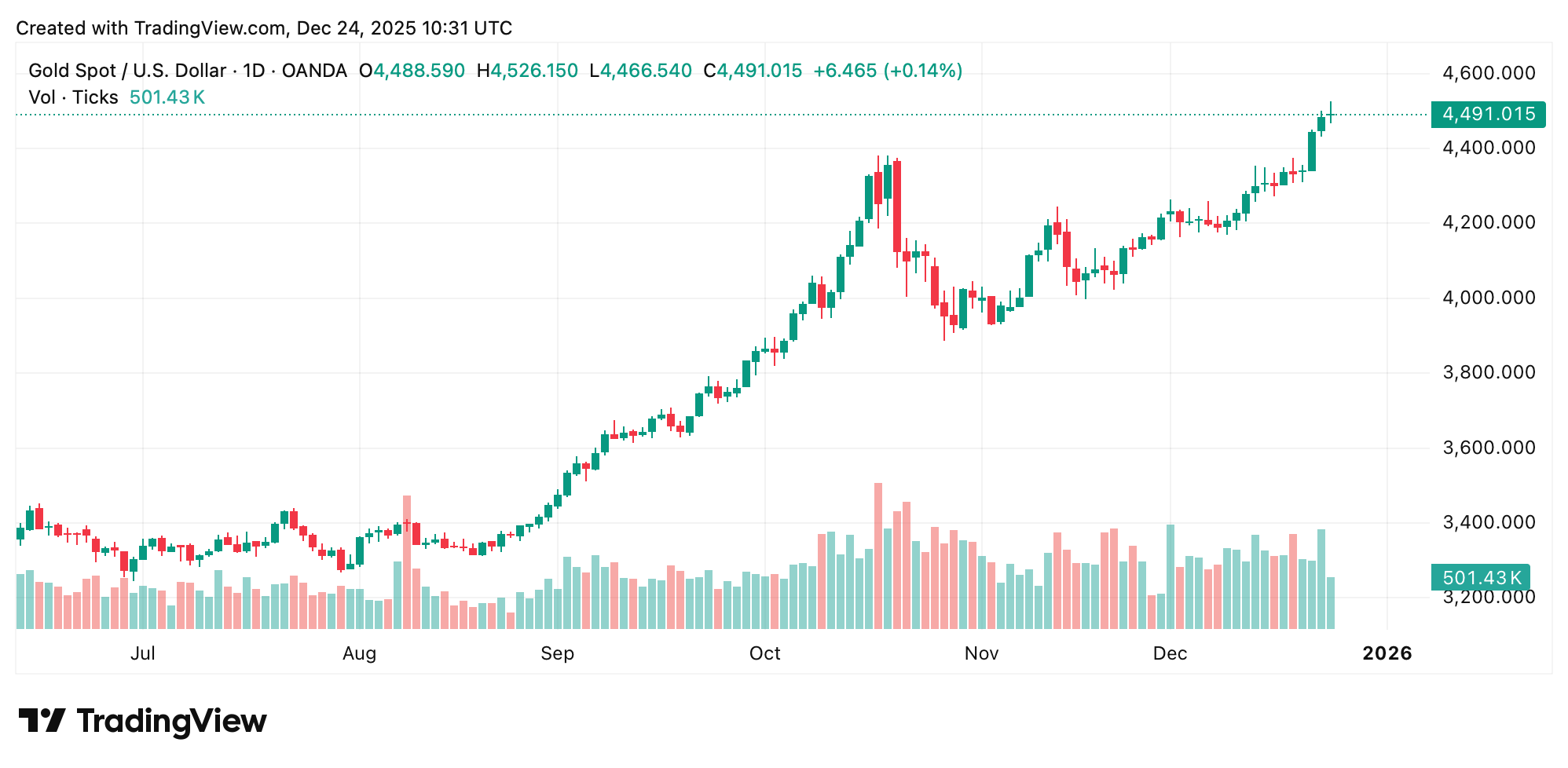
Gold’s performance in 2025 reflected renewed demand for monetary hedges as real interest rates remained pressured for much of the year. Expectations for interest rate cuts early in the year set the tone, while persistent geopolitical tensions reinforced gold’s appeal as a reserve asset. Central banks continued to accumulate bullion at a historically elevated pace, adding steady demand independent of short-term market positioning. 🏦
Silver’s move proved even more pronounced, reflecting its dual role as both a monetary metal and a critical industrial input. Demand from solar manufacturing, electric vehicles, data centers, and electronics expanded throughout the year, tightening supply in a market already experiencing multi-year deficits. Unlike gold, silver’s price action showed sharper acceleration during periods of industrial demand growth. 🌞🔋
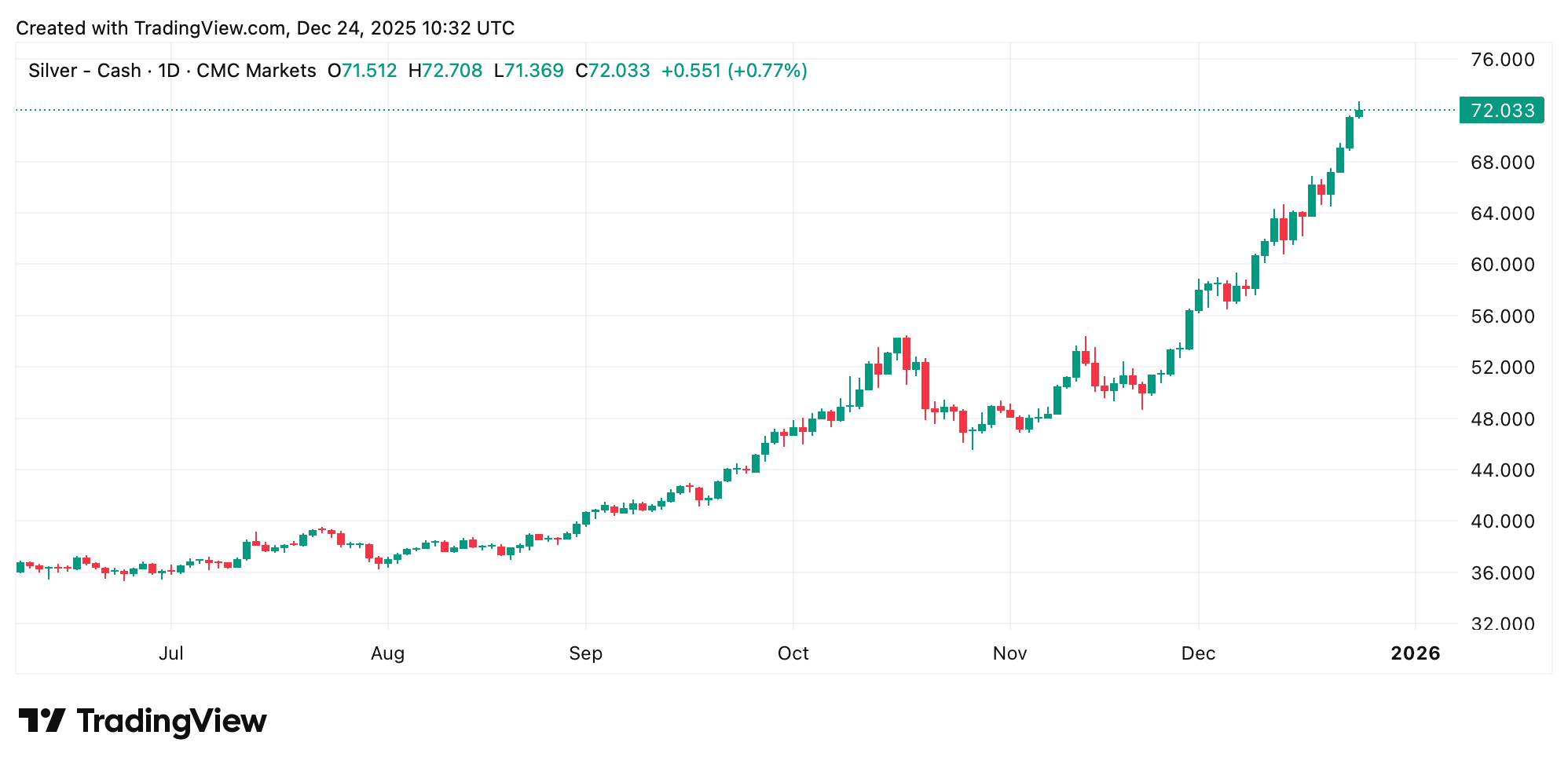
Market data from 2025 showed that gold and silver followed a phased trajectory. Early gains were supported by monetary policy expectations and safe-haven flows. Midyear consolidation gave way to renewed upside momentum in the second half as physical supply constraints became more visible and investment demand reaccelerated. 📈
Silver inventories, particularly across major exchanges and vaulting systems, declined as industrial consumption absorbed available supply. Leasing rates rose sharply at several points during the year, signaling tightness in the physical market rather than speculative excess. These conditions amplified silver’s price response during periods of increased demand. 🧊
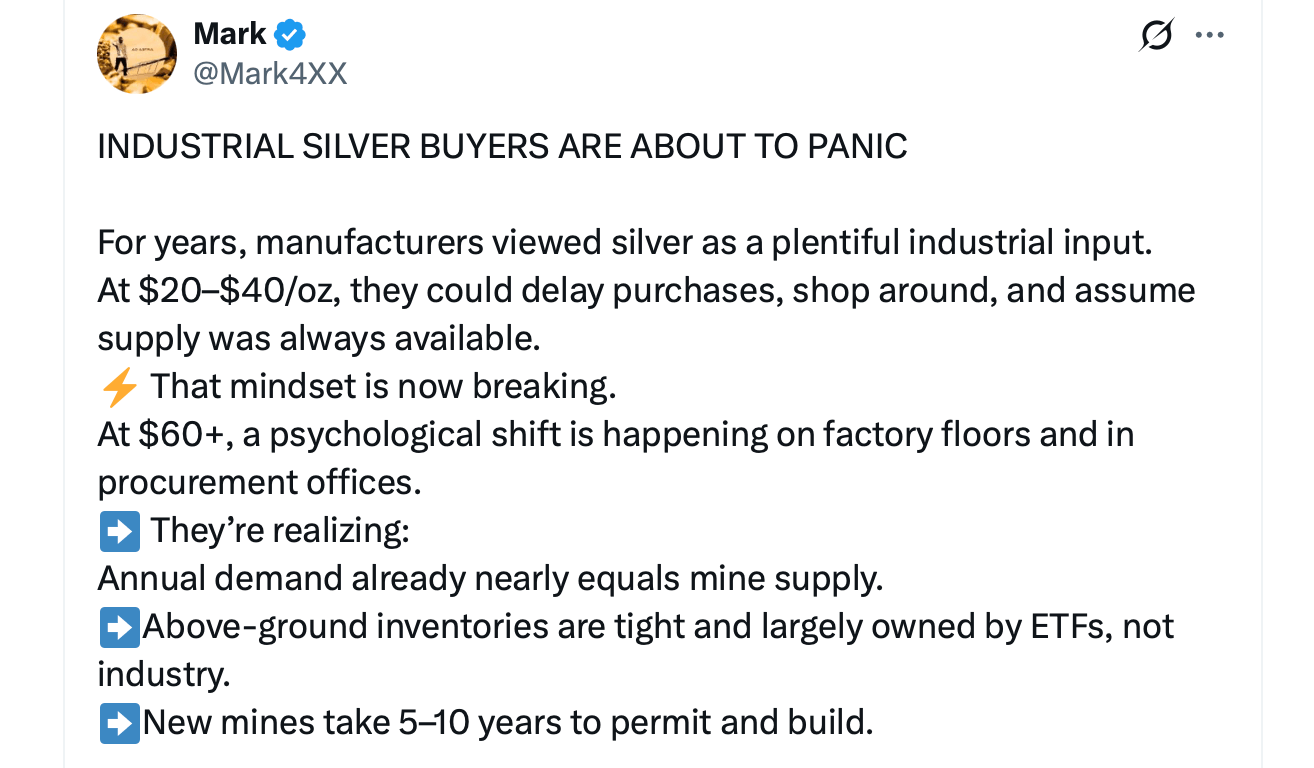
Gold’s rise was steadier but equally significant. Investment flows into bullion-backed products increased alongside physical bar and coin demand, particularly outside North America. Central banks in emerging and developed markets alike continued diversifying reserves amid concerns surrounding currency exposure and long-term fiscal sustainability. 🌍
The broader economic backdrop also played a role. Global debt levels remained elevated, while inflation metrics proved uneven across regions. These factors reinforced demand for hard assets viewed as stores of value (SoV), particularly during periods of currency volatility and geopolitical strain. ⚠️
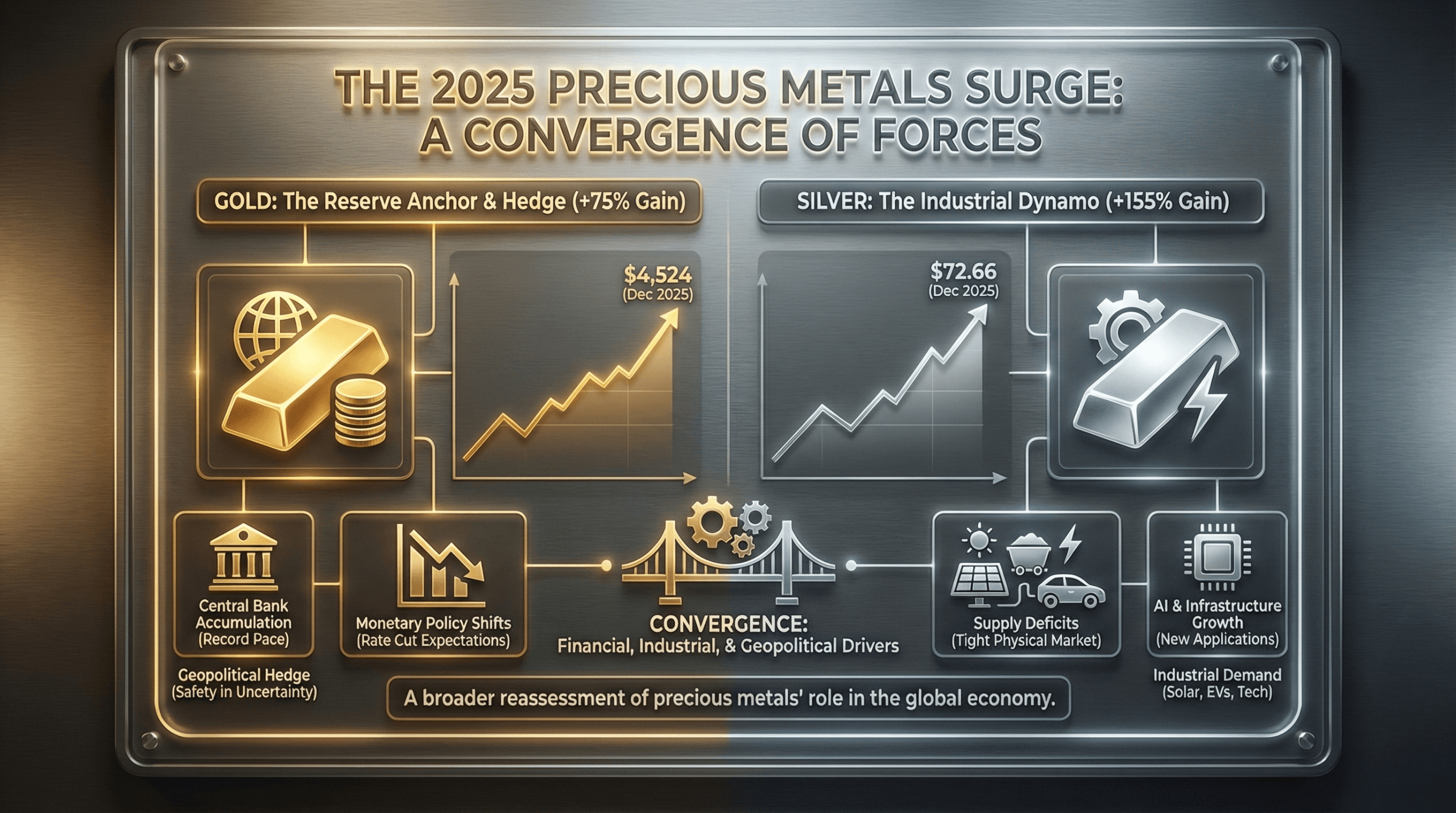
Industrial demand emerged as a defining feature of silver’s outperformance. Solar panel production alone accounted for a growing share of annual silver consumption, while electric vehicle manufacturing continued to increase silver loadings per unit. Expansion in artificial intelligence (AI) infrastructure and advanced electronics further tightened the supply-demand balance. 🌐
“Silver is no longer playing second fiddle – it’s gaining real market value, not just hype,” one X influencer explained. “Some analysts are calling this a once-in-a-decade reset. Silver may just be finding its real value, and if demand holds – this ride could go WAY higher.” Cue dramatic orchestral swell. 🎵
By year’s end, both metals reached new nominal highs, reflecting not only cyclical forces but longer-term structural shifts. Analysts noted that silver’s performance highlighted vulnerabilities in supply chains for energy transition technologies, while gold’s strength always points to ongoing demand for neutral reserve assets. 🌍
Market participants debated whether the gains represented a temporary overshoot or a repricing driven by durable fundamentals. While short-term volatility remained possible, the breadth of demand across investment, industrial, and official sectors differentiated 2025 from previous metals rallies. 🌀
Looking ahead, expectations for 2026 remain mixed but grounded in similar themes. Central bank demand is expected to persist, while industrial consumption of silver is projected to remain elevated. Potential economic slowdowns could affect industrial metals broadly, though structural demand drivers remain intact. 🚀
The 2025 performance of gold and silver ultimately reflected a convergence of financial, industrial, and geopolitical forces. Rather than a narrow speculative episode, the year’s gains signaled a broader reassessment of precious metals’ role within global markets as economic and technological transitions continue. 🌐
FAQ ❓
- Why did gold prices rise so sharply in 2025?
Gold gained on central bank buying, monetary policy expectations, and sustained demand for reserve assets. 🏦 - What drove silver’s larger percentage gain compared to gold?
Silver benefited from rising industrial demand alongside tightening physical supply. 🌞 - Did investment demand play a role in 2025’s metals rally?
Yes, both physical purchases and investment flows supported higher prices. 💸 - Are the precious metals gold and silver expected to remain strong going into 2026? Analysts see continued demand, though future performance will depend on economic and industrial conditions. 🌍
Read More
- Clash Royale Best Boss Bandit Champion decks
- Vampire’s Fall 2 redeem codes and how to use them (June 2025)
- Mobile Legends January 2026 Leaks: Upcoming new skins, heroes, events and more
- How to find the Roaming Oak Tree in Heartopia
- World Eternal Online promo codes and how to use them (September 2025)
- Best Arena 9 Decks in Clast Royale
- Clash Royale Season 79 “Fire and Ice” January 2026 Update and Balance Changes
- Clash Royale Furnace Evolution best decks guide
- Clash Royale Witch Evolution best decks guide
- Best Hero Card Decks in Clash Royale
2025-12-24 19:08