Well, darling, Iran’s Islamic Revolutionary Guard Corps-yes, that familiar chorus line-has been flirting with cryptocurrency, transacting more than $2 billion to dodge sanctions and fuel their cyber cabaret. And the chorus is likely louder than reported, since this figure only covers US-designated sanctions.
What we have here is a companionable rise in illicit crypto, a consequence of sanctions played by Russia, North Korea, and friends-it’s a veritable business symposium of misdirection.
Iran, Russia Drive On-Chain Illicit Growth
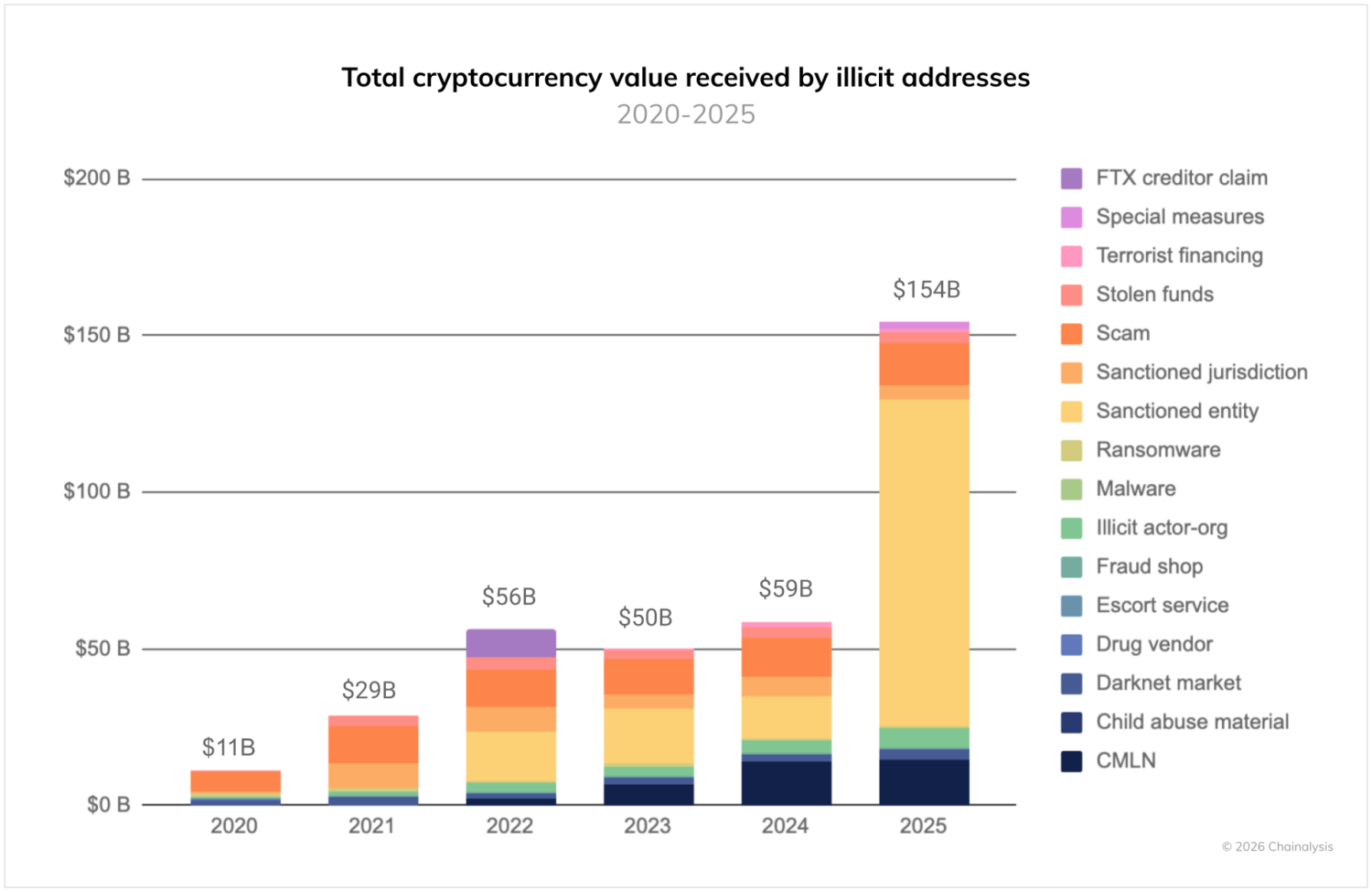
Crypto crime surged to unprecedented levels in 2025. According to data compiled by Chainalysis, illicit cryptocurrency transactions increased by 162% compared to the previous year, totaling at least $154 billion. 😂
Sanctioned jurisdictions have significantly expanded their reliance on cryptocurrencies as a means of bypassing financial restrictions. 💸
In Iran’s case, affiliated proxy groups and entities labeled as terrorist organizations, including Hezbollah, Hamas, and the Houthis, have increasingly turned to digital assets to transfer and cash out funds. 💣
The West Asian country wasn’t the only one to seed its illicit crypto economy surge. 😎
According to Chainalysis, Russia accounted for the largest share of illicit on-chain activity. This trend intensified after the state introduced its ruble-pegged A7A5 token last year. In total, transactions linked to Russia’s new stablecoin reached at least $93 billion. 📈
That volume alone emerged as the primary factor behind an almost sevenfold increase in crypto activity among sanctioned entities. 💥
North Korean hackers have long been a persistent presence in the cyber threat environment. The past year marked their most damaging period to date, both in terms of the value stolen and the growing sophistication of their attack and laundering methods. 🥷
Illicitly obtained assets continued to pose a significant risk to the crypto ecosystem in 2025. Hackers linked to the DPRK were responsible for approximately $2 billion in stolen funds. 💰
At the same time, China’s role in illicit activity introduced an unexpected dimension to the overall landscape. 🐲
Crypto Crime Extends Into Physical Violence
According to a Chainalysis report published Thursday, Chinese money laundering networks (CMLNs) emerged as a dominant force in 2025. 🚔
These organized groups accelerated the diversification and professionalization of on-chain crime. They now offer specialized services, including laundering-as-a-service and supporting criminal infrastructure. 🧰
Building on models such as Huione Guarantee, these networks evolved into full-service criminal operations. They support fraud, scams, North Korean hacking proceeds, sanctions evasion, and terrorist financing. 🔧
Beyond crypto’s role in illicit activity, the report stressed the increased correlation between digital assets and violent crime.
Physical attacks on bitcoin holders rose 33% in 2025
and violent crypto robberies and kidnappings jumped 169%
most wrench attacks start with public wallet exposure
attackers don’t need to hack wallets, they just need to find the person
This is why privacy matters.
– Crypto Tea (@Cryptotea) January 8, 2026
The blockchain analytics firm stressed the growing connections between on-chain activity and cases of human trafficking operations and attacks involving physical coercion.
Although Chainalysis clarified that illicit transactions still represent a small share of total crypto activity, the urgency of protecting the ecosystem’s security and integrity has reached unprecedented levels. 🛡️
Read More
- Clash Royale Best Boss Bandit Champion decks
- Vampire’s Fall 2 redeem codes and how to use them (June 2025)
- Mobile Legends January 2026 Leaks: Upcoming new skins, heroes, events and more
- World Eternal Online promo codes and how to use them (September 2025)
- Clash Royale Season 79 “Fire and Ice” January 2026 Update and Balance Changes
- Best Arena 9 Decks in Clast Royale
- M7 Pass Event Guide: All you need to know
- Clash Royale Furnace Evolution best decks guide
- Best Hero Card Decks in Clash Royale
- Clash Royale Witch Evolution best decks guide
2026-01-10 01:32