Unlocking Protein Secrets: How Coevolution Reveals Key Mutations
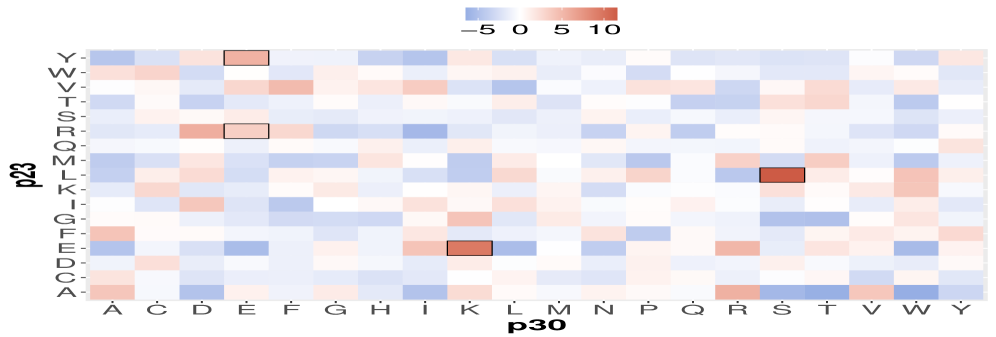
A new statistical framework analyzes patterns of amino acid relationships to predict protein interactions and understand the impact of genetic changes.
A new statistical framework analyzes patterns of amino acid relationships to predict protein interactions and understand the impact of genetic changes.
![The system’s transition from disorder to collective order hinges on the introduction of halting interactions; without them, a disordered state remains stable, but with interactions set to a value of seven, ordered dynamics emerge as evidenced by trajectories of order parameters [latex]m, v_m, v[/latex] and phase plane analysis of a mean-field model-simulations with [latex]N=500[/latex] particles and parameters [latex]s_S=s_M=s_C=c_S=c_C=0.2[/latex], [latex]h\in\{0,7\}[/latex], and [latex]c_M=2[/latex]-demonstrate this shift.](https://arxiv.org/html/2601.15362v1/x2.png)
Researchers have discovered that simple ‘stopping’ interactions between individuals can surprisingly give rise to robust, synchronized flocking behavior.
![The system adapts a pre-trained model θ - initially trained on attribute set <i>X</i> - during inference to incorporate newly discovered attributes [latex]\tilde{X}[/latex], such as YWHAG and MI recently identified as significant factors in Alzheimer’s disease prediction, thereby aiming to enhance predictive performance through incremental knowledge integration rather than complete retraining.](https://arxiv.org/html/2601.15751v1/x1.png)
Researchers have developed a method to seamlessly integrate new features into existing tabular learning models during inference, boosting performance and adaptability.
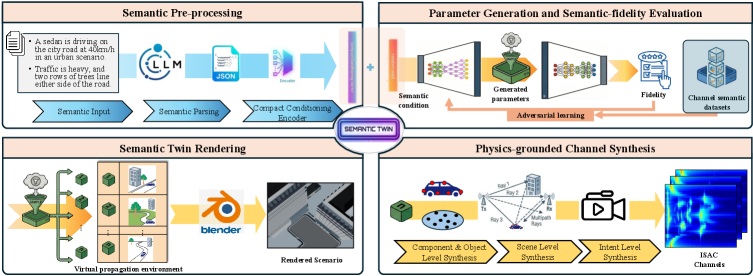
A new approach leverages generative AI and environmental semantics to create a more realistic and intelligent model for integrated sensing and communication systems.
As AI-powered mental health tools become increasingly prevalent, ensuring their safety, efficacy, and ethical design is paramount.
![Soft Q-learning, when employing a Gaussian policy with standard deviation [latex]\sigma_{\pi} = 0.1[/latex], demonstrates that a standard negative entropy term encourages policy improvement to select out-of-distribution actions, while a sigmoid-bounded entropy function constrains this effect, establishing a more well-defined action space and clearer region of high Q-values for maximization-particularly when sampled actions remain within [latex]1.5\sigma_{\pi}[/latex] of the mean.](https://arxiv.org/html/2601.15761v1/figures/draw_entropy_concept_4_compare_Q_H_Z.png)
A new reinforcement learning approach enables robots to rapidly acquire complex skills using just a single example, bridging the gap between simulation and real-world deployment.

As artificial intelligence becomes increasingly autonomous in healthcare, establishing robust governance and lifecycle management is crucial to mitigate emerging risks.
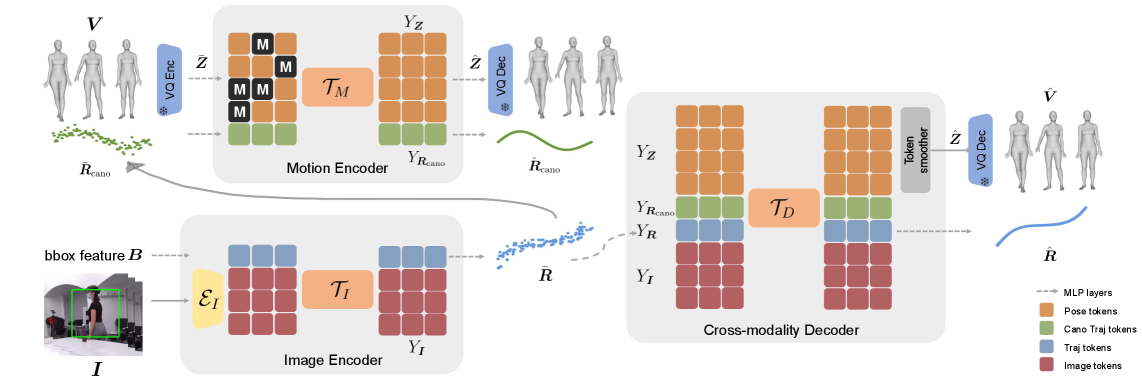
A new framework leverages the power of masked generative transformers to reconstruct accurate 3D human motion from video, even when parts of the body are hidden from view.
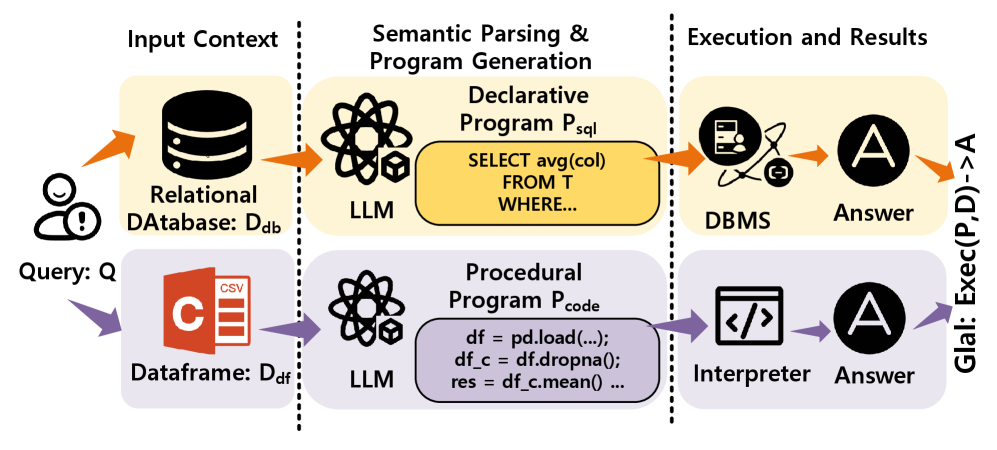
A new analysis reveals that translating natural language into executable Python code, while comparable to SQL generation, demands greater logical completeness and highlights critical challenges in ambiguity resolution for large language models.
A new theoretical framework uses mathematical sheaf theory to model brain function and understand the roots of neurological disorders.