Robots Learn by Flow: Mastering Manipulation with Next-Gen Imitation

A new approach combines latent space modeling with real-time perception to enable robots to learn complex manipulation tasks with greater speed and stability.
A new approach combines latent space modeling with real-time perception to enable robots to learn complex manipulation tasks with greater speed and stability.
![The methodology integrates trust-by-design principles directly into the agile AI development lifecycle, ensuring inherent reliability and verifiability throughout iterative refinement-a process formalized by establishing mathematically provable invariants [latex] \mathbb{P}(outcome \mid model, data) \ge \tau [/latex] at each stage, where τ represents a predefined threshold for acceptable confidence.](https://arxiv.org/html/2601.22769v1/Figures/Trust_AI_Health.png)
A new framework proposes moving beyond simple compliance to foster genuine trust in artificial intelligence through a focus on relationships and shared values.
Researchers have developed a new system that automatically generates publication-quality diagrams and plots, streamlining the visual communication of complex scientific findings.

Researchers have developed a new hierarchical decision-making framework that allows humanoid robots to learn complex and stable boxing techniques through competitive self-training.
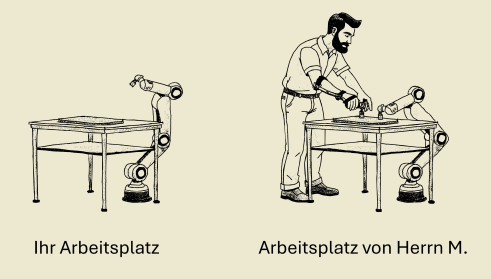
New research suggests that integrating assistive robots into universally designed workplaces can actively reduce the stigma often faced by people with disabilities in professional settings.
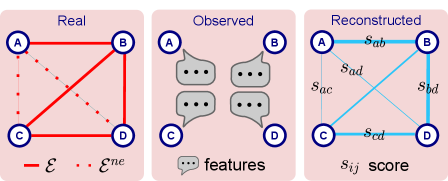
A new analysis reveals that traditional graph theory methods can be surprisingly competitive with complex machine learning models for predicting missing links in real-world economic and financial networks.
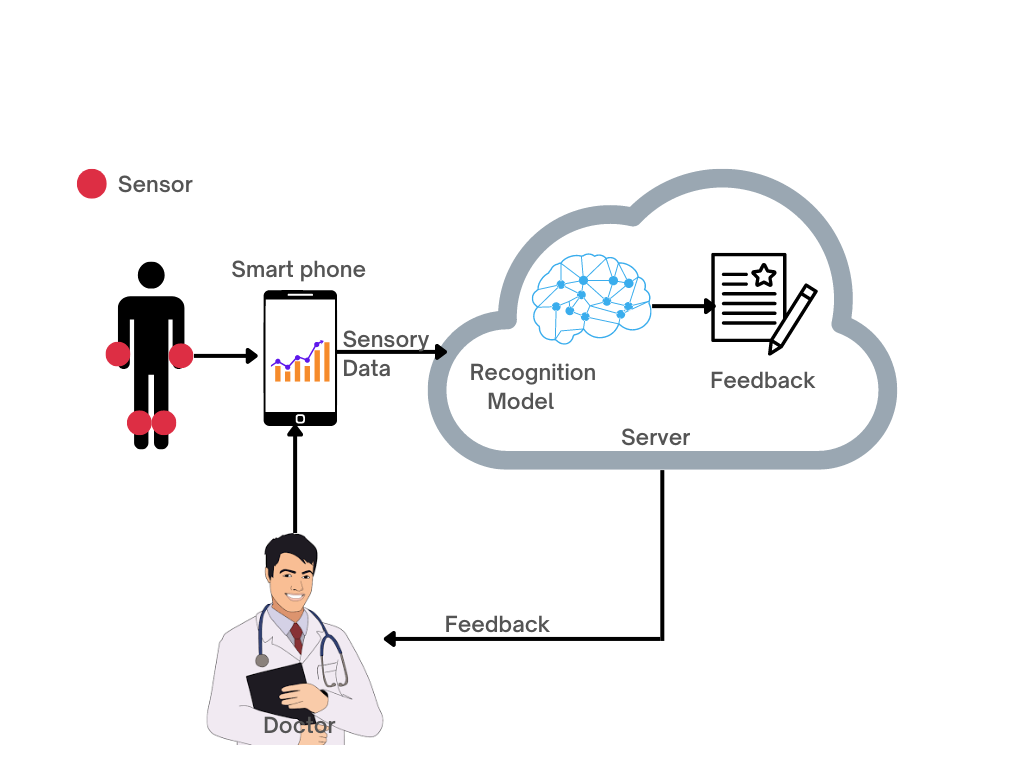
A new approach combines sensor data and machine learning to accurately recognize human activities while safeguarding patient privacy in resource-constrained healthcare settings.
Researchers have developed an artificial intelligence system that leverages the power of language to autonomously design molecules and peptides, pushing the boundaries of biological engineering.

A new framework enables multi-agent systems to learn reward functions that prioritize resilience and sustained performance even when faced with disruptions.

As artificial intelligence systems proliferate, understanding the true uniqueness of individual models becomes critical for efficient deployment and reliable performance.